
2026 Midterm Turnout Hits 49%, Second-Highest Since 1914, in Democratic Wave
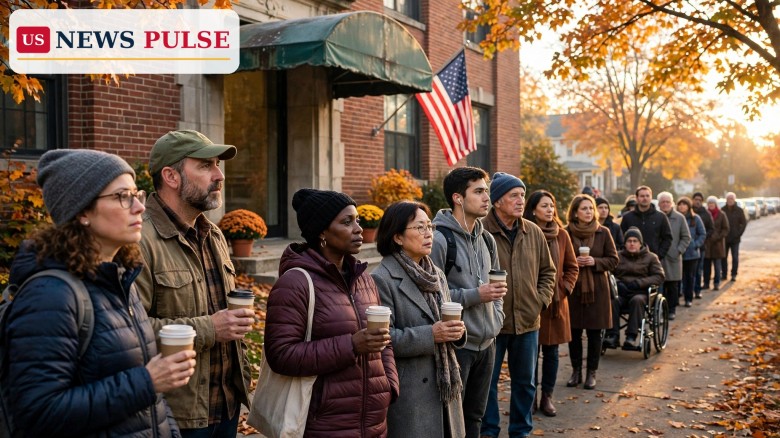
Nearly half of all eligible Americans voted in the 2026 midterm elections, according to preliminary data, producing the second-highest midterm turnout in more than a century and a record vote that powered Democrats to a sweeping victory in the battle for Congress.
The University of Florida Election Lab put turnout at 49.42 percent of eligible voters — about 124.3 million ballots cast — in figures reported by the Washington Post on Saturday, November 7. The estimate is provisional and could change as remaining mail and provisional ballots are counted in California and Washington.
Key Points
- Turnout reached 49.42 percent of eligible voters, about 124.3 million ballots — the second-highest midterm turnout since 1914, behind only the 50.05 percent of 2018.
- The figure is well above the 46.8 percent of the 2022 midterms, extending a surge in participation that began in 2018.
- Maine led at 65.7 percent, followed by Minnesota at 65.2 percent and Michigan at 63.2 percent — all three held competitive Senate races Democrats won and elected Democratic governors.
- First-time midterm voters backed Democrats 64-34, and Democrats won the national House popular vote by 12 to 14 points, the largest margin since 1974.
- Turnout was highest where Democrats won unexpected victories, the Washington Post found.
What Happened
Americans voted on Tuesday, November 3, 2026, in elections that decided control of the House and Senate, along with dozens of governorships and state offices. Voting followed a record early-vote period in which nearly 48 million ballots were cast before Election Day, passing the 2022 record of 45.9 million.
Once Election Day ballots were added, the Election Lab calculated about 124.3 million ballots in all — 49.42 percent of the voting-eligible population. The Washington Post reported the figures on Saturday, November 7. The number is not final: California and Washington were still counting mail ballots, but the picture is settled — the second-largest midterm turnout share in more than a century, and a Democratic House win with the largest popular-vote margin since 1974.
Background: A Century of Midterm Turnout
Midterms have historically drawn far fewer voters than presidential years; for most of the last century barely more than a third of eligible voters took part. Turnout in 2014 was just 38.5 percent, and the figure hovered in the 40 percent range for decades. The 2018 midterms broke the pattern at 50.05 percent — the highest since 1914 — and 2026 confirms that higher engagement was not a one-off.
The 1914 comparison carries weight: in that year women could not yet vote in most states and African Americans were barred from the polls across much of the South. The 2022 figure of 46.8 percent was itself high by historical standards, yet 2026 ran nearly three points higher. Easier voting helped — early and mail voting expanded sharply since the pandemic — as did the stakes: the eight-month US war with Iran, rising gasoline prices and the cost of living, with record spending of a projected 11.9 billion dollars, per OpenSecrets.
2026 Midterm Turnout: Where the Surge Came From
The turnout map tells the story of the Democratic wave. The three highest-turnout states — Maine at 65.7 percent, Minnesota at 65.2 percent and Michigan at 63.2 percent — each held a competitive Senate race Democrats won and each elected a Democratic governor. Turnout was highest precisely where Democrats scored their most unexpected victories.
New voters were central: first-time midterm voters backed Democrats 64-34, young voters backed the party by about seven in ten, and Hispanic voters returned to the Democratic column in force. Where races were closest and campaigns most intense, more voters turned out and leaned Democratic. In 2014 barely a third of eligible voters voted; in 2026 nearly half did.
Reactions and Analysis
No direct quotes from election officials were published in the source reports checked for this article, and none are invented here. The available analysis comes from the Washington Post's reporting of the Election Lab data, which linked turnout to outcome and stressed the historical scale: 49 percent is second only to 2018 since 1914. The Lab's figures are the standard measure because they use the voting-eligible population rather than registered voters, which outdated rolls can inflate.
Why It Matters
Turnout is the simplest measure of democratic health, and 2026 shows the 2018 surge was not a passing reaction to one presidency. Two of the last three midterms have now drawn about half of all eligible voters, a level unthinkable for most of the last century.
Democrats won the House with the second-largest midterm turnout in over a century and the largest House popular-vote margin since 1974 — a mandate a low-turnout win would not have carried. For Republicans, the figures pose a harder question: they lost ground in an election with more voters than almost any midterm on record. President Donald Trump has pointed to the Iran war, higher gasoline prices and attitudes toward Israel; the turnout data adds another factor — the electorate was larger, younger and more Democratic than in 2022.
What Happens Next
The Lab's estimate will be revised as California and Washington finish counting, with final certified totals following over the coming weeks; the figure should stay near 49 percent. The new Congress convenes in January with Democrats holding the House and a new Senate majority, and the systems that handled nearly 125 million ballots will be studied for lessons before the 2028 presidential election.
Frequently Asked Questions
How high was turnout in the 2026 midterms?
About 49.42 percent of eligible voters, roughly 124.3 million votes, per preliminary Election Lab data reported on November 7, 2026.
How does that compare with 2018?
The 2018 midterms hold the modern record at 50.05 percent, the highest since 1914. The 2026 figure is second, well above 2022's 46.8 percent and 2014's 38.5 percent.
Which states had the highest turnout?
Maine at 65.7 percent, Minnesota at 65.2 percent and Michigan at 63.2 percent — all three won Senate races and governors for Democrats.
What did the high turnout mean for the results?
Turnout was highest where Democrats won unexpected victories; first-time midterm voters backed Democrats 64-34, and the House popular-vote margin of 12 to 14 points was the largest since 1974.
Related coverage: Record early voting: 47.9 million ballots cast before the 2026 midterms; Young voters swung hard left in 2026 midterms as 7 in 10 backed Democrats; US midterm elections 2026: Americans vote as control of Congress hangs in balance.
© 2026 US News Pulse. All rights reserved.
 Print
 Save