
Farm and Construction Leaders Blast Stephen Miller Promotion Over Deportation Drive
WASHINGTON — Leaders of the farm and construction industries that depend most on immigrant labour have denounced President Donald Trump’s decision to promote Stephen Miller, the architect of his deportation drive, to White House chief of staff — and some blame Miller’s enforcement campaign for the Republican Party’s midterm losses.
Key Points
- Farm and construction leaders told the Washington Post they decried Stephen Miller’s promotion to chief of staff, effective Monday, November 9, 2026.
- Chris Herr of PennAg Industries said many members helped propel Trump to victory in 2024 but have soured as enforcement took their workers.
- Mario Guerrero of the South Texas Builders Association, a three-time Trump supporter, said Miller’s enforcement was “the reason the GOP lost across the board” on November 3.
- More than 40 farm groups warned Trump last month that the crackdown was hitting the food supply and risking higher grocery prices.
- About 66 percent of US farmworkers are foreign-born, and the White House defended Miller as a key player in the America First agenda.
What Happened
Trump announced on Friday, November 6, that Miller, 41, would become chief of staff, calling him one of his most trusted advisers. Miller, the deputy chief of staff for policy and homeland security adviser, has shaped the administration’s hardline immigration agenda since Trump returned to office and has worked for the president since 2015. Wiles, the first woman to hold the job, moves to Trump’s political operation.
The promotion landed three days after Democrats won the House and Senate in the November 3 midterms. Some House Republicans have already erupted over the appointment, and Democratic leader Hakeem Jeffries has called Miller a “dangerous xenophobe”. Now the criticism comes from outside Washington, from employers who say raids have taken workers off farms and building sites, slowed harvests and pushed up costs.
Background: A Crackdown That Reached the Fields and Job Sites
Miller’s rise has been inseparable from immigration enforcement. As deputy chief of staff, he drove the mass-deportation programme, pressing agencies for higher arrest numbers and defending workplace raids that swept up workers far beyond the criminals the president had promised to target. The Wall Street Journal reported last week that Trump himself told aides Miller had “gone too far” after the First Lady complained that people she knew were being apprehended and deported.
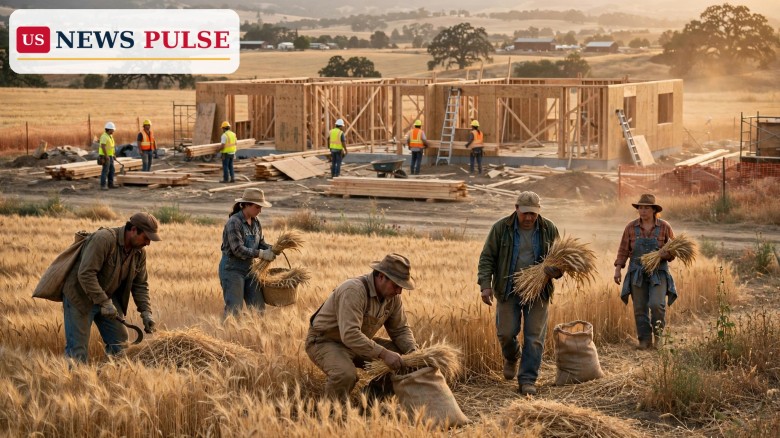
Last month, more than 40 farmers and agricultural groups wrote to Trump and congressional leaders warning that the crackdown was hitting the food supply and risking higher grocery prices. About 66 percent of US farmworkers are foreign-born, and growers say many of the rest are also immigrants whose status is uncertain. When workers stop showing up — detained or afraid to leave home — crops rot in the fields. Construction faces the same squeeze in Texas and across the Sun Belt.
Stephen Miller’s Promotion and the Farm and Construction Backlash
Chris Herr, president of the PennAg Industries Association, which represents farmers and pork and poultry producers in Pennsylvania, told the Post his first thought on hearing the news was, “Thank goodness he was let go.” Herr said many of his members helped propel Trump to victory in 2024 but have soured as enforcement took workers from their farms. His reaction captured the frustration in farm country: the man many growers hoped was on his way out had instead been given the most powerful staff job in the White House.
Mario Guerrero, who heads the South Texas Builders Association and describes himself as a three-time Trump supporter, was blunter: “The reason the GOP lost across the board [on Tuesday] is because of the enforcement that Stephen Miller was pushing.” For Guerrero, the midterm result was a verdict on the crackdown itself: voters in his region watched neighbours and co-workers disappear from job sites, and they punished the party that ordered it.
Reactions and Quotes
The White House pushed back. Spokeswoman Lauren Bis said Miller “has been a key player in delivering on President Trump’s America First agenda since day one.” Vice President JD Vance has called Miller “an amazing patriot,” and House Freedom Caucus Chairman Andy Harris has praised his record. But the defence has not quieted the criticism: retiring Representative Don Bacon of Nebraska said Miller “greatly hurt the administration and cost us many seats on Tuesday,” and Representative Marlin Stutzman of Indiana called the promotion a “horrible decision.”
Why It Matters
Miller’s new job gives him control of the White House staff, the flow of paper to the president’s desk and the machinery that turns policy into action. His critics, including now the employers who depend on immigrant workers, see it as a guarantee that the crackdown will continue and the labour shortages it created will deepen. The timing matters too: Miller takes over on the same day Congress returns for its lame-duck session, with government funding running out on December 11 and a farm bill still unfinished.
What Happens Next
Miller starts as chief of staff on Monday, November 9, and the first test of his tenure will be how the White House handles the farm and construction complaints. The administration could soften enforcement in agriculture and building, as Trump hinted earlier this year when he said immigration agents should focus on criminals rather than broad workplace raids. Or it could press on. With Democrats set to take both chambers in January, the new majority has already promised hearings on the deportation programme.
Frequently Asked Questions
Who is Stephen Miller?
Stephen Miller, 41, is President Donald Trump’s new White House chief of staff, starting Monday, November 9, 2026. He was deputy chief of staff for policy and homeland security adviser, and he is the architect of the administration’s hardline immigration agenda. He has worked for Trump since 2015.
Why are farm and construction leaders criticising his promotion?
They say Miller’s enforcement campaign has taken workers from farms and building sites, slowed harvests and pushed up costs. About 66 percent of US farmworkers are foreign-born.
What did the industry leaders actually say?
Chris Herr of PennAg Industries said his first thought was, “Thank goodness he was let go.” Mario Guerrero of the South Texas Builders Association said, “The reason the GOP lost across the board [on Tuesday] is because of the enforcement that Stephen Miller was pushing.”
How did the White House respond?
Spokeswoman Lauren Bis said Miller “has been a key player in delivering on President Trump’s America First agenda since day one.” Vice President JD Vance has called Miller “an amazing patriot.”
When does Miller start as chief of staff?
He starts on Monday, November 9, 2026, replacing Susie Wiles. The announcement came on Friday, November 6, three days after the midterms.
Related reading: Trump Names Stephen Miller Chief of Staff as Susie Wiles Exits After Midterms • House Republicans Erupt Over Stephen Miller’s Promotion to Chief of Staff • Trump Told Aides Stephen Miller Had “Gone Too Far” on Deportations, WSJ Reports
© 2026 US News Pulse. All rights reserved.
 Print
 Save