
Colombia Drone Attack Kills 3 Soldiers at Army Base as Defence Minister Blames ELN
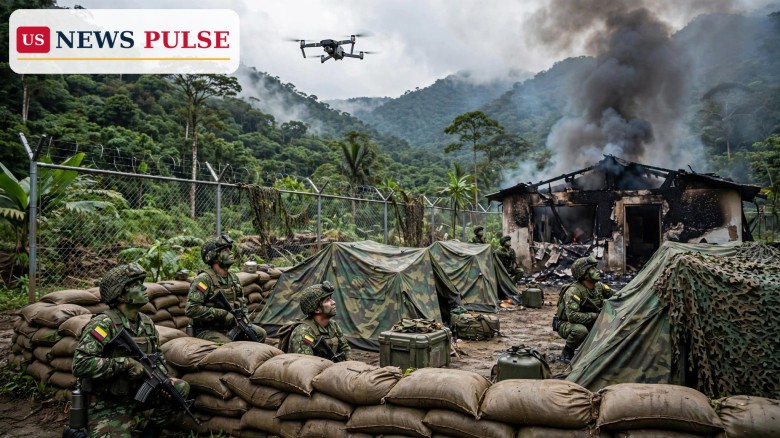
Explosive-laden drones struck a Colombian Army base in the gold-mining town of Santa Rosa del Sur on Saturday, November 7, 2026, killing three soldiers and wounding at least 16. The Colombia drone attack hit the Cantón Militar compound in southern Bolívar department around midday, when drones modified to carry explosives slammed into the base of the 48th Jungle Battalion, a unit that has been targeted by drones before. Defence Minister Jorge Mora blamed the National Liberation Army, known as the ELN, although no group has claimed responsibility.
Key Points
- Explosive drones hit the Colombian Army's Cantón Militar compound in Santa Rosa del Sur, southern Bolívar, around midday on Saturday, November 7, 2026.
- Three soldiers were killed and at least 16 wounded in the attack on the base of the 48th Jungle Battalion.
- The army named the dead as professional soldier Jairo Lince Carvajal and soldiers Dilan Andrés Lozano León and Álvaro Pushaina.
- Defence Minister Jorge Mora blamed the ELN, saying the attack appeared to be retaliation for the capture of ELN finance leader Leivis Enrique Valero Castillo, alias Carrito.
- Colombia has recorded 418 explosive-drone attacks in 2026, the most in Latin America, as armed groups turn cheap commercial drones into weapons.
What Happened
Around midday on Saturday, explosive-laden drones flew over the Cantón Militar compound in Santa Rosa del Sur, a gold-mining town in the south of Bolívar department. The drones had been modified to carry explosives, and they struck the base of the 48th Jungle Battalion directly. Three soldiers were killed outright and at least 16 more were wounded, some seriously enough to need hospital treatment.
On Sunday the army named the dead as professional soldier Jairo Lince Carvajal and soldiers Dilan Andrés Lozano León and Álvaro Pushaina, and confirmed the battalion had been attacked by drones before. The wounded were treated at the scene and in nearby hospitals while the army secured the compound. No group has claimed responsibility, the army initially named no suspects, and the exact route the drones took into the base remained under investigation.
Background and Context
Santa Rosa del Sur sits in a gold-mining region of southern Bolívar where the state has long competed with armed groups for control of territory, mines and trafficking routes. The 48th Jungle Battalion is deployed there to protect communities and confront the guerrilla and criminal organisations that profit from illegal gold mining and the cocaine trade, and its remote jungle position is hard to defend against an enemy that no longer needs to approach on foot.
The National Liberation Army, or ELN, is Colombia's largest remaining guerrilla group and a major cocaine-trafficking organisation. It has fought the Colombian state for decades and has increasingly used explosive drones against military and police targets. The attack came only a week after United States-supplied MQ-9A Reaper drones lent to Colombia flew over the Tolemaida base on October 31, a visible sign of Washington's deepening help for Colombia and Venezuela as they target the ELN.
Colombia Drone Attack: A Growing Threat
The Santa Rosa del Sur strike is part of a wider shift in Colombia's conflict. The country has recorded 418 explosive-drone attacks in 2026, the most in Latin America, as armed groups that once relied on ambushes and roadside bombs have learned to fit explosives to cheap commercial drones. A drone can cross a fence, a minefield or a jungle clearing that would stop a foot patrol, and strike a barracks or a fuel store from above with little warning.
For the soldiers of the 48th Jungle Battalion, that is a new kind of danger. Sandbags, watchtowers and patrols were built for an enemy on the ground, not for a small aircraft approaching silently from the sky. Across Latin America, criminal and guerrilla groups have copied the drone tactics seen in the wars in Ukraine and the Middle East, while defences against them are expensive and still reaching remote bases.
Reactions
Defence Minister Jorge Mora blamed the ELN, saying the attack appeared to be retaliation for the capture of the group's finance leader, Leivis Enrique Valero Castillo, alias Carrito. The arrest of the man who handled the ELN's money would be a serious blow to the group, and Mora's account suggests the guerrillas answered it with the most dramatic weapon they have.
President Abelardo de la Espriella said those behind the attack will have "nowhere to hide" and ordered intensified operations against the perpetrators. No group has claimed the attack, so the official blame rests on the minister's word, but the ELN's history of drone use, and the timing after the finance chief's capture, give his account weight. Further reading: Venezuela army strike kills at least 19 at ELN rebel camp in Apure, near Colombia and UN report: UAE firm hired Colombian Desert Wolves to fight for Sudan's RSF.
Why It Matters
The attack matters because it shows how far the ELN has come in turning drones into a weapon of war inside Colombia. Three soldiers dead and 16 wounded in a single strike is a heavy price for a base that was supposed to be protected.
It also matters for the United States. Washington has stepped up support for Colombia's fight against the ELN, lending Reaper drones and sharing intelligence, and an attack of this scale is in part an answer to that partnership. For the people of Santa Rosa del Sur, a town already caught between the state and armed groups, a military base in their town is now a target from the air.
What Happens Next
The immediate step is the intensified operation ordered by President de la Espriella. Colombian forces are expected to step up patrols and raids around Santa Rosa del Sur and across southern Bolívar, hunting the cell that launched the drones.
Investigators will study the wreckage for clues about who built the drones. Longer term, the attack will add urgency to Colombia's efforts to defend its bases against drones, from electronic jamming to new detection systems. The 418 attacks recorded this year already made that a priority; the deaths at Santa Rosa del Sur will make it harder to delay.
Frequently Asked Questions
What happened in the Colombia drone attack?
Explosive drones struck the Colombian Army's Cantón Militar compound in Santa Rosa del Sur, southern Bolívar, around midday on Saturday, November 7, 2026, killing three soldiers and wounding at least 16.
Who was killed in the attack?
The army named the dead as professional soldier Jairo Lince Carvajal and soldiers Dilan Andrés Lozano León and Álvaro Pushaina, all serving with the 48th Jungle Battalion.
Who does Colombia blame for the drone attack?
Defence Minister Jorge Mora blamed the ELN, saying the attack appeared to be retaliation for the capture of ELN finance leader Leivis Enrique Valero Castillo, alias Carrito. No group has claimed responsibility.
How many explosive-drone attacks has Colombia recorded in 2026?
Colombia has recorded 418 explosive-drone attacks in 2026, the most of any country in Latin America, as armed groups turn commercial drones into weapons.
What has the Colombian government said it will do next?
President Abelardo de la Espriella said those behind the attack will have "nowhere to hide" and ordered intensified military operations against the perpetrators.
© 2026 US News Pulse. All rights reserved.
 Print
 Save