
Russell Brand Jailed for 10 Years and Six Months for Rape and Sexual Assaults
Russell Brand was sentenced on Monday to 10 years and six months in prison after a jury at Southwark Crown Court in London found him guilty of rape and three sexual assaults against four women. The sentence ends one of Britain’s most closely watched celebrity trials in years. The 51-year-old comedian and actor will spend at least seven years behind bars before release is considered.
Mr Justice Joel Bennathan told Brand: “You were clever – and in many people’s eyes, funny and charismatic. You had also become a sexual predator.” The judge imposed nine years for the rape, plus nine months, 18 months and eight months for the three assaults, all consecutive.
Brand, who held a crucifix in the dock and showed little emotion, mouthed “I love you” to his wife, Laura Gallacher, as he was led away.
Key Points
- Russell Brand was jailed for 10 years and six months at Southwark Crown Court on Monday, November 9.
- The sentence is nine years for rape, plus nine months, 18 months and eight months for three sexual assaults, served consecutively.
- Brand must serve two-thirds of the term – at least seven years – before he is eligible for parole.
- A jury convicted him on November 5 of rape and three sexual assaults against four women, for offences between 2004 and 2009.
- His name stays on the UK sex offenders’ register for life, and police are investigating two further rape allegations.
What Happened
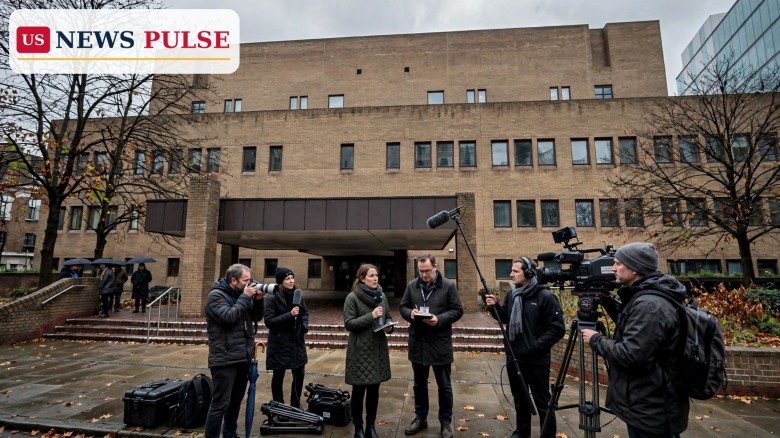
The sentencing hearing on Monday morning lasted only a short time, but it drew a large crowd of reporters and camera crews to the court on the Thames. Brand arrived from HMP Wandsworth, where he had been held since the verdicts on November 5.
Mr Justice Bennathan set out the sentence in full. The nine-year term for rape is the starting point, and the three assault terms run one after another, taking the total to 10 years and six months. Brand must serve two-thirds of that term in custody, so he will not be eligible for parole until he has served at least seven years.
Background: From Stardom to the Dock
At the height of his fame, Russell Brand was one of Britain’s best-known entertainers. He rose through stand-up comedy to MTV presenting, a BBC Radio 2 show, and Hollywood films including Forgetting Sarah Marshall and Get Him to the Greek. The offences the jury found proved date from that period, between 2004 and 2009.
The case began with a joint investigation by The Sunday Times and Channel 4’s Dispatches programme, published in September 2023. Several women came forward, and police opened a criminal investigation. Brand denied every charge.
The trial began on October 12 and lasted three weeks. The rape conviction concerned a 21-year-old fan in 2009, met after a show at the Hammersmith Apollo. The other convictions covered the groping of an MTV worker in 2004, the kissing and groping of a woman at work in 2005, and the sexual assault of another woman in 2009.
After more than eight hours of deliberation over two days, the jury found Brand guilty on four counts and acquitted him on three: two further rapes and one attempted indecent assault.
Russell Brand Sentenced: How the Judge Reached 10 Years and Six Months
The 10-year-and-six-month sentence reflects how English courts deal with multiple serious sexual offences. The judge treated the rape as the most serious offence and set a nine-year term for it. Rape carries a maximum of life imprisonment in England and Wales.
Each of the three sexual assaults was then given its own term – nine months, 18 months and eight months – ordered to run consecutively. That is why the total is longer than the rape term alone, and it is the standard approach when the offences involve different victims and occasions.
The two-thirds rule is also central to what happens next. For serious sexual offences, an offender must serve two-thirds of the term before becoming eligible for parole, and release is not automatic: the Parole Board must be satisfied that he no longer poses a risk. His name will also stay on the sex offenders’ register for life.
Reactions and Quotes
The Crown Prosecution Service said after the verdict that fame, status and the passage of time do not change the fundamental issue of consent. Prosecutors had argued that the case was not about Brand’s celebrity, but about what happened to four women who gave evidence.
The Metropolitan Police confirmed on Monday that its investigation into Brand does not end with this sentence. It is investigating two further rape allegations against him, and files have been sent to prosecutors. No charges have been brought. Brand has denied all charges, and his legal team has not yet said whether he intends to appeal.
Why It Matters
The sentencing matters well beyond the fate of one celebrity. It is a reminder that in the British justice system, the passage of time is not a defence to sexual offending, and complaints made years later can still be investigated, charged and tried. The offences here date back as far as 2004, more than two decades before the trial.
It also matters because of who Brand was. At the time of the offences, he was a rising star with a large public platform, and the judge’s words about fame and charisma spoke to how celebrity can be used to gain access to people and discourage them from complaining. The verdict shows that a public profile offers no protection in a criminal court.
What Happens Next
Brand will now begin serving his sentence, and he will not be eligible for parole until he has served at least seven years. He can seek leave to appeal to the Court of Appeal. No appeal has been announced so far.
The police investigation into two further rape allegations will continue separately. Brand’s professional life is effectively over: his broadcasting and live work had already stopped after the 2023 investigation, and a sentence of this length leaves little prospect of a return to public life.
Frequently Asked Questions
How long will Russell Brand spend in prison?
He was sentenced to 10 years and six months, and must serve two-thirds – at least seven years – before parole. Release is not automatic.
What was Russell Brand convicted of?
One count of rape and three counts of sexual assault, involving four women, for offences between 2004 and 2009. He was acquitted of two further rapes and one attempted indecent assault.
Where and when was he sentenced?
At Southwark Crown Court in London on Monday, November 9, 2026, by Mr Justice Joel Bennathan.
Has Russell Brand said he will appeal?
No appeal has been announced. He has consistently denied all the charges, and his legal team can seek leave to appeal.
Are there other allegations against him?
Yes. Police confirmed they are investigating two further rape allegations against Brand, and files have been sent to prosecutors. No charges have been brought yet.
Read more: Russell Brand convicted of rape as jury finds him guilty in London trial. Also in crime news: Federal charges reveal 521 days of abuse in Oregon basement in Kylie Arellano case.
© 2026 US News Pulse. All rights reserved.
 Print
 Save