
Trump Iran Deal Sees 'Positive Momentum' After Qatar PM White House Talks
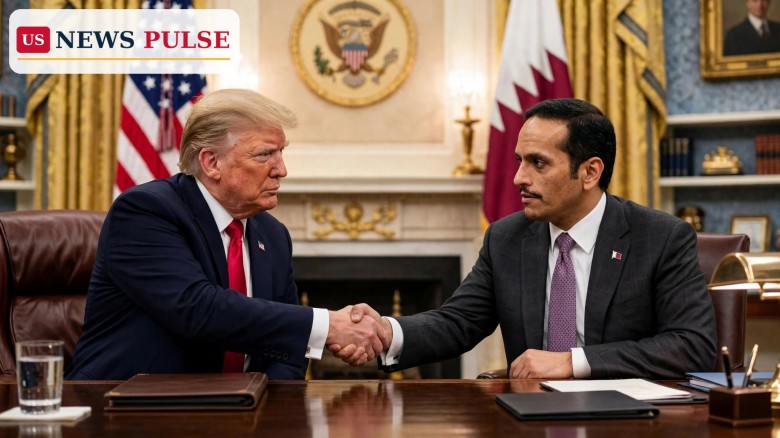
President Donald Trump said on Monday that there is "positive momentum" toward a Trump Iran deal to end the war with Iran, after a closed-door White House meeting with Qatar's Prime Minister Sheikh Mohammed bin Abdulrahman Al Thani produced no agreement but a more hopeful tone from both sides. Trump wrote on Truth Social after the talks that a resumption of American military strikes on Iran was "quite unlikely", a marked softening from weeks of threats, and the Qatari leader said the two men had held "positive discussions" about reaching a deal and bringing peace to the region.
The meeting lasted just under an hour, with Vice President JD Vance also attending. It broke from Trump's usual practice of taking questions from reporters while hosting a world leader, and the White House issued no readout. As of Monday evening, the two sides remained apart on the terms that have blocked a settlement for weeks.
Key Points
- President Donald Trump met Qatar's Prime Minister Sheikh Mohammed bin Abdulrahman Al Thani at the White House on Monday, November 9, 2026, with Vice President JD Vance also attending.
- The closed-door session lasted about 45 minutes, with no readout and no questions from reporters, breaking from Trump's usual practice.
- After the meeting, Trump said on Truth Social there was "positive momentum" toward a deal to end the US-Iran war, and that a resumption of US strikes was "quite unlikely".
- The Qatari prime minister said on X he had "positive discussions" with Trump and Vance on reaching a deal and bringing peace to the region.
- No deal emerged. The two sides remain apart on Tehran's two-day plan; Secretary of State Marco Rubio called the terms "outrageous and ridiculous" on Sunday.
What Happened
The Qatari prime minister arrived at the White House on Monday for talks centred on the war with Iran, now in its ninth month since it began on February 28, 2026. The meeting was closed to the press and ended without a joint statement, a news conference or any published account of what was discussed. The absence of a readout left the first public word to the two leaders' own social media accounts.
Trump's message came first. Writing on Truth Social after the session, he said there was "positive momentum" toward a deal to end the war, and that a resumption of US military strikes on Iran was "quite unlikely". He added that Gulf powers wanted to keep the status quo. The Qatari prime minister followed on X, saying he had held "positive discussions" with Trump and Vance on a deal and peace in the region. Neither message described any agreement, timetable or next meeting.
Background and Context
Qatar has been the main intermediary between Washington and Tehran throughout the war, carrying messages in both directions while the fighting and the American naval blockade of Iranian ports continued. Monday's meeting had been scheduled as the next step in that mediation, with the Qatari prime minister presenting Tehran's latest position in person.
Tehran's position is a two-day plan: the United States would lift its naval blockade, release seized Iranian assets and ease sanctions, and in return Iran would reopen the Strait of Hormuz, with talks on its nuclear programme to follow. Washington has rejected those terms repeatedly. Secretary of State Marco Rubio said on Sunday, before flying to Paris for a meeting of G7 foreign ministers, that the terms were "outrageous and ridiculous" and that no breakthrough was imminent.
Trump Iran Deal: What the White House Meeting Changed
The meeting changed the tone, not the terms. Trump's description of fresh strikes as "quite unlikely" was the clearest public signal yet that the White House sees the current pause holding, at least while talks continue. For a president who has repeatedly warned Tehran that American forces could return, that shift was the day's most important message.
What did not change is the gap between the two sides. Iran still wants the blockade lifted, its frozen assets released and sanctions eased before negotiations start, and it still offers the reopening of the Strait of Hormuz in return. Washington still wants a verifiable commitment that Iran will not rebuild its nuclear programme first. Until one side moves, the "positive momentum" is a mood, not a deal.
Reactions and Quotes
The Qatari prime minister's account matched Trump's in tone. Writing on X after the meeting, he said he had held "positive discussions" with Trump and Vance on reaching a deal and bringing peace to the region, a formulation that credited the talks without claiming progress on the substance.
From Tehran, the reaction was more guarded. Iranian President Masoud Pezeshkian said on Monday that Tehran was prepared to negotiate an end to the prolonged state of neither war nor peace, while insisting Iran would not surrender to coercion. Rubio said on Sunday he had no progress to report, while adding that Trump prefers a diplomatic solution but Washington would act if American forces or shipping came under threat.
Why It Matters
The meeting matters because Qatar is the only channel both sides trust to carry messages, and a face-to-face session between Trump and the Qatari prime minister is the closest the two governments have come to direct contact in weeks. If Doha can narrow the gap on the blockade and the strait, the path to formal talks opens. If it cannot, the war drifts on with no peace and a blockade in place.
It also matters for the Gulf states, which have pressed Washington to keep the pause. Trump said after the meeting that Gulf powers wanted to keep the status quo. A return to strikes would threaten shipping, energy and their security; a deal reopening the strait would ease all three.
What Happens Next
The next step is unclear, because neither side announced one. The Qatari prime minister returned to Doha with no deal in hand, and there is no public date for a further meeting or a new round of talks. Qatar has said separately that the United States and Iran are reviewing an interim deal, but the terms of that review have not been made public.
For now, the status quo holds: the blockade stays, the strait stays restricted, and both sides keep talking through Doha. Whether the "positive momentum" turns into a written agreement depends on whether either side moves first on the terms that have blocked every round.
Frequently Asked Questions
What did Trump say after meeting Qatar's prime minister?
Trump said there was "positive momentum" toward a deal to end the war, and that renewed US strikes were "quite unlikely".
Was a deal reached at the White House meeting?
No. No deal emerged, and the White House issued no readout. The two sides remain apart on Tehran's two-day plan.
What is Iran asking for?
Tehran wants the blockade lifted, seized assets released and sanctions eased, in return for reopening the Strait of Hormuz, with nuclear talks to follow.
How long has the US-Iran war been going on?
The war began on February 28, 2026; it is now in its ninth month.
Related coverage: the meeting preview, the Qatar bridge deal, and the interim deal under review.
© 2026 US News Pulse. All rights reserved.
 Print
 Save