
Trump Says Iran War Is 'Effectively Over' After Qatar Talks, Blockade Stays
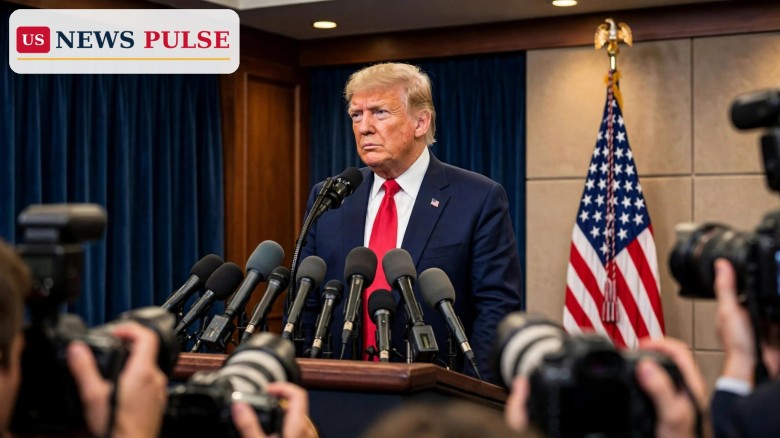
President Donald Trump declared on Monday, November 9, 2026, that the war with Iran is "effectively over" in military terms, while making clear the United States will keep its naval blockade of Iranian ports and remains ready to strike again if talks fail. The Trump Iran war effectively over remark, made in a surprise White House briefing room appearance, was his most definitive statement yet that the fighting phase of the nine-month conflict has ended — while refusing to promise the guns will stay silent.
"Iran, militarily, is effectively over. We're just keeping it the status quo," Trump said, adding that the arrangement was "really at the behest of countries that are their neighbours." He spoke hours after a closed-door White House meeting of about 45 minutes with Qatar's Prime Minister, Sheikh Mohammed bin Abdulrahman Al Thani, attended by Vice President JD Vance. Trump paired the declaration with a warning: "I don't guarantee anything. But if we do have to go back in, we are locked and loaded and ready to go."
Key Points
- President Donald Trump said on Monday, November 9, 2026, that Iran is "militarily, effectively over" and the United States is "just keeping it the status quo."
- The remarks followed a roughly 45-minute closed-door White House meeting with Qatar's Prime Minister Sheikh Mohammed bin Abdulrahman Al Thani, attended by Vice President JD Vance.
- Trump said Iran has been "decapitated" but still wants a long-term deal to defang its nuclear programme, calling a nuclear-armed Iran "non-negotiable."
- The "status quo" means the US naval blockade continues, alongside the newly announced Task Force Iron Gate cutting off trade by land and through the Caspian Sea.
What Happened
Trump's briefing room appearance was unannounced. He walked in on Monday evening after the Qatar meeting and laid out his reading of the conflict: the fighting is done, the pressure stays. The session lasted only minutes, but it produced the clearest White House framing yet of where the war stands.
Trump said Iran has been "decapitated," pointing to the damage nine months of American strikes inflicted on its military and nuclear infrastructure. He added that he still wants a long-term solution to defang Iran's nuclear programme — the administration's central demand since the war began. He called the continuing blockade "the greatest naval blockade in the history of our country," now supplemented by Task Force Iron Gate, cutting off trade by land and through the Caspian Sea.
No deal emerged from the Qatar meeting, and the White House issued no formal readout. What Trump offered was a status report: talks are moving, the military phase is over in his view, and the pressure campaign will continue until a durable agreement is signed.
Background: Nine Months of War
The United States and Iran have been at war since February 28, 2026, a conflict that has swung between bombardment and fitful diplomacy. In recent weeks the tempo has shifted toward talks: Vice President JD Vance said on November 2 that Washington had made "progress" with Tehran, and Trump told CNN that fresh strikes were "highly unlikely" if talks advanced. Oil fell about 4 percent on Monday, with Brent crude settling at $92.57 a barrel, far below the $112 level seen at the start of the month.
Qatar has been the central mediator, carrying proposals between the two sides, including a 48-hour "bridge deal" trading blockade relief for inspections of Iran's bombed nuclear sites. Tehran countered with its own two-day plan, demanding Washington first halt hostilities and lift the blockade. Secretary of State Marco Rubio called some of Iran's conditions "outrageous and ridiculous."
Trump Says the Iran War Is 'Effectively Over'
The phrase "effectively over" is doing a lot of work. Trump announced no ceasefire, signed no agreement, and did not say the blockade would end. He declared the military phase finished while keeping every lever of pressure in place — claiming victory at home while preserving the threat of renewed strikes as leverage.
It is also a message to the Gulf states pressing for an end to the fighting. Trump said the status quo continues "at the behest of countries that are their neighbours," framing the blockade as the preference of Qatar, Saudi Arabia, the UAE, Bahrain and Kuwait. The remarks came the same day Trump spoke of "positive momentum" toward a deal — each step carrying the same caveat that the United States will return to force if diplomacy fails.
Reactions: Tehran Dismisses the Remarks
Iranian officials dismissed Trump's comments. Mohsen Rezaei, secretary of Iran's Supreme National Security Council, wrote on social media: "STOP manufacturing FAKE NEWS about imaginary talks." President Masoud Pezeshkian struck a different tone, saying Supreme Leader Mojtaba Khamenei had called for an end to the situation of "neither war nor peace" and that Iran was open to further negotiations — but "will not surrender to force and bullying." The split reflects the tension inside Tehran: leaders who want the blockade and sanctions lifted, but not at the price of accepting American terms.
Why It Matters
If Trump's assessment holds, it marks a turning point in the longest American military engagement in the Middle East since the war in Afghanistan. The stakes are tangible: the war has kept oil prices volatile for nine months, with Brent crude swinging from above $112 at the start of November to $92.57 by Monday's close as hopes of a deal grew. A durable end to the fighting would ease upward pressure on energy costs; a collapse of talks could send prices sharply higher again. Politically, Trump spoke days after Democrats swept both chambers of Congress in the November 3 midterms.
What Happens Next
The test now is whether the diplomacy produces anything concrete. Qatari mediators returned to Doha on Monday evening, and Tehran has said it could restart talks within two days if its conditions are met. Watch for three things: whether Iran responds to the phased plan to reopen the Strait of Hormuz; whether the IAEA gains access to Iran's bombed nuclear sites; and whether Trump's "locked and loaded" warning is tested. For now, the war sits in the space Pezeshkian described: neither war nor peace.
Frequently Asked Questions
Did Trump say the Iran war is over? He said Iran is "militarily, effectively over" — but announced no ceasefire or peace deal, and refused to guarantee the fighting would not resume.
Is the US naval blockade of Iran still in place? Yes. Trump called it "the greatest naval blockade in the history of our country," now supplemented by Task Force Iron Gate, targeting trade by land and through the Caspian Sea.
What did Qatar's prime minister discuss with Trump? Sheikh Mohammed bin Abdulrahman Al Thani met Trump behind closed doors for about 45 minutes on Monday, November 9, 2026, with Vice President JD Vance attending. Qatar is the chief mediator.
How did Iran respond? Mohsen Rezaei dismissed the remarks as "FAKE NEWS about imaginary talks," while President Masoud Pezeshkian said Iran is open to talks but "will not surrender to force and bullying."
Read more: Trump Iran Deal Sees 'Positive Momentum' After Qatar PM White House Talks — Qatar's 48-Hour 'Bridge Deal' Trades Blockade Relief for Hormuz Reopening
© 2026 US News Pulse. All rights reserved.
 Print
 Save