
Dow Jumps 1,104 Points as S&P 500 Has Best Day Since April on Iran Talks
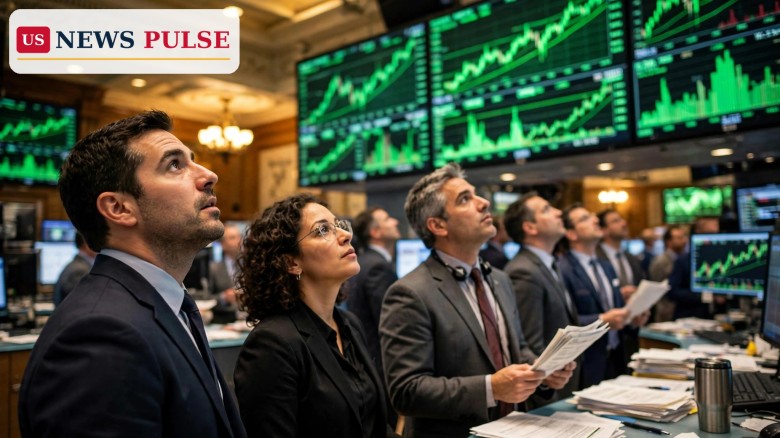
Wall Street roared back on Monday, November 9, 2026, as the Dow Jones Industrial Average jumped 1,104 points and the S&P 500 posted its best day since April. Easing fears of fresh United States strikes on Iran and a rebound in artificial intelligence stocks lifted the market after a bruising week.
The Dow rallied 1,104.02 points, or 2.2 per cent, to close at 52,389.75, recovering last week’s losses and climbing back above its Election Day close. The S&P 500 rose 173.08 points, or about 2.3 per cent, to 7,549.94, its strongest session since April 8, while the Nasdaq Composite climbed 673.71 points, or 2.7 per cent, to 25,253.14.
Key Points
- The Dow Jones gained 1,104.02 points, or 2.2 per cent, to close at 52,389.75 on Monday, November 9, 2026.
- The S&P 500 rose 173.08 points, or about 2.3 per cent, to 7,549.94, its best day since April 8 and its second straight gain.
- The Nasdaq Composite climbed 673.71 points, or 2.7 per cent, to 25,253.14 as artificial intelligence stocks rebounded.
- Brent crude fell about 5.8 per cent to $92.57 a barrel, down from above $112 at the start of November; West Texas Intermediate fell 4.4 per cent to $86.85.
- The rally followed President Donald Trump telling CNN on Sunday that fresh strikes on Iran were “highly unlikely” while talks make progress.
What Happened
Monday’s rally was broad. All three major American stock indexes rose more than 2 per cent in a single session, erasing much of the damage from the previous week. The S&P 500’s 2.3 per cent gain was its best day in seven months, and the index has now risen for two straight sessions.
The move was striking because it came as one of the market’s biggest names fell sharply. Nvidia shares dropped more than 4 per cent, wiping about $192 billion from the chipmaker’s value as the FBI probes its chief executive’s reported links to an alleged Chinese spy. The wider market surged anyway, driven by relief over Iran and bargain hunting in other technology shares. Oil told the other half of the story: Brent fell 5.8 per cent to $92.57 a barrel as traders priced in a lower risk of a wider war.
Background: A Month of Wild Swings
The rally caps a volatile stretch that began with the midterm elections on November 3. The day after Democrats swept back into control of both chambers of Congress, the Dow surged 1,569.40 points, its biggest post-midterm gain since 1982, closing at 53,356.12. That rally faded within days as investors worried the new Democratic majorities could slow spending on artificial intelligence data centres, a fear that hit chip stocks hardest.
Oil has swung even more violently. Brent rebounded to about $106.57 a barrel on November 3 after American strikes on Iran’s Qeshm Island, then slid below $98 by the end of last week as Gulf producers cut prices. The backdrop is the United States-Iran war, now in its ninth month: every hint of escalation has pushed oil higher and stocks lower, while every sign of diplomacy has done the opposite.
Dow Jumps 1,104 Points: What Drove the Rally
The immediate trigger was President Trump’s Sunday interview with CNN, in which he said fresh strikes on Iran were “highly unlikely” as negotiations progress. Vice President JD Vance said the same day that Washington had made progress in talks with Tehran and that no deadline had been set for a deal, a signal that the White House is giving diplomacy time to work.
The second driver was technology. Artificial intelligence-linked chip stocks, battered last week by worries that Democratic midterm wins could slow data-centre spending, bounced back sharply as buyers returned, lifting the Nasdaq 2.7 per cent. Cheaper oil added a third tailwind: Brent at $92.57, down from more than $112 nine days earlier, eases costs for airlines, truckers and manufacturers, takes pressure off petrol prices, and cools inflation, giving the Federal Reserve more room to keep interest rates steady.
Reactions
President Trump’s message to CNN on Sunday set the tone for the week. Asked about renewed strikes, he said they were “highly unlikely” while talks with Iran continue, a marked change from the language of recent weeks. His remarks followed Vice President Vance’s assessment that Washington had made progress in the negotiations and felt “pretty good” about the prospects for a settlement. Traders took the comments as a green light.
Why It Matters
Monday’s rally matters for more than the daily scoreboard. The S&P 500 is the benchmark for most American retirement accounts, and a 2.3 per cent gain in a single day adds real value to pension funds and 401(k) plans that had been sliding for a week. The Dow’s return above its Election Day close also steadies nerves after a midterm result that left investors unsure how Washington would govern.
Cheaper oil matters too. Brent below $93 a barrel, after trading above $112 at the start of the month, is good news for drivers and fuel-hungry businesses, and it removes one of the biggest threats to the inflation outlook as the holiday shopping season begins.
What Happens Next
Investors will get a fresh read on inflation on Tuesday morning, when the October consumer price index is released at 8:30 a.m. Eastern time. A cooler-than-expected reading would reinforce Monday’s rally; a hot one could quickly reverse it by reviving fears that the Federal Reserve may need to raise rates again.
The Iran talks remain the wild card. No deadline has been set for a deal, and the White House has said military options stay on the table if negotiations fail. Nvidia reports quarterly earnings on November 17, the next big test for the AI trade.
Frequently Asked Questions
Why did stocks rise so sharply on Monday?
Investors were encouraged by signs of progress in United States-Iran talks, with President Trump saying fresh strikes were “highly unlikely”, and by a rebound in artificial intelligence stocks.
How much did the Dow, S&P 500 and Nasdaq rise?
The Dow gained 1,104.02 points, or 2.2 per cent, to 52,389.75. The S&P 500 rose 173.08 points, or about 2.3 per cent, to 7,549.94. The Nasdaq climbed 673.71 points, or 2.7 per cent, to 25,253.14.
Why did oil prices fall?
Brent crude fell about 5.8 per cent to $92.57 a barrel as easing fears of a wider war reduced the risk premium on Gulf oil supplies, after trading above $112 at the start of November.
What did President Trump say about Iran?
Speaking to CNN on Sunday, President Trump said fresh strikes on Iran were “highly unlikely” while negotiations continue, and Vice President JD Vance said Washington had made progress in the talks.
Is the stock market back at record highs?
Not yet. The S&P 500 is 3.4 per cent below its all-time high, and the Dow is below its November 4 close of 53,356.12.
Related reading: Brent crude drops below $98 as Gulf producers slash prices after Iran talks; Nvidia shares plunge 4.3%, wiping $192 billion, as FBI probes Huang spy claims; Dow jumps 1,569 points in best post-midterm rally since 1982 as oil drops.
© 2026 US News Pulse. All rights reserved.
 Print
 Save