
Boeing to Cut 5% of Commercial Airplane Workforce, About 2,500 Jobs, as 737 MAX Ramp Slows
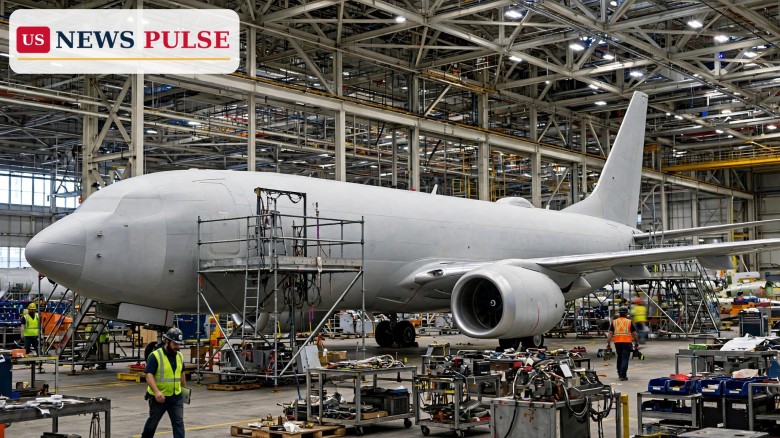
Boeing will cut about 5% of the workforce at its commercial airplane division, roughly 2,500 jobs, as the company slows the ramp-up of 737 MAX production, division chief Stephanie Pope told employees in an internal memo on Monday, November 9, 2026. The Boeing job cuts, the first at the planemaker since chief executive Kelly Ortberg eliminated 17,000 positions in 2024, will come through a mix of attrition and involuntary layoffs, with notices going out from December. Pope said the slower pace was needed to give factories and suppliers more time to stabilise, leaving the division overstaffed at current output. Boeing shares slipped about 1% on Monday after the news.
Key Points
- Boeing Commercial Airplanes will cut about 5% of its workforce, roughly 2,500 of the division's 50,494 employees.
- The cuts come through attrition and involuntary layoffs, with notices from December and 60 days' notice required in many US states.
- Division chief Stephanie Pope told staff the slower ramp-up will give factories and supply chain partners more time to achieve stability.
- The 737 MAX rate of 47 a month is now expected in early 2027, with the rise to 52 a month pushed to the second half of 2027.
- These are Boeing's first job cuts since CEO Kelly Ortberg eliminated 17,000 positions in 2024; shares slipped about 1% on Monday.
What Happened
Stephanie Pope, who leads Boeing Commercial Airplanes, informed employees of the cuts in an internal memo on Monday, November 9, 2026. The division employed 50,494 people at the end of December 2025, so a 5% reduction amounts to roughly 2,500 jobs, through a combination of natural attrition and involuntary layoffs rather than a single round of dismissals.
Notices will begin going out from December, and in many US states workers must receive 60 days' notice before a layoff takes effect, so departures will be spread over the coming months. Boeing has not said which sites or job categories will be hit hardest, and it has not disclosed any severance terms. The division builds the 737 MAX at Renton and the 777 and 787 widebody jets at Everett and Charleston, and its factories in Washington state employ the largest share of its workforce. Boeing shares slipped about 1% on Monday, a muted reaction that reflected how widely the slower ramp had already been signalled.
Background and Context
Boeing has spent the past two years rebuilding its commercial airplane business after a series of production and quality setbacks. Ortberg, who became chief executive in August 2024, moved quickly to cut costs, eliminating about 17,000 positions across the company that year to stabilise the business and preserve cash.
The 737 MAX is the centre of that recovery. It is Boeing's best-selling aircraft and the main source of cash for the commercial division, but the company has struggled to raise output at the pace it once promised. Suppliers have battled parts shortages and quality problems, and Boeing has had to slow lines to fix defects and tighten inspections after regulators increased scrutiny of its factories. Last month Ortberg told analysts Boeing would miss its 737 production and delivery targets for 2026. The plan had been to reach 47 MAX jets a month this year; that milestone is now expected in early 2027, and the next step, to 52 a month, has been pushed to the second half of 2027.
Boeing Job Cuts: What the Memo Means for Workers
Pope's message framed the cuts as a consequence of the slower ramp rather than a broader retreat. She said the slower pace was intended to "provide our factories and supply chain partners additional time to achieve stability" — a recognition that the production system is not yet ready to support the workforce Boeing built for a faster climb.
For workers, the effect is a phased reduction rather than an immediate one. Attrition will account for part of the total as people retire or leave voluntarily, and the involuntary layoffs will follow the notice rules in each state. In Washington, where most of the commercial division's workforce is based, the company must give 60 days' notice for mass layoffs, so employees should learn their fate in December and leave in the early months of 2027.
Reactions and Quotes
Pope's memo was the company's only public statement on the decision. She told employees the slower ramp-up would give factories and suppliers "additional time to achieve stability", and that the lower output left the division overstaffed. Boeing did not hold a press conference or publish a separate statement, and the company has not commented further on which roles will be affected.
Investors reacted calmly. Boeing shares slipped about 1% on Monday, a modest move that suggested the market had already priced in the slower production outlook after Ortberg's warning to analysts last month.
Why It Matters
The decision matters beyond Boeing's own payroll. The commercial airplane division is one of the largest manufacturing employers in the United States, and its production rate ripples through thousands of suppliers across the country. A slower ramp means fewer orders for parts makers, fewer deliveries for airlines, and a longer wait for the cash Boeing needs to pay down debt and fund new programmes. It also helps Airbus, which has been steadily raising output of its A320 family while Boeing stays below its planned rate.
What Happens Next
Layoff notices will start going out from December, with the 60-day notice period in many states pushing the first departures into early 2027. Boeing will also have to report the scale of the cuts in its regulatory filings and to state workforce agencies, which will give a clearer picture of which sites are affected.
The next test is the production rate itself. If Boeing reaches 47 MAX jets a month in early 2027 as now planned, and holds that rate steadily, the cuts will look like a one-off adjustment. If the rate slips again, more pressure will fall on the division and its workforce.
Frequently Asked Questions
How many jobs is Boeing cutting?
About 5% of the commercial airplane division's workforce, roughly 2,500 of its 50,494 employees.
When will the layoffs happen?
Notices go out from December 2026, with 60 days' notice required in many US states, so departures will be spread into early 2027.
Why is Boeing cutting jobs now?
Because 737 MAX production is ramping up more slowly than planned, leaving the division overstaffed for its current output.
When will 737 MAX production reach 47 a month?
Boeing now expects that rate in early 2027, with the rise to 52 a month pushed to the second half of 2027.
Are these Boeing's first job cuts under Kelly Ortberg?
No — Ortberg eliminated about 17,000 positions across the company in 2024, but these are the first cuts since then.
Related: Boeing's commercial division was already under pressure — our report on Boeing's third-quarter loss, as its jet division lost $697 million — and regulators have been tightening oversight of its factories — our story on the FAA ordering fuel-tank sealant checks on 60 Boeing 787s and 31 747s.
© 2026 US News Pulse. All rights reserved.
 Print
 Save