
Musk Expected to Join Trump at APEC Summit as Huang's Trip Falls Into Doubt
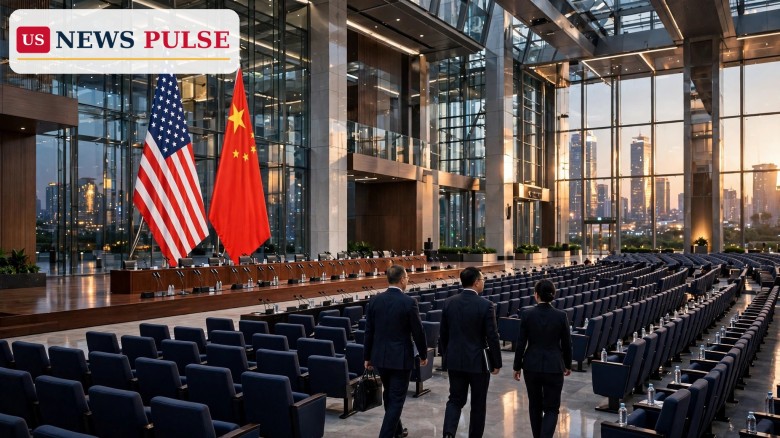
Elon Musk is expected to travel to China with President Donald Trump for next week's APEC summit, while Nvidia chief Jensen Huang's place on the trip has fallen into doubt amid the controversy that prompted Nvidia's board to open an independent investigation into whether he was the target of a foreign intelligence operation. The shake-up, reported by the South China Morning Post on Tuesday, sets up a contrast in Shenzhen: one Silicon Valley titan welcomed aboard, another waiting to learn if he can come.
The summit is set for November 18-19 in Shenzhen. Trump is expected to meet Chinese President Xi Jinping there for the third time this year, and a rare three-way meeting with Xi and Russian President Vladimir Putin is also reported likely.
Key Points
- Top US business leaders, including Tesla chief Elon Musk, are expected to join President Donald Trump's delegation to the APEC summit in Shenzhen on November 18-19, the South China Morning Post reported.
- Nvidia chief Jensen Huang's attendance is now in doubt, the report said, after he had been in talks to join, amid the probe into whether he was the target of a foreign intelligence operation.
- Trump said Sunday, asked whether he would take Huang: "I don't know, but I'd certainly take him," adding he would check with intelligence officials.
- Huang's presence had been especially important for Nvidia, which has struggled to win permission to sell its H200 AI chips in China.
- Musk's expected presence comes after Tesla and SpaceX lost $456 billion in two days after the Democrats' midterm sweep, as Democrats plan probes of Musk and chief of staff Stephen Miller.
What Happened
The South China Morning Post reported on Tuesday that Musk is expected to be part of the US delegation travelling to China for next week's APEC summit. The report, cited by Reuters, said top American business leaders would accompany Trump, with Musk among them, while Huang's participation is uncertain though he had been in talks.
The doubt over Huang stems from a controversy that erupted in recent days. Nvidia's board launched an independent investigation on Sunday into whether Huang was the target of a foreign intelligence operation, after a report alleged his close relationship with a Chinese businesswoman who passed information to Beijing.
The allegation concerns a contact in Huang's orbit, not an accusation against Huang. Tesla, Mastercard, Nvidia and the White House did not immediately respond to Reuters' requests for comment.
Background and Context
Huang has been one of Trump's closest allies in Silicon Valley, advising the president on artificial intelligence policy and joining the chief executives who accompanied Trump to China in May. That delegation, including Mastercard chief Michael Miebach as well as Musk and Huang, focused on resolving business issues with China.
The stakes for Nvidia are unusually high: the company has struggled to obtain permission to sell its H200 AI chips in China, one of the world's largest markets for AI hardware, and Huang's seat would have given it a direct channel to the leaders deciding whether they can go ahead. Top House Republicans have demanded Huang brief Congress in a closed session on November 18 — the same day the summit opens — over the reported Chinese spy case.
Musk, Huang and the APEC Summit Delegation
Musk's expected presence carries weight. The Tesla and SpaceX chief has been a central figure in Trump's orbit, and his companies sit at the intersection of the US-China agenda: electric vehicles, space launch, artificial intelligence and the supply chains that connect them.
His attendance would also come at a sensitive moment at home: Tesla and SpaceX lost $456 billion in two days after the Democrats' midterm sweep, and Democrats plan investigations into Musk and White House chief of staff Stephen Miller once they take control of congressional committees in January.
Reactions and Quotes
Trump's remarks on Sunday were the clearest public signal yet about Huang's status. "I don't know, but I'd certainly take him," he said when asked whether Huang would join the Asia trip. The president has repeatedly defended the Nvidia chief, telling reporters he had "a lot of respect for Jensen" and calling him a "great, brilliant person," promising to "check it out very closely."
Nvidia has pushed back firmly on any suggestion Huang shared sensitive information, saying he meets thousands of customer executives every year and that Asian cloud customers receive only ordinary business information. The board's investigation is examining whether Huang himself was the target of a foreign intelligence operation — a framing that would cast him as a potential victim rather than a participant.
Why It Matters
The APEC summit is where the US-China relationship is negotiated in person, and the business delegation is where much of the bargaining happens. For Nvidia, the H200 question alone is worth billions. For Tesla, which builds cars in Shanghai, the trip is a chance to protect a market central to its future.
The Huang question matters for a different reason. If the chief executive of America's most valuable chip company cannot travel with the president over an unresolved intelligence controversy, it signals how quickly national security concerns can override commercial diplomacy — even for a man the president has publicly defended.
What Happens Next
The White House is expected to confirm the final delegation in the coming days, ahead of the summit opening November 18. All eyes will be on whether Huang's name appears on the list, and whether the intelligence check Trump promised produces a clear answer before the plane leaves.
At the summit, Trump is expected to meet Xi bilaterally for the third time this year, and a three-way meeting with Putin is also reported likely. Huang's closed-session briefing before Congress, demanded for November 18, will run alongside the summit opening.
Frequently Asked Questions
Is Elon Musk going to the APEC summit in China? Top US business leaders including Musk are expected to join President Donald Trump's delegation for the APEC summit in Shenzhen on November 18-19, the South China Morning Post reported Tuesday.
Why is Jensen Huang's attendance in doubt? Huang had been in talks to join, but his participation is now uncertain amid the controversy that prompted Nvidia's board to investigate whether he was the target of a foreign intelligence operation.
What did Trump say about taking Huang on the trip? Asked Sunday whether he would take Huang, Trump said: "I don't know, but I'd certainly take him," adding that he would check with intelligence officials.
When and where is the APEC summit? The APEC summit is set for November 18-19, 2026, in Shenzhen. Trump is expected to meet Chinese President Xi Jinping there for the third time this year.
Why does Huang's attendance matter for Nvidia? His presence had mattered because Nvidia has struggled to win regulatory permission to sell its powerful H200 AI chips in China.
Read more: Trump says he will likely meet Xi and Putin in rare three-way summit at APEC in Shenzhen next week; Nvidia CEO Jensen Huang asked to brief Congress on Nov 18 over China spy claims; Tesla and SpaceX lose $456 billion in two days after Democrats' midterm sweep.
© 2026 US News Pulse. All rights reserved.
 Print
 Save