
US Skips UN Human Rights Review for Second Year as Rights Groups Cry Foul
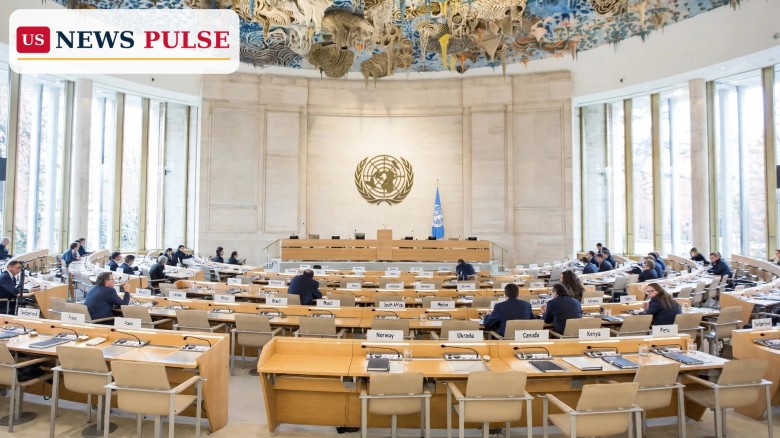
The United States will stay away from its own human rights examination at the United Nations on Tuesday, skipping the UN human rights review in Geneva for the second year in a row. The decision has drawn swift condemnation from rights advocates, who say the world's most powerful democracy is refusing to answer for its own record. The review, scheduled for November 10, 2026, was meant to put the human rights record of President Donald Trump's administration under the microscope, with other governments free to question American policies from migration to the death penalty.
Key Points
- The United States will skip its Universal Periodic Review at the UN Human Rights Council in Geneva on Tuesday, November 10, 2026 — the second straight year it has stayed away.
- Washington disengaged from the council last year, citing anti-Israel bias; the State Department calls it an “irredeemable body” that “makes a mockery of human rights.”
- With the US absent, the review is likely to be postponed until January, according to a draft UN document and diplomats.
- Governments had planned to raise abortion and the death penalty, and nearly 200 submissions from US and international groups covered migration and racial discrimination.
- The ACLU's Jamil Dakwar said attacks on civil liberties have reached levels unseen in generations.
What Happened
The United States was due to face its Universal Periodic Review, known as the UPR, in Geneva on Tuesday. Instead, Washington will not be in the room — the second consecutive year it has skipped its own examination, a process even governments accused of grave abuses observe. The absence is expected to force a postponement until January, according to a draft UN document and diplomats.
Fourteen countries are due to take part in the Geneva review process this month, and the American session was among the most closely watched. Governments had prepared questions on abortion, the death penalty, migration and racial discrimination, and nearly 200 submissions from American and international groups covered migrant treatment, voting rights and policing. With no US delegation present, that scrutiny will have to wait.
The State Department was plain: taking part would imply endorsing the council, a spokesperson said, calling it “irredeemable” and saying it “makes a mockery of human rights.”
Background and Context
The Universal Periodic Review is the Human Rights Council's flagship process. Every UN member state is examined on its human rights record roughly once every four to five years, where other governments ask questions and make recommendations. The process was designed to be universal: no country is exempt.
That universality is what makes the American absence so striking. In President Trump's first term, the United States submitted its UPR report and took part. The break came when Washington disengaged from the council, arguing it singles out Israel and gives a platform to governments with poor records of their own. Critics note the council has always included states accused of abuses — and staying away changes none of its conclusions.
The UN Human Rights Review: How the Process Works
The UN human rights review is not a court and cannot impose penalties. It works through publicity and peer pressure. Ahead of each session, the country under review submits a national report, the UN compiles information from treaty bodies and experts, and civil society groups file their own submissions. Other governments then question the delegation for about three and a half hours, and the council issues recommendations the country can accept or note.
For the United States, that process produced a detailed dossier: nearly 200 submissions covering migration, racial discrimination, abortion access, the death penalty and the treatment of protesters. When a country fails to appear, the council has limited options — diplomats say the most likely outcome is a postponement until January.
Reactions and Quotes
Rights groups were blunt. Jamil Dakwar of the American Civil Liberties Union told reporters in Geneva: “We've seen attacks on fundamental human rights and civil liberties unprecedented in generations.” The ACLU was among the groups that filed submissions, whose representatives had travelled to Geneva expecting answers.
Campaigners now want the scrutiny to go ahead even without Washington. Noor Abdalla, wife of pro-Palestinian activist Mahmoud Khalil, is among those urging UN human rights chief Volker Turk to hold a briefing on the US situation despite the absence — so the issues are heard even if the government under review refuses to attend.
The State Department showed no sign of reconsidering. Its description of the council as an “irredeemable body” reflects a position held since Washington disengaged last year: that taking part would lend legitimacy to a body it regards as biased, particularly against Israel.
Why It Matters
The United States has long presented itself as a champion of human rights abroad, raising rivals' records, such as China's and Russia's. Skipping its own review undercuts that position: when Washington refuses the scrutiny it demands of others, its criticism carries less weight and its adversaries gain an easy rebuttal.
The decision also weakens the review itself. The UPR works only because participation is treated as universal. If the world's most powerful country can stay away, others under pressure may conclude they can too — and the process loses authority.
What Happens Next
The immediate question is the new date. According to the draft UN document and diplomats, the review is likely to be postponed until January, when the council will try again to schedule the American session. Whether Washington attends then is open: nothing suggests a change of position. In the meantime, campaigners will press Volker Turk to hold a briefing on the United States, and the fourteen other countries due for review this month will proceed as planned — with the American chair left empty.
Frequently Asked Questions
What is the Universal Periodic Review?
The UN Human Rights Council's peer-review process, in which every member state has its human rights record examined by other governments roughly once every four to five years. Countries report, civil society files submissions, and the council issues recommendations.
Why did the United States skip its review?
Washington disengaged from the Human Rights Council last year, citing anti-Israel bias. A State Department spokesperson said taking part would imply endorsement of the council, calling it an “irredeemable body” that “makes a mockery of human rights.”
Has the United States skipped its review before?
Yes — this is the second year in a row. In President Trump's first term, by contrast, the United States submitted its UPR report and took part in the review.
What happens to the review now?
Diplomats say it is likely to be postponed until January. Campaigners are also asking UN human rights chief Volker Turk to hold a briefing on the United States in Washington's absence.
Does the review have any enforcement power?
No. The UPR cannot impose penalties. It works through publicity and peer pressure: governments question each other in public, and recommendations carry political and moral weight, though not legally binding.
Related coverage: the United Nations ended its Western Sahara peacekeeping mission after 35 years — read our report on the MINURSO mandate lapse after a Security Council deadlock. See also NATO's deep-strike plan and the Qatar mediation effort as Iran talks shift to Doha.
© 2026 US News Pulse. All rights reserved.
 Print
 Save