
Google Launches TPU 8tx and TPU 8i Max AI Chips in Direct Nvidia Challenge
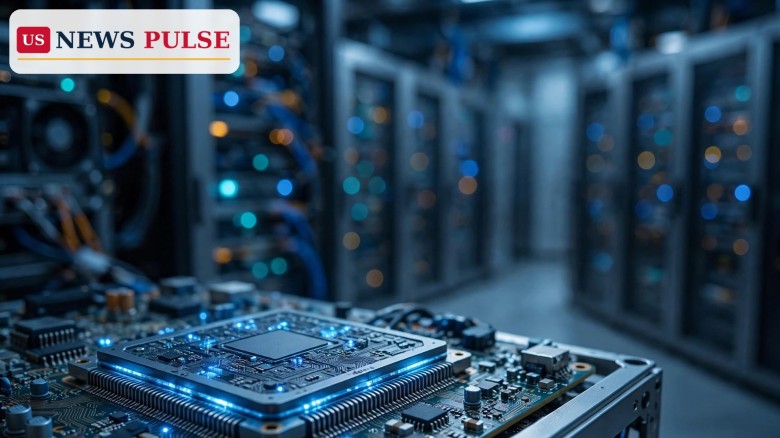
Google has unveiled two new artificial intelligence chip systems, the TPU 8tx and the TPU 8i Max, completing a four-system eighth-generation lineup in a single year — a first for the company and its most direct challenge yet to Nvidia's dominance of the AI hardware market.
Announced on Monday, November 9, 2026, they target the two problems now shaping enterprise AI: keeping sensitive data safe while autonomous agents work with it, and giving agents enough memory to reason across huge codebases and hours of video. Google gave no prices or dates; Bloomberg reported both are due in 2027.
Key Points
- Google's eighth-generation TPU family now has four systems — 8t, 8i, 8tx and 8i Max — launched in a single year for the first time.
- TPU 8tx is built for secure, confidential inference, protecting data and model weights in hardware while in active use.
- TPU 8i Max packs two TPU 8i chips into one package, doubling compute, SRAM and memory bandwidth for massive context windows.
- TPUs now serve nearly 100 customers, including frontier AI labs, trading firms, retailers and universities.
- No prices or dates were announced; Bloomberg reported both systems are due in 2027.
What Happened
Google announced the two systems on its official blog on Monday, saying it had expanded its eighth-generation TPU portfolio with the TPU 8tx and TPU 8i Max, "marking four new TPU systems in a single year." The company added: "This is the first time we have introduced four TPU systems in a single year."
The TPU 8t for large-scale training and the TPU 8i for real-time reasoning were introduced at Google Cloud Next in April 2026. The new systems are specialised configurations of that silicon, built for a shift Google describes as moving from human-scale computing to agent-scale computing.
TPU 8tx is aimed at banks, governments and other regulated customers running frontier models and agents on private data. TPU 8i Max targets workloads where memory is the bottleneck — teams of agents working across an entire codebase or hours of video at once.
Background: From Google's Basement to Nearly 100 Customers
Google designed its first Tensor Processing Unit more than a decade ago for its own needs, including voice recognition and translation. Eight generations later, TPUs train and serve the company's Gemini models, power agentic workloads, and serve Google Cloud customers — and customers can now deploy TPUs directly into their own data centres.
The eighth generation began at Google Cloud Next in April 2026 with the TPU 8t for training and the TPU 8i for reasoning. Google said the pair offer up to 2.7 times better training performance and 80 percent better inference price performance than the previous generation.
Demand has grown fast. Google said TPUs are "now a rapidly growing business with nearly 100 customers — including frontier labs, trading firms, retailers, universities, and more." In October, The Information reported that OpenAI plans to buy Google's AI chips. Read our earlier report on OpenAI's plan to buy Google AI chips.
TPU 8tx: Security Built Into the Silicon
Normally, data is encrypted when stored or sent over a network, but it must be unlocked in memory while a computer processes it. TPU 8tx closes that gap by building security into the hardware layer, keeping sensitive data and model weights protected and isolated even while in active use.
Built on the same silicon as the TPU 8t and paired with fifth-generation AMD EPYC host CPUs, it uses the low-latency Boardfly network Google created for real-time reasoning, delivering up to twice lower latency than the TPU 8t with what Google calls "a near-zero performance penalty." It also lets organisations fine-tune models on private data, distil large models into smaller ones and train agents through reinforcement learning on one system, without moving sensitive data between clusters.
TPU 8i Max: Twice the Silicon for Giant Contexts
TPU 8i Max attacks a different problem: the memory wall. When dozens of AI agents work together across a codebase or hours of video, memory bandwidth becomes the bottleneck and processors stall waiting for data.
Google's answer was to combine two low-latency TPU 8i chips onto a single package, doubling compute, on-chip SRAM and HBM memory bandwidth — up to 17.2 terabytes per second, 768 megabytes of SRAM and 384 gigabytes of HBM, according to Network World and TechTarget. Because it fits twice the silicon in the existing rack footprint, data centres get far more computing power per square foot and per watt.
Reactions: Google's Software Push and the Nvidia Question
Google paired the hardware with a broad software push, including the open-source TPU Sync model-state layer, an Agent Compute Engine that suspends idle agent sessions to cut costs, and Cloud Pathways on Google Kubernetes Engine.
Coverage framed the launch as Google stepping up its rivalry with Nvidia, whose processors still power most large AI training runs. The timing added edge: the announcement came days after Nvidia's chief executive became embroiled in an FBI spy-affair probe, a distraction for the market leader just as Google pressed its case.
Why It Matters
The AI chip race is no longer only about raw speed. As agents move into production, buyers want hardware that can keep secrets and hardware that can hold enormous amounts of context. Google's two new systems each answer one demand, giving the company a purpose-built accelerator for every stage of the agentic lifecycle — training on the 8t, reasoning on the 8i, confidential work on the 8tx and giant contexts on the 8i Max.
For Google Cloud the stakes are commercial too. Every TPU sold outside is revenue that once went to Nvidia. The spending behind the contest is enormous — Meta alone recently raised $95 billion for AI, as we reported in our coverage of a $198 billion day of AI spending.
What Happens Next
Google has not said when the TPU 8tx and TPU 8i Max will reach customers or what they will cost; Bloomberg's reporting points to 2027. Pricing and availability details should emerge at Google Cloud events in the coming months, along with customer announcements — the first named deployments will be the clearest test of whether the new systems win work from Nvidia's installed base. Benchmarks on the InferenceX and AgentX tests Google cited will also be watched.
FAQ
What is the Google TPU 8tx?
Google's third eighth-generation TPU system, built for secure and confidential inference. It protects sensitive data and model weights in hardware while they are in active use, and is aimed at banks, governments and other regulated customers.
What is the TPU 8i Max?
Google's fourth eighth-generation system. It combines two TPU 8i chips in a single package, doubling compute, SRAM and HBM memory bandwidth for AI agents working across huge codebases or hours of video.
When will the new TPUs be available?
Google gave no prices or dates. Bloomberg reported that both the TPU 8tx and the TPU 8i Max are due in 2027.
How do the new chips compare with Nvidia's?
Google positions them as specialised alternatives to Nvidia's GPUs — the 8tx on security, the 8i Max on memory bandwidth and compute density. Independent benchmarks have not yet been published.
© 2026 US News Pulse. All rights reserved.
 Print
 Save