
Fossil Fuel Emissions Set to Fall in 2026 for First Time Since Covid, Scientists Say
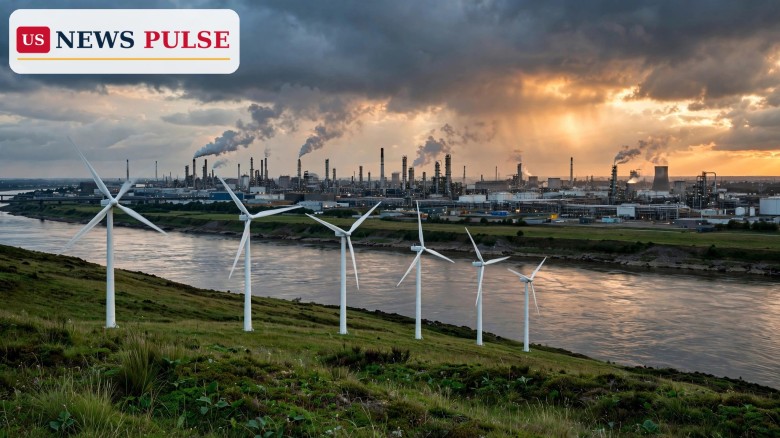
Global fossil fuel emissions are projected to fall in 2026 for the first time since the Covid pandemic, as the energy shock from the war with Iran cuts oil use and wind and solar power keep expanding, according to the 2026 Global Carbon Budget released on Tuesday.
Fossil-fuel carbon dioxide emissions are expected to drop 0.4 percent this year to 38.2 billion tonnes. It is the first decline since 2020, when lockdowns brought the world economy to a standstill. But the scientists behind the study warn the fall is fragile, small, and driven largely by war rather than by deliberate climate policy.
Key Points
- Fossil-fuel CO2 emissions are projected to fall 0.4% in 2026 to 38.2 billion tonnes, the first drop since 2020, according to the 2026 Global Carbon Budget.
- Oil emissions are expected to fall 1.9%, mainly because of the energy shock from the Iran conflict and the closure of the Strait of Hormuz.
- Emissions are set to fall in China, the United States and the European Union, but rise 4.4% in India, while coal use still grows 0.6%.
- The fall is "statistically indistinguishable from zero" and is not yet proof that global emissions have peaked, the report says.
- Counting deforestation and other land-use change, total CO2 emissions will still hit a record 43.3 billion tonnes in 2026.
What Happened
The Global Carbon Project released its 2026 Global Carbon Budget on Tuesday, November 10, 2026, presenting the findings at the COP31 climate summit in Antalya, Turkey. The report is the 21st annual edition of the assessment, produced by more than 140 scientists and published as a preprint in the journal Earth System Science Data.
Its headline finding is a projected 0.4 percent fall in fossil-fuel CO2 emissions in 2026, to 38.2 billion tonnes. The decline is driven mainly by oil, with oil emissions expected to fall 1.9 percent — a sharp reversal the report links directly to the energy shock caused by the conflict with Iran and the closure of the Strait of Hormuz, one of the world's most important oil shipping routes. Rapid growth in wind and solar power is the second force behind the fall, as clean electricity displaces a growing share of fossil generation.
Yet the authors stress how narrow the margin is. The projected change spans a range from a 1.5 percent fall to a 0.6 percent rise, so the final figure could still show growth once the year's data are complete.
Background
Global fossil fuel emissions have risen in almost every year since the pandemic rebound. After the record drop of 2020, emissions surged back and kept climbing through 2025. A fall in 2026 would break a five-year run of increases — but only just.
The war with Iran, now in its ninth month, has reshaped global energy markets this year. The closure of the Strait of Hormuz disrupted oil shipments, pushed prices higher and forced importers to cut consumption. At the same time, wind and solar capacity additions have hit new records in China, the United States and Europe. The report credits that expansion as a genuine, structural factor behind the fall — unlike the oil shock, which could reverse quickly if the conflict eases.
Fossil Fuel Emissions: What the Numbers Show
The regional picture is uneven. Fossil emissions are projected to fall 0.9 percent in China, the world's largest emitter, 1.3 percent in the United States and 1.5 percent in the European Union. India, by contrast, is expected to see emissions rise 4.4 percent. By fuel, oil emissions fall 1.9 percent, gas emissions edge down 0.3 percent, and coal emissions rise 0.6 percent — the dirtiest fuel is still expanding even in a year when total fossil emissions fall.
The most sobering number concerns the remaining carbon budget. The world has just 150 billion tonnes of CO2 left to emit before warming is expected to pass 1.5 degrees Celsius above pre-industrial levels — less than four years of emissions at the current rate. Scientists have long said emissions must fall by around 7 percent a year to keep the 1.5C goal within reach. A 0.4 percent dip, driven by war and within the margin of error, is not that.
Reactions
The report's authors were careful not to overstate the finding. The drop, they said, is "statistically indistinguishable from zero" and "not yet proof emissions have peaked" — a reminder that one year's data, shaped by a war and an oil shock, cannot confirm a trend. The findings were presented to delegates at COP31 in Antalya, where negotiators are weighing new pledges on fossil fuels, finance and adaptation.
Why It Matters
A fall in fossil fuel emissions, even a small one, matters because it has happened so rarely. Since 2020, every year has brought a new record or a near-record, and each year of growth has shortened the time left to hold warming to 1.5C. A year without growth — if it holds — would be the first sign that the global emissions curve can bend. The report's message is not that the crisis is easing — it is that the world has, for one year, stopped making it worse quite so fast.
What Happens Next
The Global Carbon Budget's figures are projections, and the final numbers for 2026 will not be confirmed until next year, when full energy data are available. If oil demand rebounds as the Strait of Hormuz reopens or the conflict eases, the projected fall could vanish. At COP31, attention turns to whether countries will agree on stronger measures to lock in the decline. The next edition of the Global Carbon Budget, a year from now, will show whether 2026 was the start of a real peak — or just a pause in the climb.
Frequently Asked Questions
Are global fossil fuel emissions really falling?
They are projected to fall 0.4% in 2026 to 38.2 billion tonnes, the first decline since 2020. But the report calls the drop "statistically indistinguishable from zero".
Why did oil use fall this year?
Mainly because of the energy shock from the war with Iran and the closure of the Strait of Hormuz, which disrupted oil shipments and pushed prices up. Rapid growth in wind and solar power also helped.
What is the Global Carbon Budget?
An annual assessment by the Global Carbon Project, produced by more than 140 scientists. The 2026 edition is the 21st, published as a preprint in Earth System Science Data and presented at COP31 in Antalya, Turkey.
How much of the carbon budget is left?
Just 150 billion tonnes of CO2 before warming is expected to pass 1.5C above pre-industrial levels — under four years of emissions at the current rate.
Does this mean emissions have peaked?
Not yet. The report says the 2026 fall is not proof of a peak. A real peak needs several years of sustained declines, and total CO2 is still set to hit a record this year.
Read more: US-Iran strike plans: forces ready within 96 hours of Trump order, reports say; NASA Swift Observatory ends 22-year mission as spacecraft falls back to Earth; Fed rate decision October 2026: why a pause looks likely despite high inflation.
© 2026 US News Pulse. All rights reserved.
 Print
 Save