
Ten Nations Sign JEF Naval Pact in Oslo to Deter Russian Submarines on Tuesday
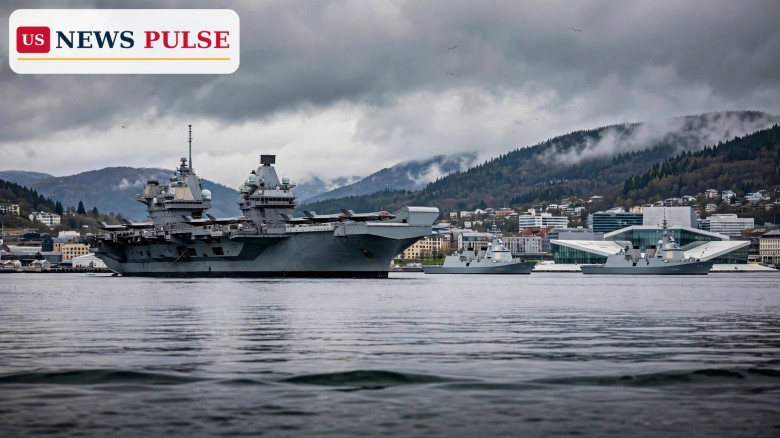
Ten northern European nations signed a naval partnership agreement in Oslo on Tuesday, pledging to move from talking about joint defence to doing it — with deterring Russian submarines at the top of the agenda. The pact, signed aboard the British aircraft carrier HMS Prince of Wales, binds the members of the UK-led Joint Expeditionary Force (JEF) to joint action to protect shipping and the undersea cables and pipelines that carry Europe’s data and energy across the North Atlantic, the Arctic and the Baltic Sea.
Key Points
- The UK, Denmark, Estonia, Finland, Iceland, Latvia, Lithuania, the Netherlands, Norway and Sweden signed the naval partnership agreement in Oslo on Tuesday, November 10, 2026.
- The signing took place aboard the 284-metre carrier HMS Prince of Wales, hosting two defence conferences this week.
- Its central mission: deterring Russian submarines from attacking or threatening shipping in wartime, and protecting underwater infrastructure.
- Gen Sir Richard Knighton, the UK Chief of the General Staff who announced the plan on November 8, said the group would move from “memorandums of understanding, information exchange and consultations” to practical joint action.
- About 500 political and military leaders are aboard the carrier for the week’s events, as European allies take on more responsibility for their own defence.
What Happened
The agreement was signed in Oslo aboard HMS Prince of Wales, the Royal Navy’s largest warship, which arrived in the Norwegian capital on Friday escorted by the destroyer HMS Dauntless, the Norwegian frigate KNM Fridtjof Nansen and the coast guard vessel KV Nornen. The carrier is hosting the Atlantic Future Forum and the International Sea Power Conference this week, bringing about 500 political and military leaders aboard.
The Financial Times first reported the planned signing, announced on November 8 by General Sir Richard Knighton. Under the pact, the ten JEF countries commit to coordinated naval operations to deter Russian submarines and safeguard shipping lanes and undersea infrastructure in the North Atlantic, the Arctic and the Baltic Sea, where Russian naval activity has grown steadily in recent years.
Background: The Joint Expeditionary Force
The Joint Expeditionary Force has operated under British leadership since 2014, bringing together the UK with the Nordic and Baltic states and the Netherlands in a rapid-reaction grouping built to respond quickly to crises in northern Europe. Unlike NATO, which needs consensus among all 32 allies, the JEF can act fast with a smaller group of like-minded nations.
In December 2023, JEF countries deployed seven ships to patrol areas with vulnerable undersea cables and pipelines, after suspected sabotage incidents in the Baltic Sea raised alarms about the seabed networks carrying internet traffic, power and gas. The new agreement builds on that experience: where the 2023 patrols were a one-off response to a specific scare, the naval partnership is meant to make joint action routine — shared patrols, shared surveillance and a shared understanding of who does what when a threat appears beneath the waves.
JEF Naval Pact Targets Russian Submarines
At the heart of the pact is the submarine threat. Knighton said one of the most important tasks is “to deter submarines from attacking or threatening shipping in wartime.” As he pointed out, the security of the shipping lanes and cables in the North Atlantic concerns “not only Europe but also the US East Coast,” since the same waters carry the transatlantic data and trade on which both sides depend.
Russian submarines have long operated in the North Atlantic and the Norwegian Sea, and Western navies have reported a sharp rise in their activity over the past decade. The concern is not only a wartime attack on merchant shipping — the classic submarine mission — but also the quieter threat to the undersea cables and pipelines on the seabed, largely unguarded and almost impossible to repair quickly if cut. The pact also reflects a wider shift: President Donald Trump has repeatedly called on European allies to take greater responsibility for their own security, and Knighton noted the shift in US foreign policy focus from Europe to the Indo-Pacific began long before the current president, going on for “15 years or more.”
Reactions and Quotes
Knighton has been blunt about the threat picture, describing targeted assassinations, sabotage and cyberattacks as real actions of the Russian state and saying Moscow’s “appetite” for risk “has clearly increased.” In his view, the term “hybrid activity” no longer reflects the seriousness of what Russia is doing.
“The stronger we are, the better chance we have of deterring Russia from trying to test our strength,” Knighton said in an interview with the Financial Times, repeating a call he first made in October for military personnel to prepare for a possible war — and for political leaders to begin a “frank conversation” with citizens about preparing for a conflict with Moscow. He also said London needs to “catch up with our European allies,” especially those closer to Russia.
Why It Matters
The agreement matters because the seabed has become one of Europe’s most exposed frontiers. The cables and pipelines running through the North Atlantic, the Arctic and the Baltic carry the overwhelming majority of intercontinental data traffic and a growing share of Europe’s energy. It also matters as a signal to Moscow: ten nations signing a pact aboard an aircraft carrier is a deliberate display of unity and capability. For the United States, the pact is welcome news, since a northern European group taking ownership of its own maritime security frees American naval resources for other regions, above all the Indo-Pacific.
What Happens Next
The practical work begins now. Officials will turn the agreement into joint patrol schedules, shared surveillance arrangements and common rules for responding to suspicious activity around undersea infrastructure. The conferences continuing aboard HMS Prince of Wales this week will be the first chance for the ten nations’ military leaders to discuss implementation face to face. Attention will also turn to whether the pact produces visible results — more ships at sea, more exercises in the High North, and faster responses when cables or pipelines are threatened.
Frequently Asked Questions
What is the Joint Expeditionary Force?
The JEF is a UK-led defence grouping of ten northern European nations operating since 2014 to respond quickly to crises in northern Europe.
What does the new naval pact do?
It commits the ten JEF countries to joint naval action to deter Russian submarines from threatening shipping in wartime and to protect undersea cables and pipelines.
Where was the pact signed?
Aboard the British aircraft carrier HMS Prince of Wales in Oslo on Tuesday, November 10, 2026.
Why are undersea cables so important?
They carry most intercontinental internet traffic and a growing share of Europe’s energy, and damage can disrupt communications and power supplies while repairs at sea are slow and expensive.
Does the pact replace NATO?
No. The JEF works alongside NATO, but its smaller membership lets it act faster than the 32-nation alliance in a northern European crisis.
Related coverage: Ukraine, Russia and US open first trilateral peace talks in nine months in Abu Dhabi • Russia and Ukraine show flexibility on territory ahead of Abu Dhabi peace talks • US evacuates aircraft from RAF Mildenhall after Iran threat raises UK alert
© 2026 US News Pulse. All rights reserved.
 Print
 Save