
Israel's New Knesset Sworn In as Eisenkot Targets Netanyahu Legacy in Jerusalem
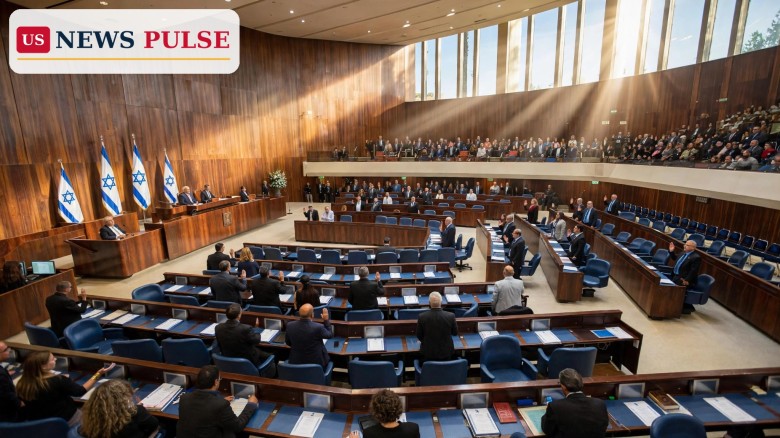
Israel's 26th Knesset was sworn in on Tuesday, November 10, 2026, and the new parliament wasted no time in turning on the legacy of Benjamin Netanyahu. The 120 lawmakers elected on October 27 took their oaths of office in Jerusalem while no new government exists, and within hours the bloc led by Gadi Eisenkot — the man tasked with forming the next government — moved against the caretaker prime minister's record: an independent commission to investigate the security failures behind the October 7, 2023 Hamas attack, and a sweeping repeal of Netanyahu's judicial overhaul.
Key Points
- Israel's 26th Knesset was sworn in on Tuesday, November 10, 2026, with the 120 lawmakers elected on October 27 taking their oaths in Jerusalem while no new government exists.
- Gadi Eisenkot, tasked by President Isaac Herzog on Sunday with forming a government, has until December 6, with a possible extension to December 20.
- Eisenkot's bloc proposed an independent commission to investigate the security failures behind the October 7, 2023 Hamas attack, and a sweeping repeal of Netanyahu's judicial overhaul.
- Lawmakers installed Matan Kahana as the new Knesset speaker, replacing Likud's Amir Ohana, in the first session's opening test of strength.
- Netanyahu remains caretaker prime minister, his Likud-led bloc holding 53 of 120 seats, Eisenkot's centre-right Yashar alliance 48, and the Arab-led parties a record 19.
What Happened
The swearing-in brought the full 120-member chamber together for the first time since the October 27 vote. One by one, the lawmakers rose to take the oath, in a session presided over by President Isaac Herzog, who warned them: "You must do everything to avoid a repeat election."
Among those sworn in was Elisha Madan, a military reservist who lost both legs in Israel's assault on Gaza. Madan received an ovation when he stood on his prosthetic legs to take his oath. But the ceremony was only the prelude. In the heated first session, Eisenkot's bloc submitted its two proposals — the October 7 inquiry and the judicial overhaul repeal — and installed Matan Kahana as speaker, replacing Likud's Amir Ohana. It was the first sign the balance of power has shifted.
Background: An Election That Changed the Map
The October 27 election left Israel with a parliament no single bloc can control. Netanyahu's Likud-led bloc won 53 seats, Eisenkot's centre-right Yashar alliance 48, and the Arab-led parties a record 19, with 61 needed for a majority. No government exists, and Netanyahu remains in office only as caretaker prime minister. On Saturday, November 7, President Herzog told Eisenkot he would task him with forming Israel's next government, passing over Netanyahu: 67 lawmakers had endorsed Eisenkot, against 46 for Netanyahu, and the formal mandate followed on Sunday, November 8.
The October 7 attack, in which Hamas gunmen killed around 1,200 people and took more than 250 hostage, remains the central wound in Israeli public life, and Netanyahu has resisted a full state inquiry into the security failures that allowed it. The judicial overhaul brought hundreds of thousands of protesters onto the streets in 2023. Both issues are now back as bills before a sitting parliament.
The New Knesset Sworn In: An October 7 Inquiry and a Judicial Overhaul Repeal
The two proposals go to the heart of Netanyahu's record. An independent commission to investigate October 7 would examine the intelligence failures, the slow military response, and the political decisions before the attack — questions Netanyahu has faced for three years without ever submitting to a formal inquiry. A commission able to summon witnesses and publish findings would directly challenge the caretaker prime minister's version of events.
The repeal is equally pointed. The overhaul was Netanyahu's signature domestic project, an attempt to reshape the balance between government and courts that critics called an attack on Israeli democracy. Neither proposal is law yet — both face votes and committee battles — but as signals they are clear: Eisenkot's bloc will use its new position to dismantle Netanyahu's legacy piece by piece, even before it has a government. Installing Kahana in place of Ohana gives the bloc control of the chamber's agenda in a parliament where every vote is close.
Reactions and Quotes
Eisenkot set the tone, declaring Netanyahu "unfit to remain in office for even one more minute" — the sharpest attack yet from the man formally asked days earlier to replace him. The line captures his bloc's strategy: not merely to outvote Netanyahu's camp, but to argue that the caretaker prime minister's time is already over.
Netanyahu pushed for a national-unity government, arguing that the threat from Iran demands that the country's leaders govern together rather than fight over the wreckage of the last government. Herzog urged the lawmakers to govern responsibly and avoid the cycle of elections — a warning aimed at every faction in the room.
Why It Matters
The swearing-in changes who holds power in Israel, even before a government is formed. A speaker from Eisenkot's bloc, an October 7 inquiry on the agenda, and a repeal of the judicial overhaul in the works: together, they mean Netanyahu's legacy is being dismantled by a parliament he no longer controls.
It matters too because the October 7 question has never been properly answered. For three years, the victims' families and survivors have demanded a full accounting of how the attack was possible. A commission would finally provide one.
What Happens Next
Eisenkot now has until December 6 to try to form a government, with a possible extension to December 20. His path, by his own admission, is "extraordinarily complex": he needs 61 seats, and his bloc holds 48. The Arab parties, with 19 seats, and the remnants of Netanyahu's bloc will both have to be courted.
If Eisenkot fails, Herzog would likely turn to Netanyahu next. If he also fails, Israel would face a new election — the outcome Herzog warned the new parliament to avoid at all costs. For now, the 26th Knesset is seated, its speaker installed, and its first battle lines drawn.
Frequently Asked Questions
What happened at the Knesset on November 10?
Israel's 26th Knesset was sworn in, with the 120 lawmakers elected on October 27 taking their oaths in Jerusalem. Eisenkot's bloc proposed an October 7 inquiry and a judicial overhaul repeal, and installed Matan Kahana as speaker.
Who is forming Israel's next government?
Gadi Eisenkot, tasked by President Isaac Herzog on November 8. He has until December 6, with a possible extension to December 20, to build a coalition of at least 61 of 120 seats.
What is the October 7 inquiry proposal?
An independent commission to investigate the security failures behind the October 7, 2023 Hamas attack.
Why does the speaker vote matter?
Kahana's election, replacing Likud's Amir Ohana, gives Eisenkot's bloc control of the chamber's agenda in a parliament where every vote is close.
What happens if Eisenkot cannot form a government?
Herzog would likely turn to Netanyahu next. If he also fails, Israel faces a new election.
Related coverage: Herzog Tasks Eisenkot to Form Israel's Next Government, Passing Over Netanyahu | Trump Presses Netanyahu to Advance Gaza Peace Plan After Israel Election | Israel Approves First 250 Troops for Gaza International Stabilization Force
© 2026 US News Pulse. All rights reserved.
 Print
 Save