
Vikings Bring Back Kirk Cousins from Raiders in Deadline Deal for Third-Round Pick
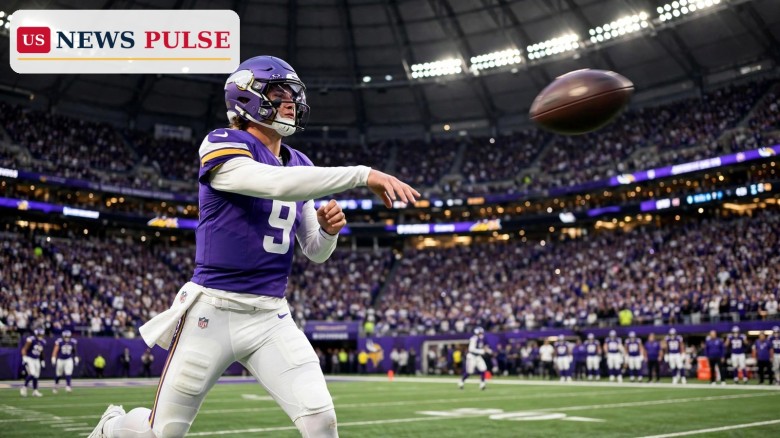
The Minnesota Vikings have brought Kirk Cousins home. Minnesota acquired the veteran quarterback from the Las Vegas Raiders on Tuesday, November 10, 2026, before the 4 p.m. ET NFL trade deadline, sending a 2027 third-round draft pick to Las Vegas in the biggest deal of deadline day. Cousins, 38, returns to the franchise where he played from 2018 to 2023 and led the Vikings to multiple playoff appearances. The move came less than 24 hours after Minnesota's 23-6 loss to the Buffalo Bills on Monday Night Football, a defeat in which starter Carson Wentz threw two interceptions and the Vikings were knocked out of first place in the NFC North.
Key Points
- Minnesota acquired Kirk Cousins from the Las Vegas Raiders on Tuesday, November 10, 2026, before the 4 p.m. ET NFL trade deadline.
- The Vikings sent a 2027 third-round draft pick to Las Vegas in the biggest deal of deadline day.
- Cousins, 38, returns to Minnesota, where he played from 2018 to 2023 and led the Vikings to multiple playoff appearances.
- The trade came a day after Minnesota's 23-6 Monday Night Football loss to Buffalo, in which Carson Wentz threw two interceptions and the Vikings fell to 6-2.
- Other Tuesday deals included Buffalo landing safety Amani Hooker, Kansas City adding receiver Josh Downs, San Francisco adding Keenan Allen and Denver adding linebacker Daiyan Henley.
What Happened
The deal was completed ahead of the 4 p.m. ET deadline on Tuesday, with Minnesota sending a 2027 third-round pick to Las Vegas for its former quarterback. It was the headline move of deadline day. The Bills acquired safety Amani Hooker from the Titans for a second-round pick, the Chiefs added receiver Josh Downs from the Colts, the 49ers added Keenan Allen, and the Broncos added linebacker Daiyan Henley.
Cousins had been playing for the Raiders this season. Nine days earlier, on Sunday, November 1, he threw for 247 yards and three touchdowns in Las Vegas's 38-33 win over the New York Jets at MetLife Stadium, adding a one-yard rushing touchdown as the Raiders ended a four-game losing run. That performance showed he could still move an offence and win a shootout, even as Las Vegas sat at 4-4.
The timing pointed straight at Monday night. Wentz, starting for the injured Kyler Murray, who is out with a hamstring injury, went 8-of-25 for 81 yards against Buffalo, with two interceptions, a lost fumble and a passer rating of 8.9. Minnesota managed just 81 passing yards all night, and Justin Jefferson was held to three catches for 58 yards. The Vikings fell to 6-2 and third in the NFC North, behind Chicago at 7-2 and Detroit at 6-2.
Background and Context
Cousins knows Minnesota well. He spent six seasons with the Vikings, from 2018 to 2023, leading the team to multiple playoff appearances and becoming one of the most productive passers in franchise history. He knows the division, the stadium and the stakes of a November playoff race. For a team adding a quarterback mid-season, that familiarity removes the usual adjustment period.
The Vikings' season had been strong until the last two weeks. Minnesota started 6-1, then lost 19-15 to Detroit on November 1 and 23-6 to Buffalo on November 9. The defence has been the strength, allowing the fewest points per game in the league, with coordinator Brian Flores's blitzes troubling even Buffalo, the NFL's most productive offence. The problem has been the offence: with Murray hurt, it could not move the ball or protect it in prime time.
Kirk Cousins Trade: What the Veteran Brings Back to Minnesota
The Kirk Cousins trade gives Minnesota something it did not have on Monday night: a proven, experienced starter at quarterback. Cousins has run offences in big games for years, and he arrives having just played winning football for Las Vegas, throwing three touchdown passes in his most recent win. He does not need weeks to learn what a playoff race feels like in Minnesota.
The price was modest for a starting-calibre quarterback in November. A 2027 third-round pick is the kind of asset contenders are usually happy to spend when a season is on the line, and starting quarterbacks are almost never available at the trade deadline. Las Vegas, at 4-4, adds a future pick while Minnesota bets that a familiar face can steady its offence.
Reactions and Analysis
Analysis after Monday's game had already pointed in this direction. USA TODAY Sports' takeaway from the Bills game was blunt: Minnesota must trade for a quarterback before the trade deadline, arguing that it would be a shame to waste a defence this good for want of a competent passer. The Cousins deal answers that call within a day, with the most proven option available — the biggest deal of deadline day, and the only one involving a starting quarterback.
Why It Matters
The NFC North race is tight, and Minnesota could not afford to let its quarterback problem linger. Chicago leads the division at 7-2, Detroit sits at 6-2, and the Vikings are now 6-2 after two straight losses. A third loss in a row would have left Minnesota chasing the division from behind with a backup quarterback and a starter still recovering from a hamstring injury.
It also matters because of the defence. Minnesota's defence has been the best in the league at keeping points off the board, and a unit that good deserves an offence that can hold up its end. Against Buffalo, the defence held the NFL's best offence in check for three quarters before fatigue set in, because the offence could not sustain a drive. A veteran quarterback who can move the chains changes that equation.
What Happens Next
Cousins rejoins the Vikings this week ahead of Week 10, and the immediate question is how quickly he can be ready to start. Murray's hamstring recovery is still to be settled, and the Vikings now have a proven option either way. The trade deadline has passed, so this is the roster Minnesota will take into the stretch run.
Frequently Asked Questions
What did the Vikings give up for Kirk Cousins?
Minnesota sent a 2027 third-round draft pick to the Las Vegas Raiders in the trade completed on Tuesday, November 10, 2026.
When did the Kirk Cousins trade happen?
The deal was completed on Tuesday, November 10, 2026, before the 4 p.m. ET NFL trade deadline.
How long did Cousins play for Minnesota before?
Cousins played for the Vikings from 2018 to 2023, leading the team to multiple playoff appearances.
Why did the Vikings make the trade?
Minnesota lost 23-6 to Buffalo on Monday Night Football, with Carson Wentz throwing two interceptions while starting for the injured Kyler Murray.
Who else was traded on deadline day?
The Bills acquired safety Amani Hooker from the Titans for a second-round pick, the Chiefs added receiver Josh Downs, the 49ers added receiver Keenan Allen, and the Broncos added linebacker Daiyan Henley.
Related coverage: the loss that forced the move — our report on the Bills' 23-6 win over the Vikings on Monday Night Football — and Cousins' last game for Las Vegas — our story on the Raiders' 38-33 win over the Jets.
© 2026 US News Pulse. All rights reserved.
 Print
 Save