
Rubio: No Need for Major Combat Operations Against Iran as Sanctions Bite
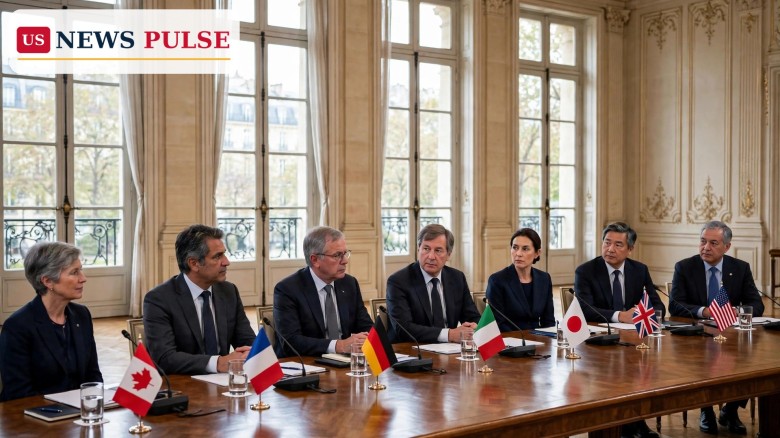
US Secretary of State Marco Rubio said on Tuesday, November 10, 2026, that the United States has no need for major combat operations against Iran right now, arguing the American economic campaign is achieving the same objectives as military force. Speaking in Paris after two days of G7 foreign ministers' meetings, Rubio said President Donald Trump had concluded that Washington could reach its goals without returning to large-scale strikes.
"The economic campaign [against Iran] is so devastating that right now there is no need for major combat operations," Rubio said. "We don't need to conduct military strikes if we're achieving the same objective through economic means and economic pressure. That's not a stalemate."
Key Points
- Secretary of State Marco Rubio said on Tuesday, November 10, 2026, in Paris that there is "no need for major combat operations" against Iran at present.
- Rubio said President Trump had concluded the US is achieving the same objective through economic means: "not a stalemate".
- Rubio described the economic pain on Iran as "extraordinary", saying it compounds and grows every day, with Iranian oil supplies drying up under the US naval blockade.
- He warned the restraint was not unconditional: if Iran crossed US red lines, the military stands ready and Tehran would pay a "terrible price".
- European G7 members pressed Rubio at the Paris meeting to avoid any new escalation, while Tehran's offer to reopen the Strait of Hormuz within two days remains on the table.
What Happened
Rubio spoke to reporters in Paris after two days of talks with G7 foreign ministers. European ministers pressed the American delegation to avoid any new escalation against Tehran. Rubio said Iran could no longer sell its energy on world markets as it once did. "The economic pain on Iran is extraordinary and it compounds. It's growing every day," he said, with Iranian oil supplies drying up under the US naval blockade.
Rubio framed the pause as a decision, not a concession. President Trump "has concluded that for the time being there is no need for major combat operations because we are achieving the same objective by economic means". But the warning was explicit. If Iran crossed American red lines, the military stands ready and Tehran would pay a "terrible price". The US demands a verifiable commitment that Iran will not rebuild its nuclear programme.
Why Rubio Says Combat Operations Against Iran Are Not Needed
The argument Rubio laid out in Paris rests on a simple claim: the blockade is doing the work that bombs would do. Since the war began on February 28, 2026, the United States has combined military strikes with a sweeping economic campaign — a naval blockade of Iranian oil exports, sanctions on the shadow fleet of tankers that carry Iranian crude, and pressure on buyers and intermediaries across Asia and the Middle East. Rubio said the campaign has now reached a point where Iran's oil revenues are collapsing, leaving Tehran facing a growing fiscal crisis.
Background: Nine Months of War, a Blockade and a Fragile Opening
The US-Iran war is now in its ninth month, having begun on February 28, 2026. Qatar has acted as the main mediator. The most recent fighting came with American strikes on Iran's Qeshm Island, which the US described as defensive and which pushed Brent crude above $106 a barrel.
Vice President JD Vance said on Monday, November 2, that Washington had made "progress" in talks with Iran and that he and President Trump "both feel pretty good about the prospects for potentially coming to a negotiated settlement". President Trump said on Monday that a deal was "coming together very nicely" and that Iran wants a deal. See our report on Vance saying the Iran talks are making progress.
Tehran says its offer to reopen the Strait of Hormuz within two days, on conditions, remains on the table, and that it has held no negotiations with Washington, only contacts through Qatar and Pakistan. See also our reports on the Qeshm Island strikes and the draft deal approved by Washington under the Qatar plan.
Reactions: Allies Urge Restraint, Tehran Holds Its Line
European members of the G7 used the Paris meeting to press Rubio to avoid any new escalation against Iran, worried about a wider regional conflict and the economic damage from a blocked Strait of Hormuz. Rubio's emphasis on economic pressure gives the Europeans the commitment to diplomacy they sought, while preserving Washington's freedom to act. Tehran's public position has not shifted — Iran says it has held no direct negotiations with the United States, only contacts through Qatar and Pakistan, and it has kept its conditional offer to reopen the strait within two days on the table.
Why It Matters
Rubio's statement matters because it is the first time a senior American official has so plainly said that the United States does not need to bomb Iran to get what it wants. If it holds, the war changes character: from strikes to strangulation, with the blockade and sanctions as the main instruments of American power. A blockade is slower than bombing, but harder for Iran to answer with force, and it gives diplomacy more room to work. For the region it is a measure of relief, however provisional — but the pause is a tactic, not a peace treaty, and it can be reversed in a day.
What Happens Next
The immediate test is whether the diplomatic track can produce something concrete. Qatari mediators are shuttling between the two sides, and both Washington and Tehran are reviewing the mediators' suggestions. The coming days will show whether they can become a framework — or whether the talks stall again. Watch, too, for the next moves in the economic campaign: if Iranian oil exports fall further, or if new sanctions target the networks that move Iranian crude, that will be a sign Washington believes the strategy is working. The Strait of Hormuz remains the most dangerous flashpoint.
Frequently Asked Questions
What did Marco Rubio say about combat operations against Iran?
In Paris, Rubio said "the economic campaign [against Iran] is so devastating that right now there is no need for major combat operations". Trump had concluded the US is achieving the same objective by economic means.
Is the US still threatening military action against Iran?
Yes. Rubio warned the restraint was not unconditional: if Iran crossed US red lines, the military stands ready and Tehran would pay a "terrible price". The US demands a verifiable commitment that Iran will not rebuild its nuclear programme.
How is the US putting economic pressure on Iran?
Through a naval blockade of Iranian oil exports, sanctions on the shadow fleet of tankers carrying Iranian crude, and pressure on buyers and intermediaries. Rubio said Iranian oil supplies are drying up.
What is Iran's position on talks with the US?
Tehran says it has held no negotiations with Washington, only contacts via Qatar and Pakistan; its Hormuz offer remains on the table.
How long has the US-Iran war been going on?
It began on February 28, 2026, and is now in its ninth month, with US strikes, ceasefires and Qatari mediation.
© 2026 US News Pulse. All rights reserved.
 Print
 Save