
Trump's Oklahoma Judge Pick Zach West Blocked as Home-State Senator Reverses Support
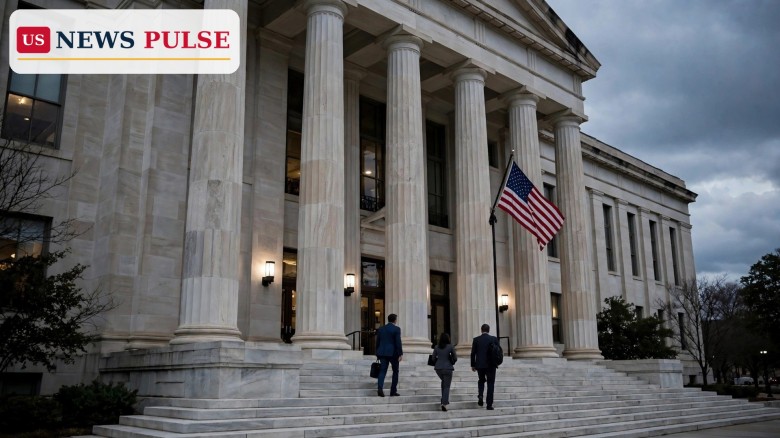
President Donald Trump’s nominee for a federal judgeship in Oklahoma has hit a wall in the Senate after the home-state Republican senator who once backed him reversed course.
Zach West, a lawyer in the Oklahoma Attorney General’s Office since 2017, was poised for a committee vote on Tuesday, November 11, 2026. Instead, the committee put it off after Senator Alan Armstrong — who had previously returned a “blue slip” signalling his support — told the panel he now opposes the nomination, leaving the nomination effectively blocked in the lame-duck session.
Key Points
- Republican Senator Alan Armstrong of Oklahoma has reversed his support for Zach West, President Trump’s nominee for the US District Court in eastern Oklahoma.
- Armstrong had returned a blue slip of support, but a spokesperson confirmed on Wednesday, November 11, 2026, that he now opposes the nomination.
- The Judiciary Committee put off a vote on West scheduled for Tuesday, November 11, after Armstrong’s opposition emerged.
- Senator Thom Tillis of North Carolina, a Judiciary Committee member, supports Armstrong. West needs all 12 Republican votes in committee to advance, so the nomination is blocked for now.
- The White House is racing to confirm as many judges as possible before Democrats take the Senate in January, after winning at least 54 seats on November 3.
What Happened
West had already appeared before the Judiciary Committee, and his nomination was on track for a vote on Tuesday, November 11, 2026. The vote did not happen: the committee postponed it after opposition emerged from Armstrong, the home-state senator whose support is traditionally essential for a district court nominee.
A spokesperson for Armstrong confirmed on Wednesday, November 11, that the senator now opposes West’s nomination, with no detailed explanation for the change. Armstrong had earlier returned a blue slip for West, the form senators use to signal whether they support or oppose a judicial nominee from their state.
The opposition quickly gained a second voice: outgoing Republican Senator Thom Tillis of North Carolina, a Judiciary Committee member, supports Armstrong’s position. West needs all 12 Republican votes on the panel to advance, and with Tillis siding with Armstrong, the votes are not there.
Background: Who Is Zach West?
West has worked in the Oklahoma Attorney General’s Office since 2017, first as solicitor general and later as director of special litigation.
President Trump nominated him for the US District Court for the Eastern District of Oklahoma, one of three federal trial courts in the state. District judges serve for life, so one vacancy on a small court can shape its work for decades.
Armstrong is himself a short-timer, appointed by Governor Kevin Stitt in March as caretaker for the seat vacated when Markwayne Mullin resigned to become homeland security secretary. State law barred Armstrong from seeking a full term, and Republican Kevin Hern won the seat in the November 3 election. Hern takes office on November 30, and it is not clear whether he would support West. Read more: Kevin Hern Wins Oklahoma Senate Seat, Holding Open Seat Vacated by Mullin.
Zach West Nomination and the Blue Slip Tradition
The blue slip is one of the Senate’s oldest unwritten rules: when a president nominates someone for a district court seat, the Judiciary Committee sends a blue piece of paper to the nominee’s home-state senators asking whether they approve. A returned slip signals support; a withheld one signals opposition.
For district court nominees, the tradition has long been close to a veto. Committee chairs of both parties have generally refused to move a nominee forward over a home-state senator’s objection, since the senator knows the local legal community best.
That is what makes Armstrong’s reversal so consequential. He did not merely withhold a blue slip from the start: he returned one in support, then withdrew it after West had already testified. Postponing the vote rather than holding it and watching the nominee fail signals that the leadership does not have the votes.
Reactions and Quotes
The White House has not said how it plans to handle the setback. The context is clear: the administration is racing to confirm as many judges as possible before Democrats take the Senate in January, after winning at least 54 seats in the November 3 midterms.
The same pressure showed elsewhere on Tuesday, November 11, when the White House swapped out nominees for a key Arkansas seat on the 8th US Circuit Court of Appeals after that state’s senators withheld support for President Trump’s original pick. The swap showed the administration will change nominees quickly when home-state senators object, rather than spend scarce lame-duck time on a losing fight. Neither Armstrong nor Tillis has publicly explained the reasons for opposing West in detail. Read more: White House Warns Democrats Their Planned Probes Could Be ‘Blatant Criminality’.
Why It Matters
The blocked nomination matters for three reasons. First, it leaves a federal judgeship in Oklahoma unfilled, with no clear timeline for filling it, adding to the remaining judges’ workload and slowing cases for people and businesses waiting on them.
Second, with Democrats about to take the Senate, every confirmation depends on holding all 12 Republican votes on the Judiciary Committee, and a single home-state objection, backed by one colleague, is enough to stop a nominee cold.
Third, the blue slip tradition still holds real power: unwritten and bent before, it worked here exactly as designed, halting the process once the home-state senator’s opposition was clear.
What Happens Next
The immediate question is whether the White House withdraws West’s nomination or tries to save it. The Arkansas swap suggests the administration will move on quickly when a nominee loses home-state support, and a replacement could be named in the coming days. Another possibility is that the nomination simply runs out of time: the lame-duck session has only weeks left, and if the committee does not act, the nomination will be returned to the White House when the new Congress is seated in January. Then the question becomes what Senator-elect Kevin Hern thinks when he takes office on November 30: his view of West or a replacement will carry the same weight.
Frequently Asked Questions
Who is Zach West?
Zach West is a lawyer in the Oklahoma Attorney General’s Office since 2017, first as solicitor general, later as director of special litigation. President Trump nominated him for the US District Court for the Eastern District of Oklahoma.
Why is Zach West’s nomination blocked?
Senator Alan Armstrong of Oklahoma reversed his earlier support and now opposes the nomination. Senator Thom Tillis backs Armstrong, and West needs all 12 Republican committee votes to advance.
What is a blue slip?
A blue slip is the form the Judiciary Committee sends to a nominee’s home-state senators asking whether they support the pick. For district court nominees, a home-state senator’s opposition has traditionally been enough to stop a nomination.
What happens to the nomination now?
The committee has postponed its vote, and the nomination is blocked. The White House could withdraw West and name a replacement, or the nomination could expire when the new Congress is seated in January.
© 2026 US News Pulse. All rights reserved.
 Print
 Save