
Vance Weighs Direct Talks With Iran's Rezaei as Trump Calls June Deal a Blunder
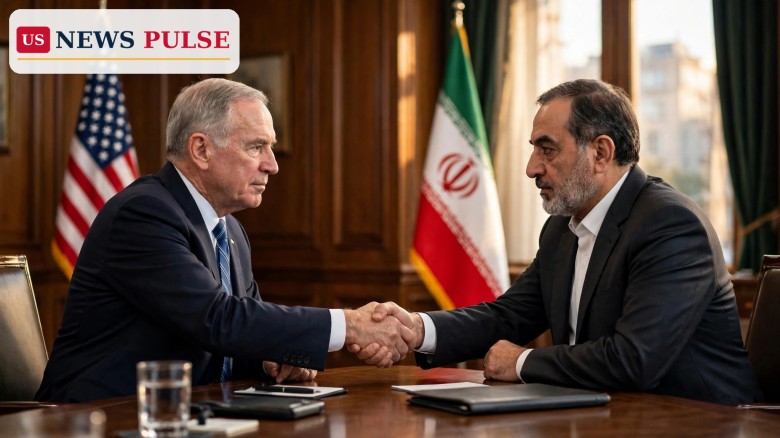
US Vice President JD Vance is weighing direct talks with Mohsen Rezaei, the secretary-general of Iran's Supreme National Security Council, the Wall Street Journal reported on Wednesday. President Donald Trump has empowered Vance to resume negotiations on ending the nine-month US-Iran war, a conflict blamed for the Republican Party's steep midterm losses.
Until now, Washington's contacts with Tehran have run through intermediaries, with White House envoys Steve Witkoff and Jared Kushner carrying the talks. US officials told the Journal Vance has now taken the lead role in the effort, eclipsing both envoys.
The report landed the same day Trump used his Veterans Day address at Arlington to claim the US had already won the war, while insisting he would not end it until there was a "total victory."
Key Points
- Vance is weighing direct talks with Mohsen Rezaei, Iran's security chief, after Trump empowered him to restart negotiations, the Wall Street Journal reported on Wednesday.
- Trump has privately called the June memorandum of understanding with Iran, which Vance helped negotiate, a mistake that let Tehran recover and earn oil revenues.
- Vance has taken the lead role in the diplomatic effort, eclipsing envoys Steve Witkoff and Jared Kushner.
- Rezaei said Iran is not holding talks with the US or discussing its nuclear programme, and threatened strikes on "distant" American bases if Trump strikes again.
- Three sources confirmed Iran attacked ship navigation systems on the Omani island of Didamar in the Strait of Hormuz, with limited impact on shipping likely.
What Happened
US officials told the Journal that Vance has taken the lead role in diplomatic efforts to reach an agreement with Iran, sidelining Witkoff and Kushner. Officials called the move a politically high-risk, high-reward effort. Secretary of State Marco Rubio and White House Chief of Staff Stephen Miller, by contrast, back maintaining the blockade on Iran until it gives, two US officials said.
Unlike Rubio and War Secretary Pete Hegseth, who have defended Trump over the war, Vance has publicly blamed the conflict for the Republican Party's drubbing by Democrats in last week's elections. Trump agreed with Vance's assessment about the electoral consequences, but continued to defend the war on Wednesday, claiming the US had already won. "We want to make sure we have a total victory - not a 93% victory. It's going to be total," Trump said at Arlington.
Background: Nine Months of War and a Failed June Deal
The June memorandum of understanding was supposed to pause a war that began on February 28, 2026, when the United States and Israel struck Iran. Instead, the deal fell apart within weeks over navigation through the Strait of Hormuz, a key oil shipping route. Iran rebuilt its missiles and defences, and inspectors remain barred from the damaged nuclear sites.
Vance has been involved in the Iran file for months. He led secret indirect talks reported last week, and he sent a letter to Rezaei about medical supplies. Tehran's price for reopening Hormuz has not changed: Rezaei insists the US must accept all seven Iranian conditions, including lifting sanctions and the blockade, reparations and an Israeli withdrawal from Lebanon.
Vance Iran Direct Talks: A High-Risk Diplomatic Gamble
Direct talks between Vance and Rezaei would be a first at this level and a sharp break from the backchannel route. For Vance, the gamble is personal as well as political: he would stake his standing on a negotiation with a man who says there are no talks at all.
The former head of the Mossad, David Barnea, acknowledged on Wednesday that the fighting hurt Trump at the ballot box. "[Trump] proved that doing the right thing is not always the popular choice," he told the Israel Hayom conference in New York. Barnea said Israel "achieved an unprecedented result" against Iran, but admitted Iran will continue to pursue nuclear weapons "as long as this regime exists." He put the chance of a deal at "very low".
Reactions and Quotes
Trump again asserted on Wednesday that the war will end shortly, something he has been asserting for months. "When this conflict is over - and it will be soon - the entire world will be a much safer and better place, more peaceful place, and a place without the kind of danger that we had to suffer," he declared at Arlington.
Rezaei, speaking to Lebanon's Al-Mayadeen television channel, threatened on Wednesday that Iran would attack "distant" American bases if Trump strikes again. "If the Americans make a mistake and attack us, we will not content ourselves with targeting nearby bases, but will strike all nearby bases, and we will also target distant American bases," he said. He insisted: "I affirm that we are not conducting any talks with the Americans at the present time."
Why It Matters
The stakes go well beyond one meeting. The war has shaped the midterm elections and cost 23 American lives. If Vance can turn his backchannel into a real negotiation, it could end a nine-month war Trump says is effectively won but not yet finished. If it fails, the next move may be military.
The Didamar attack underlines the risk. Three sources confirmed Iran attacked ship navigation systems on the Omani island of Didamar in the Strait of Hormuz, showing Tehran can target infrastructure used to restore Gulf oil flows. Reuters confirmed smoke rising from the island in video footage. Shipping sources said the attacks would likely have limited impact, because other systems are in place elsewhere.
For readers following the diplomacy, Vance's secret backchannel talks with Iran set the stage for this week's shift, while Rezaei's vow on Iran's enriched uranium shows how far apart the two sides remain. Trump's Veterans Day address set out the president's own terms.
What Happens Next
No meeting between Vance and Rezaei has been scheduled, and Rezaei said on Tuesday that there are no plans to meet the vice president. The question now is whether the Wall Street Journal report forces the issue into the open: whether Trump formally announces a direct channel, and whether the blockade camp led by Rubio and Miller accepts a diplomatic track at all.
Frequently Asked Questions
Who is Mohsen Rezaei?
Mohsen Rezaei is the secretary-general of Iran's Supreme National Security Council and a former commander of the Revolutionary Guard. He is Tehran's most senior security official.
What was the June memorandum of understanding?
It was a June 2026 understanding Vance helped negotiate. It collapsed over navigation through the Strait of Hormuz, and Trump has privately called it a mistake.
Are the US and Iran currently talking?
Rezaei says no negotiations are under way and there are no plans to meet Vance. Vance is weighing direct talks, but no meeting has been confirmed.
What happened on Didamar island?
Iran attacked ship navigation systems on the Omani island of Didamar in the Strait of Hormuz. The damage is unclear, and shipping sources said the impact is likely limited.
How long has the US-Iran war lasted?
The war began on February 28, 2026, with US and Israeli strikes against Iran. It is now in its ninth month, with 23 US service members killed.
© 2026 US News Pulse. All rights reserved.
 Print
 Save