
Gibran Rakabuming Raka Resigns as Indonesia Vice President Amid Impeachment Push
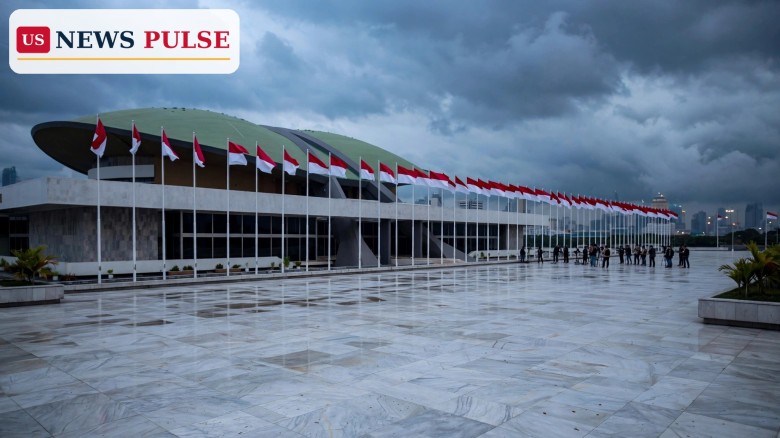
Indonesia's Vice President Gibran Rakabuming Raka formally resigned on Thursday, November 12, 2026, stepping aside just as parliament prepared to open impeachment proceedings against him over questions about his education credentials. The resignation letter was delivered to the People's Consultative Assembly, known as the MPR, in Central Jakarta, and its speaker confirmed receipt within hours.
Gibran, 39, the eldest son of former president Joko Widodo, had offered to resign to President Prabowo Subianto on Tuesday, two parliamentary sources told Reuters. The House of Representatives cancelled its plenary session scheduled for Thursday afternoon, where lawmakers were due to read out the impeachment motion, the first formal step in the process.
Key Points
- Indonesia's Vice President Gibran Rakabuming Raka submitted his resignation letter to the People's Consultative Assembly on Thursday, November 12, 2026.
- MPR Speaker Ahmad Muzani confirmed receipt of the letter in Central Jakarta and said it will be processed; a copy was also sent to President Prabowo Subianto.
- The House of Representatives cancelled its plenary session scheduled for Thursday to read out an impeachment motion after the resignation was submitted.
- 120 members of parliament from all eight House factions had signed the motion, far above the minimum of 25 lawmakers from more than one faction.
- The motion alleges Gibran no longer meets the constitutional requirements to serve as vice president after court rulings on his education documents.
What Happened
Gibran's resignation unfolded over three days. On Tuesday, November 11, he met President Prabowo Subianto and offered to resign, two parliamentary sources told Reuters. On Wednesday, the impeachment motion was submitted to House leadership with 120 signatures. On Thursday morning, Gibran delivered the formal letter to the MPR, and Speaker Ahmad Muzani confirmed receipt in Central Jakarta, saying it had also been sent to the president and will be processed.
Within hours, the House cancelled the plenary session scheduled for 2 p.m. local time on Thursday. Lawmakers had been due to read out the motion to exercise the Right to Express an Opinion, known by its Indonesian initials HMP, the first step in the impeachment process. With the resignation submitted, the session no longer had a purpose.
Background: A Contested Rise to the Vice Presidency
Gibran became Indonesia's vice president in October 2024 as the running mate of Prabowo Subianto, winning office at 36 as the youngest person ever to hold the post. His candidacy was controversial from the start. Indonesia's election law set a minimum age of 40, and Gibran was 36 when nominated, so his eligibility depended on a Constitutional Court ruling that allowed candidates under 40 with prior elected office. Gibran had served as mayor of Surakarta since 2021.
The decision came from a bench then led by Chief Justice Anwar Usman, who is married to Joko Widodo's younger sister. An ethics panel later removed Usman as chief justice over his handling of the case, although the ruling stood. The controversy over how Gibran reached the ticket never fully faded.
Gibran Resigns: The Education Documents Case
The impeachment motion rests on a different challenge to his eligibility: his education. The motion alleges that Gibran no longer meets the constitutional requirements to serve as vice president because of court rulings on his schooling. Indonesia's Supreme Court instructed the Education Ministry to withdraw an equivalency certificate that had been annulled, and the Constitutional Court found no convincing evidence that his overseas schooling met the minimum high-school requirement for his 2024 candidacy.
All 110 lawmakers of the Indonesian Democratic Party of Struggle, known as PDI-P, the largest opposition party, signed the proposal. The Prosperous Justice Party, known as PKS, contributed 28 signatures, and the NasDem Party added 19. In total, 120 members of parliament from all eight House factions signed, far above the minimum of 25 lawmakers from more than one faction. The signatures were submitted to House leadership on Wednesday, November 11.
Reactions and Quotes
MPR Speaker Ahmad Muzani confirmed receipt of Gibran's resignation letter, saying it will be processed and a copy was also sent to President Prabowo Subianto. Neither the MPR nor the presidential palace had, as of Thursday, published the full text of the letter or announced a timetable.
The scale of the motion's support was itself the clearest reaction in parliament. PDI-P, the party of former president Megawati Sukarnoputri, backed it with every one of its 110 lawmakers, and the motion drew signatures from all eight factions, including parties in Prabowo's governing coalition. Gibran made no public statement beyond the letter, and no statement from President Prabowo had been released by the time the House cancelled its session.
Why It Matters
The resignation of a sitting vice president is a rare event in Indonesian politics, removing the second-highest official in the world's third-largest democracy barely two years into a five-year term. Gibran was not only the vice president but the political heir of Joko Widodo, and his departure severs the most visible link between the Widodo family and the current government.
The episode also matters for what it says about Indonesia's institutions. The impeachment motion was built on court rulings rather than political disagreement, and it gathered support across the full spectrum of the House, including parties inside the governing coalition. That a constitutional challenge could force a resignation within days shows Indonesia's checks on executive power can still bite at the highest level.
What Happens Next
The MPR will now process the resignation letter, and if the vice presidency becomes formally vacant, the constitutional process for selecting a replacement applies. The choice of a successor will be one of the most consequential political decisions of Prabowo's presidency, shaping the balance inside his coalition and the line of succession for the remainder of the term. Attention will now turn to who Prabowo nominates and whether the coalition parties that signed the motion expect a say in the choice.
Frequently Asked Questions
Why did Gibran Rakabuming Raka resign?
He submitted it on Thursday, November 12, 2026, as parliament prepared to read out an impeachment motion alleging he no longer meets the constitutional requirements to serve as vice president after court rulings on his education documents.
Who confirmed the resignation?
MPR Speaker Ahmad Muzani confirmed receipt of the letter in Central Jakarta. It was also sent to President Prabowo Subianto.
How many lawmakers backed the impeachment motion?
120 members of parliament from all eight House factions signed, including all 110 PDI-P lawmakers, 28 from PKS and 19 from NasDem, far above the minimum of 25 from more than one faction.
What did the courts rule about Gibran's education?
The Supreme Court told the Education Ministry to withdraw an equivalency certificate for his overseas education that had been annulled, and the Constitutional Court found no convincing evidence his schooling met the minimum high-school requirement for his 2024 candidacy.
What happens to the vice presidency now?
The MPR will process it, and if the office becomes formally vacant, the constitutional process for selecting a replacement applies.
Read more: Indonesia sends 20,000 troops to Jakarta as generals held over president wiretap; NASA's Swift Observatory plunges to Earth over Indonesia after 22 years; Israel approves first 250 troops for Gaza international stabilization force.
© 2026 US News Pulse. All rights reserved.
 Print
 Save