
Trump Approved Nvidia Chip Crackdown Three Times, but Lutnick Keeps Stalling It
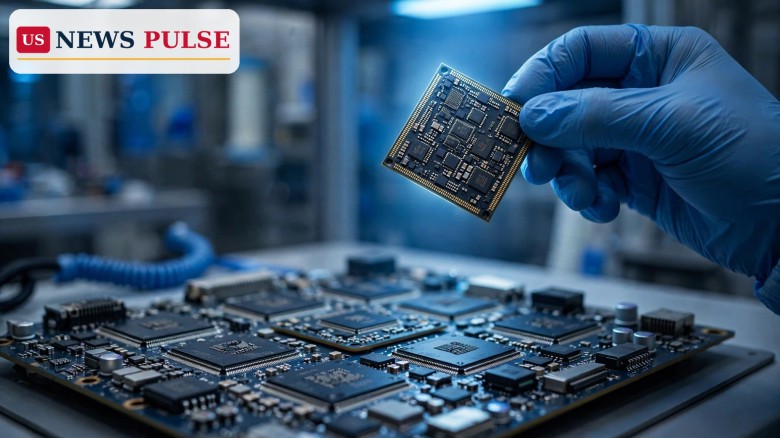
President Donald Trump has approved a crackdown on companies suspected of diverting Nvidia's advanced artificial intelligence chips to China three times this year, yet the restrictions still have not taken effect, according to a new Axios report. The Nvidia chip crackdown was authorised in May, again in August and a third time on November 5, after the president consulted billionaire adviser Elon Musk, who backed the move. Each time, Commerce Secretary Howard Lutnick was the official charged with carrying it out — and each time, the action stalled inside his department.
The report, based on interviews with six senior sources, describes a White House that has repeatedly said yes while its Commerce Department has repeatedly failed to act. It also exposes a split: Treasury Secretary Scott Bessent, who has pushed for months to blacklist the Singapore firm at the centre of the scandal, against Lutnick, who warns action could trigger a trade war with Beijing.
Key Points
- Trump authorised the crackdown three times in 2026 — in May, in August and again on November 5 — but Commerce has still not implemented it, Axios reports.
- The latest approval came after Trump telephoned Elon Musk, who backed Treasury Secretary Scott Bessent's push for tough action.
- At the centre is Megaspeed, the Singapore firm accused of funnelling about 240,000 restricted Nvidia processors, worth about $7.5 billion, to China.
- Lutnick warned the move “will start a trade war with China”; Trump replied “Let's get it done” — but Lutnick then proposed drawing up options, and nothing happened since.
- Commerce has not added a single company to its export blacklist, the entity list, in more than a year.
What Happened
The latest approval came on Thursday, November 5, in meetings that began in the White House Situation Room and ended in the Oval Office. Bessent, joined by Defence Secretary Pete Hegseth, US Trade Representative Jamieson Greer and Secretary of State Marco Rubio, pressed Lutnick on why Commerce had not put Megaspeed on the entity list, the blacklist barring American firms from selling sensitive technology to named companies without a licence. Bessent asked directly: “How come Megaspeed isn't on the entities list?”
Lutnick appeared to agree but said: “I need to check with the president.” Around 5 p.m., the group moved to the Oval Office, where Trump telephoned Musk. The billionaire adviser backed Bessent's case. Lutnick warned that listing Megaspeed “will start a trade war with China.” Trump replied: “Let's get it done.” But instead of acting, Lutnick proposed developing options and returning with them — and, one source told Axios, “it still hasn't happened.”
Background: The Megaspeed Pipeline and the Huang Affair
The dispute sits on top of one of the biggest export-control scandals in years. US officials believe intermediary networks funnelled about 240,000 restricted Nvidia processors — mostly H100, H200 and A100 chips — worth about $7.5 billion to Chinese buyers, according to The Information. At the centre is Megaspeed, a Singapore firm that became one of the largest buyers of Nvidia chips in Asia.
The affair widened when US intelligence concluded that Megaspeed executive Alice Huang, who had a romantic relationship with Nvidia chief executive Jensen Huang, was a Chinese intelligence asset. The FBI is investigating, Nvidia's board has opened a formal inquiry, and Trump says he believes Huang's claim that he had no idea Huang was a spy. Export controls bar sales of Nvidia's most advanced AI chips to China without a licence, yet Commerce has not added any company to the entity list in more than a year; the last addition was October 9, 2025.
Nvidia Chip Crackdown: Three Approvals and Still No Action
Axios reports Trump first approved the crackdown in May, when warnings about Megaspeed were already months old. He approved it again in August, and a third time on November 5, after hearing Musk's view. Three approvals, from the same president, for the same action — and still no entity listing, no new licence rule and no public enforcement step.
The pattern points to a Commerce Department reluctant to use its sharpest tool. Lutnick's trade-war warning reflects a real fear: China is America's largest trading partner in many high-tech goods, Beijing has retaliated against past controls, and officials worry aggressive listings could disrupt tariff talks. But every month without action lets suspected diverters keep operating, and tests the credibility of American export controls.
Reactions and Quotes
The quotes in the Axios report capture the split. Bessent's challenge — “How come Megaspeed isn't on the entities list?” — reflected months of Treasury frustration. Lutnick's reply, “I need to check with the president,” bought time. His warning that the move “will start a trade war with China” framed the dispute as security versus trade. Trump's answer, “Let's get it done,” settled it in the room — until it did not. A Commerce spokesperson denied Bessent confronted Lutnick; Megaspeed calls itself a “compliant and legal company”; China dismissed the spying claims as a “groundless accusation, slander and a smear.”
Why It Matters
The stakes go well beyond one Singapore firm. Nvidia's most advanced chips are the engines of the global AI race, and Washington has spent years building an export-control regime to keep them out of Chinese hands. If a firm accused of moving $7.5 billion in restricted processors cannot be listed after three presidential approvals, allies and adversaries will judge how seriously the rules are enforced. It also exposes a fault line in the administration's China policy: hawks led by Bessent, who see controls as a security imperative, against deal-makers led by Lutnick, who fear the economic fallout.
What Happens Next
The next step, on paper, is Lutnick's: he promised to develop options and return to the president. No date has been set and no deadline given. Whether Trump follows up — and whether he does so before the next round of US-China trade talks — will decide whether the third approval succeeds where the first two failed. Congress is watching, and the FBI and Justice Department probes into the Huang affair continue. If Commerce still does not move, pressure will grow for the White House to take the decision out of the department's hands.
Frequently Asked Questions
What is the Nvidia chip crackdown? A planned set of export-control actions against companies suspected of diverting restricted Nvidia AI chips to China, starting with placing Megaspeed on the Commerce Department's entity list.
Why hasn't it happened yet? Trump approved it three times — in May, August and November 5 — but Commerce Secretary Howard Lutnick delayed, warning of a trade war and promising options first.
What is Megaspeed accused of? Networks linked to the firm allegedly funnelled about 240,000 restricted Nvidia processors worth about $7.5 billion to China.
What role did Elon Musk play? On November 5, Trump telephoned Musk from the Oval Office, and Musk backed Bessent's push for action.
What happens next? Lutnick is expected to return with options, though no deadline has been set, while FBI and Justice Department probes continue.
Related coverage: Bessent Confronts Lutnick Over Megaspeed Nvidia Chips in Situation Room | Huang Affair Linked to $7.5 Billion of Nvidia Chips Shipped to China | Trump Backs Nvidia CEO Jensen Huang Amid Reported China Spy Plot Inquiry
© 2026 US News Pulse. All rights reserved.
 Print
 Save