
LA County Park Visits Fell by 151,000 Amid ICE Raids, UCLA Study Finds
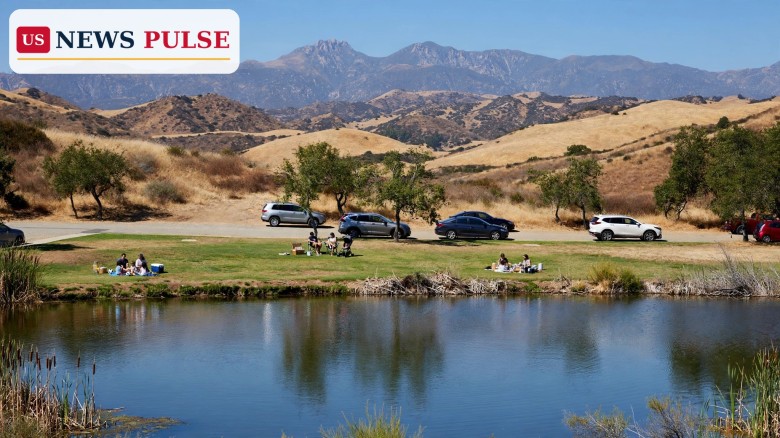
LA County park visits fell by 151,000 on summer weekends in 2025 and 2026 after President Donald Trump’s immigration enforcement operations began, according to a new study from the University of California, Los Angeles. The drop, measured across six Los Angeles County parks, has not reversed — and researchers say it shows how enforcement far from the border is reshaping everyday life in Latino neighbourhoods.
Published on November 11, 2026, by the UCLA Latino Policy and Politics Institute and the UC Berkeley Latinx Research Center, the study counted vehicle entries and converted them into visitor numbers. Its central finding is stark: the parks lost about 83,000 summer weekend visitors in 2025 and a further 68,000 in the summer of 2026, compared with the same period in 2024. The decline was steepest at the parks in Latino neighbourhoods, with Santa Fe Dam and Whittier Narrows recording the greatest falls.
Key Points
- Summer weekend visits to six Los Angeles County parks fell by 151,000 in 2025 and 2026 combined, a new UCLA study found.
- Researchers counted about 21,000 fewer vehicle entries in 2025 and 17,000 fewer in 2026 than in 2024, or 83,000 and 68,000 fewer visitors at four people per car.
- Vehicle entries fell 17% in 2025 and were still 14% lower in 2026 compared with 2024.
- The drop was sharpest at parks in Latino neighbourhoods, with Santa Fe Dam and Whittier Narrows seeing the greatest falls.
- Attendance fell after the federal immigration raids of June 2025 and has not bounced back, the researchers said.
What Happened
The researchers tracked summer weekend traffic at six parks: Frank G. Bonelli Regional Park, Castaic Lake State Recreation Area, Kenneth Hahn State Recreation Area, Santa Fe Dam Recreational Area, Peter F. Schabarum Regional County Park and Whittier Narrows Recreation Area. They compared vehicle entries in the summers of 2025 and 2026 with the summer of 2024, before the enforcement surge, at four visitors per vehicle.
The pattern was consistent across both years: vehicle entries fell 17% in 2025 and remained 14% lower in 2026 than in 2024. That translates into roughly 21,000 fewer cars in 2025 and 17,000 fewer in 2026 — and, at four visitors per car, about 83,000 fewer visitors in the first summer and 68,000 fewer in the second. The study was published on November 11, 2026, and reported by USA TODAY the following day.
Background: The June 2025 Raids
Attendance at the parks fell after the federal immigration raids that swept Los Angeles County in June 2025, part of the Trump administration’s wider enforcement campaign. Carried out by Immigration and Customs Enforcement and other federal agencies, the raids targeted workplaces, day-labour sites and neighbourhoods across the county, prompting protests and a sharp rise in fear among immigrant families.
That fear did not fade when the raids eased. The study’s authors found that visits stayed down through the summer of 2026, more than a year after the June 2025 operations. Parks in Latino neighbourhoods were hit hardest, a pattern the researchers link to the communities most exposed to enforcement. Santa Fe Dam and Whittier Narrows, both popular with Latino families for weekend gatherings, saw the greatest falls of the six parks studied.
LA County Park Visits: What the Numbers Show
The numbers tell a story of a decline that has become the new normal. In 2025, the first summer after the raids, vehicle entries at the six parks fell 17% against 2024. In 2026, entries recovered only slightly, remaining 14% below the 2024 level — 83,000 summer weekend visitors lost in 2025 and another 68,000 in 2026, 151,000 in total.
The geography of the decline matters as much as its size. The steepest falls came at Santa Fe Dam and Whittier Narrows, parks in and near Latino communities that have long served as weekend gathering places for large family groups. The researchers’ message: the drop is not a general post-pandemic trend or a weather effect — it is concentrated where enforcement fear is highest, and it has persisted for two summers running.
Reactions
The study’s authors present the findings as evidence that immigration enforcement reaches well beyond the people it detains. When families stop going to the park, they argue, the cost is measured in lost recreation, lost community life and lost public space — not only in arrests and deportations. The data, they say, shows a chilling effect that has outlasted the raids.
USA TODAY said it has asked Immigration and Customs Enforcement for comment on the study. No response from the agency was reported at the time of publication. The Trump administration has defended its operations as a lawful crackdown on illegal immigration, saying they target people in the country unlawfully.
Why It Matters
Parks are among the most public of public spaces, and a 151,000-visitor decline is a visible sign of how enforcement changes behaviour across a whole county. For many Latino families in Los Angeles, the county’s regional parks are the weekend — birthday parties, barbecues and large family gatherings with few substitutes. When those families stay home, the loss is social as well as recreational.
The findings add a new dimension to the debate over immigration enforcement. The administration’s supporters point to arrests and deportations as success. Critics, including the researchers, say the real measure is broader: the fear keeping people out of parks, shops and schools, even when they have committed no offence. The two-year persistence of the decline gives that argument fresh weight.
What Happens Next
The study gives researchers a baseline to watch. If attendance recovers in the summer of 2027, it would suggest the chilling effect is finally fading. If it stays down, the parks’ lost visitors will look more like a permanent shift in how Los Angeles County’s Latino communities use public space.
For now, the parks are still there — and still emptier than they were. The open question is whether the families who stopped coming will return, and what it would take for them to feel safe enough to do so.
Frequently Asked Questions
How many fewer visitors did Los Angeles County parks lose?
Summer weekend visits to six county parks fell by 151,000 in 2025 and 2026 combined — about 83,000 fewer in 2025 and 68,000 fewer in the summer of 2026, compared with 2024.
Who carried out the study?
The UCLA Latino Policy and Politics Institute and the UC Berkeley Latinx Research Center, which published it on November 11, 2026.
Which parks were studied?
Frank G. Bonelli Regional Park, Castaic Lake State Recreation Area, Kenneth Hahn State Recreation Area, Santa Fe Dam Recreational Area, Peter F. Schabarum Regional County Park and Whittier Narrows Recreation Area.
Which parks saw the biggest drops?
Santa Fe Dam and Whittier Narrows, the parks in Latino neighbourhoods, recorded the greatest falls in attendance.
Has attendance recovered?
No. Vehicle entries were still 14% below 2024 levels in the summer of 2026, more than a year after the June 2025 raids.
Related coverage: Dearborn ICE arrests: 3 detained in Michigan as federal agents skip local notice; ICE takes 8-year-old Haitian third-grader into custody after San Diego check-in; Democrats gear up for immigration fight as Miller promotion signals no let-up.
© 2026 US News Pulse. All rights reserved.
 Print
 Save