
ICE Holds California Nurse Ann Lawani for Two Months as She Vanishes From Database
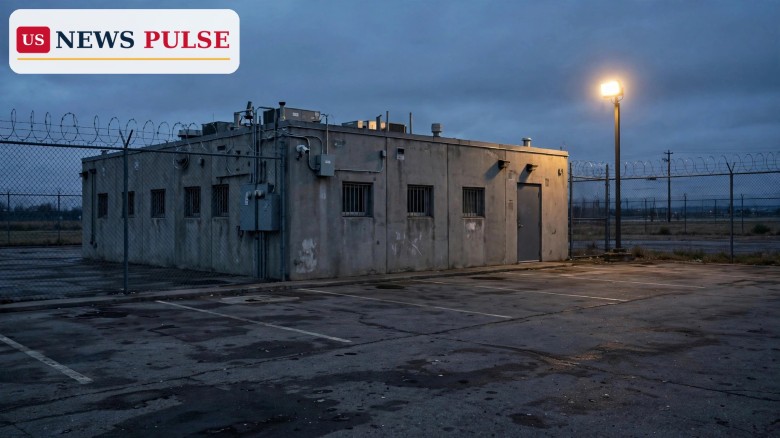
ICE holds California nurse Ann Lawani in detention for nearly two months, and the 39-year-old nurse and university professor has vanished from the agency's public detainee database. Her family could not find her for weeks after agents arrested her at her home in Lodi, California, and her case has now drawn a demand for her release from a member of Congress and a judge's order blocking her removal while her detention is challenged in court.
Key Points
- ICE agents arrested Dr Ann Lawani, 39, a Nigerian-born nurse and professor at the University of San Francisco, at her home in Lodi, California, on September 16, 2026.
- She was moved through facilities in Stockton, Bakersfield and El Paso, Texas, to the South Louisiana ICE Processing Center.
- Her family did not know where she was for nearly two months, and she does not appear in ICE's public detainee locator database.
- Rep. Josh Harder wrote to Homeland Security Secretary Markwayne Mullin on October 20 demanding her release and return to California.
- A federal judge blocked her removal on September 29 while her habeas petition is pending, and ordered the government to justify her detention.
What Happened
Federal agents arrested Lawani at her home in Lodi on the morning of September 16, 2026. She was then moved through facilities in Stockton, Bakersfield and El Paso, Texas, to the South Louisiana ICE Processing Center, where she remains in custody nearly two months later, more than 1,800 miles from the Northern California community where she has lived and worked for years.
Her family did not know where she was for nearly two months. She also does not appear in ICE's public detainee locator, the tool families and lawyers use to find people in custody. The New York Times has reported that Homeland Security changed its policy in early 2026 so detainees with final removal orders no longer appear in the public database, hiding about 20,000 people — nearly 30 percent of all ICE detainees — from public view.
Background: A Nurse, a Professor and a 2013 Removal Order
Lawani, 39, was born in Nigeria and has built her life in California. She is a professor at the University of San Francisco, where she serves as Statewide Master's Entry MSN Programme Director, overseeing 230 nursing students and partnerships with 38 clinical sites. She has also worked for more than a decade as a nurse at John Muir Health and cares for her 83-year-old father. She has no criminal history.
Her immigration history is long. She entered the United States in 2007 on a visitor visa and overstayed. In 2013, a judge issued a final removal order, dated August 6. But her attorney, Natalia Vieira Santana, says a judge also issued an order in 2013 withholding her removal to Nigeria because she would likely face persecution there. She holds work authorisation through 2029, her attorney says.
Her lawyers filed a habeas corpus petition on September 18, asking a federal court to review whether her detention is lawful. On September 29, a judge in the Eastern District of California blocked her removal while the petition is pending and ordered Homeland Security to justify her custody.
ICE Holds California Nurse Ann Lawani as Thousands Vanish From the Public Locator
Lawani's disappearance from the public locator is not a clerical error. Under the policy change reported this year, people with final removal orders are simply no longer listed, even though they remain in custody. The locator was built so families and lawyers could find a detained person quickly; when a detainee is missing from it, relatives may spend weeks calling facilities, as Lawani's family did.
The scale is large: about 20,000 people — nearly 30 percent of everyone ICE detains — are now hidden from public view. Critics say the gap makes detention less transparent and harder to challenge. The department has not said why the change was made.
Reactions: A Congressman Demands Answers
Rep. Josh Harder, a Democrat whose district includes Lodi, wrote to Homeland Security Secretary Markwayne Mullin on October 20 demanding Lawani's release under an order of supervision and her return to California. He said her detention "raises serious questions about enforcement priorities for someone who poses no public-safety threat."
Her attorney says the case turns on the 2013 order withholding her removal to Nigeria, which she says remains in force, and on her work authorisation through 2029. Homeland Security says only that she entered in 2007, overstayed, received a final removal order in 2013 and will remain in custody pending removal.
Why It Matters
Lawani's detention removes a working nurse and educator from her community. Her 230 students and the patients at John Muir Health lose a trained professional, and her 83-year-old father loses his caretaker. It also raises a wider question about who enforcement targets: a woman with no criminal history, a court order protecting her from removal to Nigeria, and a valid work permit.
The database gap matters beyond one case. If nearly a third of detainees cannot be found through the public locator, families, lawyers and journalists lose the main tool for checking who is in custody and where.
What Happens Next
The next step is in federal court, where the judge in the Eastern District of California is weighing Lawani's habeas petition and the government must explain why she should stay in detention. If the court rules for her, she could be released under an order of supervision and return to California while her case continues.
Harder is pressing the department for answers, and the petition for her release keeps growing. If the court sides with the government, the removal block could lift and her 2013 order could be enforced — unless the order protecting her from return to Nigeria prevails. Either way, the case tests how far detention powers reach.
Frequently Asked Questions
Who is Ann Lawani?
A 39-year-old Nigerian-born nurse and professor at the University of San Francisco, where she directs the Statewide Master's Entry MSN programme for 230 nursing students.
Why was she detained by ICE?
Agents arrested her at home in Lodi on September 16, 2026. Homeland Security says she entered the US in 2007 on a visitor visa, overstayed, and received a final removal order in 2013.
Why can't her family find her in the ICE database?
DHS changed its policy in 2026 so detainees with final removal orders no longer appear in the public locator, hiding about 20,000 people — nearly 30 percent of detainees.
What has the court done?
A federal judge blocked her removal on September 29, 2026, while her habeas petition is pending, and ordered DHS to justify her detention.
What is being done to free her?
Rep. Josh Harder has demanded her release, her lawyer is fighting in court, and a Change.org petition had more than 9,800 signatures by November 11.
Related coverage: LA County park visits fell by 151,000 amid ICE raids, UCLA study finds; Trump threatens to double tariffs on Mexico over migrant caravans heading to Texas.
© 2026 US News Pulse. All rights reserved.
 Print
 Save