
Four Tankers Hit by Explosions in Strait of Hormuz as Iran Says Two More Strike Mines
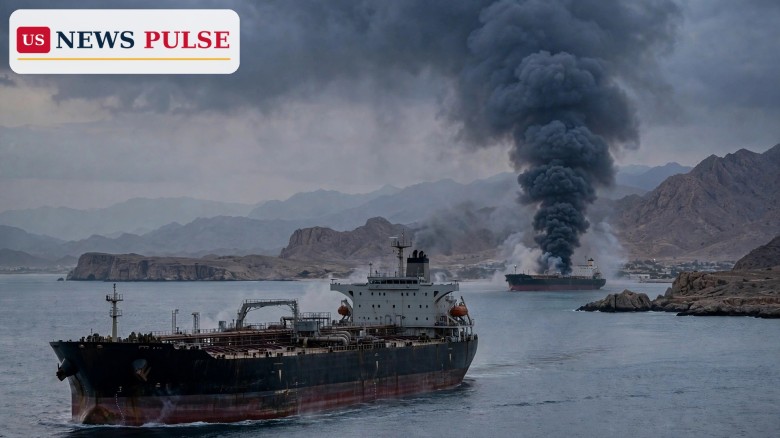
Iran said on Thursday, November 12, 2026, that four oil tankers were hit by explosions in the Strait of Hormuz, doubling the number of vessels struck in the world's most important oil shipping lane in a single week. The announcement confirmed that two more tankers hit mines on Thursday afternoon in the eastern strait, a day after Iran's Revolutionary Guards Navy said two supertankers had been disabled by explosions on Wednesday night. The vessels are unidentified, and Reuters said it could not immediately verify the Iranian account. The attacks came even as traffic through the strait had begun to recover and hopes of a negotiated end to the nine-month US-Iran war had pushed oil prices lower.
Key Points
- Iran's military said four oil tankers in total were hit by explosions in the Strait of Hormuz, two more striking mines on Thursday afternoon.
- The Revolutionary Guards Navy said the first two supertankers were disabled on Wednesday night after ignoring warnings against using an "unauthorised route".
- Iran's army said the two Thursday tankers hit mines in the eastern strait after ignoring warnings and disabling their radar systems, state television reported.
- At least 10 ships were hit in the first 10 days of November, after 37 attacks in October — the highest monthly tally since the conflict began, per Washington Institute data.
- The strait normally carries about a fifth of global oil, so every new attack threatens energy supplies and prices worldwide.
What Happened
The first two explosions came on Wednesday night, when the Revolutionary Guards Navy said two supertankers were disabled in the Strait of Hormuz. Iranian state media said the vessels "exploded after hitting naval mines" and broadcast video of the incidents. The Guards said the tankers had ignored repeated warnings against using an "unauthorised route" through the narrow waterway,
On Thursday afternoon, Iran's army said two other tankers hit mines while sailing through the eastern Strait of Hormuz, also after ignoring warnings and disabling their radar systems, state television reported. Together, the two announcements brought the total to four tankers hit by explosions in about 24 hours. Neither announcement identified the vessels or their crews, and no casualty figures or independent confirmation of the damage were available.
Background and Context
The US-Iran war began on February 28, 2026, and is now in its ninth month. The Strait of Hormuz, the narrow channel between Iran and Oman that connects the Persian Gulf to the open sea, has been one of its main battlegrounds. About a fifth of the world's oil normally passes through the strait, and attacks on commercial shipping there have become a regular feature of the conflict, with mines, drones and missiles all used against them.
Washington Institute data puts the scale in context: at least 10 ships were hit in the first 10 days of November, after 37 attacks in October, the highest monthly tally since the conflict began — raising shipping costs and forcing some vessels onto longer, costlier routes.
Diplomacy has continued alongside the fighting. Vice President JD Vance said on November 2 that Washington had made "progress" in talks with Iran and that the United States had set "no strict deadline" for a deal. President Donald Trump said the same day that a deal was "coming together very nicely". Iran wants sanctions relief and an end to the US naval blockade; Washington wants a verifiable commitment that Iran will not rebuild its nuclear programme.
Strait of Hormuz Tankers: Why the Waterway Matters
The Strait of Hormuz is only about 21 miles wide at its narrowest point, and its shipping lanes are narrower still. Almost every barrel of oil exported from Saudi Arabia, Iraq, Kuwait, the United Arab Emirates and Qatar must pass through it, along with a large share of the world's liquefied natural gas. A serious disruption there can push up fuel prices within days.
That is why each new round of tanker attacks moves markets even when no oil is spilled. Oil prices rose on Thursday as attacks on Saudi energy sites claimed by Yemen's Houthis added to the Hormuz news, with Brent crude settling at $95.82 a barrel, up $3.06, or 3.3 percent. Earlier in the war, Brent spiked above $115, then fell to $104.77 on November 2 as hopes of a deal rose.
Reactions and Statements
Iran presented the explosions as the consequence of tankers defying its warnings. The Revolutionary Guards Navy said the first two supertankers had ignored warnings against using an "unauthorised route", and the army said the two Thursday vessels had ignored warnings and disabled their radar systems before hitting mines in the eastern strait. Iranian state media broadcast what it said was video of the incidents.
Reuters reported that it could not immediately verify the Iranian account, and no other government or shipping authority had confirmed the four incidents when the announcements were made. The United States military did not immediately comment on the latest claims.
Why It Matters
Four tankers hit in a single day would be a serious escalation in any conflict. In the Strait of Hormuz, it is more than that: a direct challenge to the flow of oil that powers much of the world economy. If shipowners or insurers decide the strait is too dangerous, supplies tighten and prices rise worldwide.
The strikes also landed as hopes of de-escalation were growing — a signal from Iran that it can still disrupt the strait at will, and a reminder to Washington that the shipping war continues even as talks go on.
What Happens Next
Attention now turns to whether the four vessels are identified and whether any crew members were hurt, as well as to independent verification of what happened. Shipping authorities are expected to issue fresh transit guidance, and insurers will reassess Gulf voyage premiums.
Diplomatically, the attacks will test the fragile momentum behind the talks, with mediators shuttling between the two sides. If the tanker campaign continues, it could harden positions; if it pauses, it may signal real progress in the negotiations.
Frequently Asked Questions
How many tankers were hit in the Strait of Hormuz?
Iran said four oil tankers in total were hit. Two supertankers were disabled on Wednesday night, November 11, and two more hit mines on Thursday afternoon, November 12, 2026.
What does Iran say caused the explosions?
Iranian state media said the tankers exploded after hitting naval mines, having ignored warnings against using an "unauthorised route" and disabled their radar systems.
Have the incidents been independently verified?
Not yet. Reuters said it could not immediately verify the Iranian account, the vessels are unidentified, and no casualty figures have been released.
Why does the Strait of Hormuz matter so much?
About a fifth of the world's oil normally passes through the strait. Disruption there can raise fuel prices worldwide within days.
What happens next?
Shipping authorities should update transit guidance, insurers will reassess Gulf premiums, and the attacks will test the momentum behind US-Iran talks.
Read more: Two Supertankers Explode in Strait of Hormuz After Hitting Mines, IRGC Says | Trump Says US Doesn't Need an Iran Deal, Pulls Vance From Talks | USS George H.W. Bush Deployment Extended to 12 Months as Iran War Drags On
© 2026 US News Pulse. All rights reserved.
 Print
 Save