
CDC Confirms Six Measles Deaths in 2026 as Worst US Outbreak in 35 Years Grows
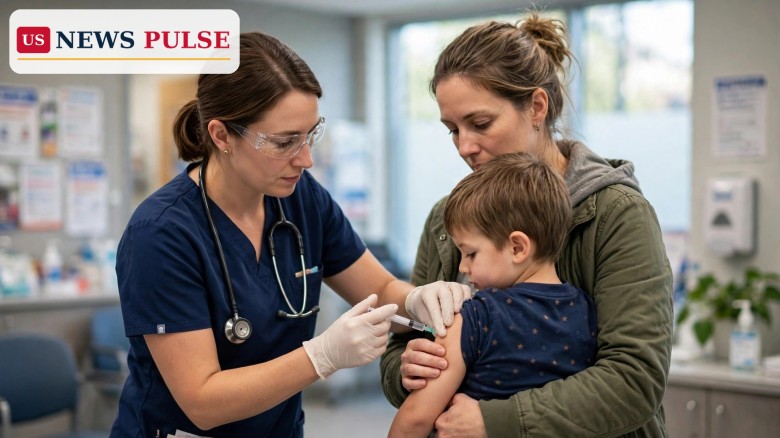
The Centers for Disease Control and Prevention (CDC) has confirmed six measles-related deaths in the United States in 2026, double the three deaths recorded in all of 2025, as the country battles its worst measles resurgence in 35 years. The updated figure, published on the agency's website on Thursday, November 12, 2026, comes in a year when more than 5,100 Americans have already caught the disease. Measles was declared eliminated in the United States in 2000, and health officials now fear that hard-won status may be about to slip away.
Key Points
- The CDC confirmed six measles-related deaths in the US in 2026, double the three deaths recorded in all of 2025.
- The CDC did not name the states; state health departments report at least eight deaths this year — six in Pennsylvania, one in New York and one in Wisconsin.
- The US has recorded 5,182 confirmed cases across 47 jurisdictions as of November 5, the worst annual total since 1991.
- A Pan American Health Organization commission met November 10-13 on whether the US keeps its measles elimination status; a decision is due Monday, November 17.
- The MMR vaccine is about 97 percent effective after two doses; about 96 percent of this year's cases are in unvaccinated people.
What Happened
The CDC confirmed the six deaths in figures posted to its website on Thursday, November 12, according to Reuters, without disclosing the states involved. The toll doubles the total recorded in 2025 and comes a week after the CDC's previous update, which had put the 2026 death toll at four — three of them in a single week: an infant in Wisconsin, a Pennsylvania resident and a child in Lewis County, New York.
The Wisconsin infant was the state's first measles death in more than 35 years; the Pennsylvania resident was the state's sixth death of the outbreak; and the Lewis County child was New York's first measles death in 30 years. The case count is the largest in a generation: 5,182 confirmed cases as of November 5, up 330 from the previous update, against 2,289 in all of 2025, with 562 people hospitalised.
Background: How the Outbreak Grew
Measles was declared eliminated in the United States in 2000, meaning the virus no longer spread continuously within the country. What changed is vaccination coverage. The share of kindergarten children vaccinated against measles fell from 95.2 percent in the 2019-20 school year to 92.4 percent in 2025-26, below the roughly 95 percent threshold needed to stop the virus spreading in a community. Around 280,000 kindergarten children are now estimated to be at risk.
The surge has been driven by large state outbreaks: Pennsylvania has reported 1,467 cases across 44 counties, and Kentucky 204 cases in its largest surge since 1991. Adults aged 20 and older account for the largest share, with 2,132 cases, and hospitalisation rates are highest among the youngest, with 17 percent of infected children under five needing hospital care.
Measles Deaths 2026: Why the CDC Count Differs From State Reports
The gap between the CDC's six deaths and the eight reported by state health departments is a matter of method, not disagreement. The CDC now counts measles deaths from verified mortality data held by the National Center for Health Statistics, a change made on September 4, 2026, under Health Secretary Robert F. Kennedy Jr. Verified records take time to reach federal statisticians, so the CDC tally can lag behind state announcements.
Both counts agree on the direction: deaths are rising in a year when cases have already passed 5,000. The difference also matters for the decision due next week: the Pan American Health Organization commission that met in Washington from November 10 to 13 will decide whether the United States keeps the elimination status it has held since 2000, with its decision expected on Monday, November 17.
Reactions and Official Guidance
The CDC urges anyone unsure of their vaccination status to check their records and get vaccinated if needed, and advises parents to make sure children receive both doses of the measles, mumps and rubella (MMR) vaccine on schedule. The agency says vaccination is the most effective protection against measles. State health departments in the hardest-hit states have run vaccination drives, opened pop-up clinics and alerted doctors to watch for symptoms: high fever, cough, runny nose, red eyes and a rash that usually starts on the face.
Why It Matters
Measles is one of the most contagious diseases known to medicine: an infected person can spread it simply by breathing or coughing, and the virus can linger in the air for up to two hours. Around nine in ten unvaccinated people exposed to measles will catch it. The human cost is already visible: more than 560 hospitalisations and six confirmed deaths, including an infant and a child, from a disease preventable with a vaccine costing a few dollars a dose.
What Happens Next
All eyes are now on Monday, November 17, when the Pan American Health Organization commission is expected to announce whether the United States keeps its measles elimination status. The CDC will also publish its next weekly case update: if the weekly increase stays above 300, the national total will pass 5,500 within two weeks and could approach 6,000 before the end of the year. Anyone unsure of their vaccination status can check records with their doctor or state immunisation registry.
Frequently Asked Questions
How many people have died of measles in the US in 2026?
Six, according to the CDC — double the three of all of 2025. State health departments report at least eight: six in Pennsylvania, one in New York and one in Wisconsin.
How many measles cases are there in the US in 2026?
5,182 confirmed cases as of November 5, 2026 — the highest annual total since 1991. The Johns Hopkins tracker counts more than 5,400.
Why is the CDC death count lower than the state count?
The CDC counts deaths from verified National Center for Health Statistics data, a method adopted on September 4, 2026. Verified records take time to arrive, so the federal tally lags state announcements.
How effective is the MMR vaccine?
Two doses are about 97 percent effective, according to the CDC: a first dose at 12 to 15 months and a second at 4 to 6 years.
Could the US lose its measles elimination status?
Yes. A Pan American Health Organization commission met November 10-13, 2026, and its decision is due Monday, November 17. Losing the status carries no sanctions, but regaining it needs a full year without sustained transmission.
Read More on US News Pulse
- US Measles Cases Rise to 5,182 Nationwide as CDC Reports Four Deaths in 2026
- US Set to Lose Measles Elimination Status After 25 Years as PAHO Review Nears
Image: a nurse gives the MMR vaccine to a young child at a US health clinic. Sources: Reuters, CDC.
© 2026 US News Pulse. All rights reserved.
 Print
 Save