
SpaceX Tesla Merger Talks Advance as Record $3.4 Trillion Deal Nears December
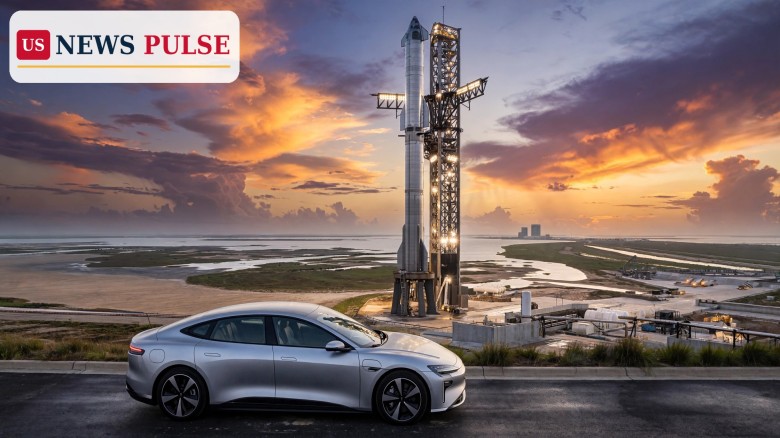
Talks to combine SpaceX and Tesla into a single company have moved into detailed negotiations over price and control, Bloomberg reported on Thursday, November 12, with a SpaceX Tesla merger announcement possible as early as December. The deal would unite Elon Musk's rocket, satellite, artificial intelligence, robotics and electric vehicle businesses under one roof — and at a combined value of roughly $3.4 trillion, it would be the largest merger in history. The boards and advisers of both companies are now working through the terms and governance of a combined company, although no final agreement has been reached and an announcement could slip into early 2027.
Key Points
- Bloomberg reported Thursday, November 12, that SpaceX and Tesla are in advanced merger talks, with an announcement possible as early as December 2026 or in early 2027.
- SpaceX is worth more than $1.9 trillion since its June 2026 IPO; Tesla is worth about $1.5 trillion — a combined $3.4 trillion.
- The talks are now about terms, including how many SpaceX shares Tesla investors would get, in what amounts to SpaceX absorbing Tesla.
- Musk called a merger "a good idea" on SpaceX's earnings call, and both boards have formed special committees of independent directors.
- Hurdles remain, including SpaceX's US defence contracts, Tesla's reliance on China, and shareholder and regulatory approval.
What Happened
Bloomberg reported the progress on Thursday, citing people familiar with the matter. The boards and advisers of both companies are working through the terms and governance of a combined company; the talks have moved past whether to merge and on to how it would work. No final agreement has been reached, and neither company commented.
Tesla shares closed up 1.69 percent on November 12 — Nvidia shares sank again this week as its market value fell below $4 trillion in the AI sell-off. Tesla holds its annual shareholder meeting on December 3 at Giga Texas, and the directors who would approve the deal face re-election, including Musk, chair Robyn Denholm and JB Straubel.
Background: How the Two Companies Got Here
Musk first floated the idea in May, weeks before SpaceX went public in June. In October, Tesla's proxy filing read like a board preparing for a combination: Ira Ehrenpreis, who chairs Tesla's compensation and governance committees, joined SpaceX's board in February. The next day, Musk confirmed both boards had formed special committees, saying he was not involved because of conflicts of interest.
The companies are already intertwined. They share a chip joint venture, Terafab, and SpaceX bought Musk's AI company xAI earlier this year for roughly $250 billion. The companies reportedly want to close before President Donald Trump leaves office. Congress flipped to the Democrats in the midterms, and they have said Musk's companies will get a hard look. SpaceX has also faced court scrutiny: a federal appeals court ruled it must face sex-bias claims.
The SpaceX Tesla Merger: What the Deal Would Look Like
The scale is hard to overstate. The record for a single deal is Vodafone's $183 billion takeover of Mannesmann in 2000. A combined SpaceX and Tesla at roughly $3.4 trillion would be about eighteen times that, dwarfing SpaceX's own $250 billion xAI purchase.
The main variable is how many SpaceX shares Tesla investors would receive, in what would amount to SpaceX absorbing Tesla. That fits the valuations: SpaceX is worth more than $1.9 trillion after its June IPO, while Tesla sits at around $1.5 trillion.
Governance matters as much as price. Musk owns about 20 percent of Tesla but controlled roughly 85 percent of SpaceX's voting power through super-voting shares. Swapping Tesla shares for SpaceX shares means trading one-share-one-vote stock for shares in a company where Musk's control is effectively locked in.
The deal would also pay Musk directly. Under his 2025 chief executive award, a change in control drops the operational milestones and tests market capitalisation at the deal price. A deal valuing Tesla at $2 trillion — about a 33 percent premium — would clear the first tranche immediately.
Reactions and Quotes
Musk has been open about his enthusiasm. On SpaceX's third-quarter earnings call last month, he said a merger with Tesla would be "a good idea", and confirmed both boards had formed special committees of independent directors.
Analysts are focused on the hardest problem: squaring SpaceX's defence and government work with Tesla's footprint in China. A JPMorgan analyst called the two "key dynamics that are at odds with each other" for regulators and shareholders — the same tension behind a July Wall Street Journal report that Tesla was weighing a sale or spinoff of its China operations, which Musk denied.
Why It Matters
A combination would create something the corporate world has never seen: one company spanning rockets, satellites, artificial intelligence, robotics and electric vehicles. It would put Musk's ambitions for AI, robotics, cars and space under one roof.
It would also reshape owning Tesla stock. Shareholders would exchange shares in a public car and energy company for shares in a rocket, satellite and AI company valued at a premium and controlled by one person. That trade is the heart of the governance debate.
The deal would test regulators too. SpaceX holds major US defence contracts, while Tesla depends heavily on China: Giga Shanghai is its most productive factory and builds more than half its cars. Musk has already offered to cancel any SpaceX government contract Washington no longer wants, a sign of how closely the company's government work is watched.
What Happens Next
The near-term marker is Tesla's annual shareholder meeting on December 3 at Giga Texas. The ballot covers re-electing Musk, Denholm and Straubel, a say-on-pay vote and the auditor, but the meeting will be read as a verdict on the company's direction as the talks intensify.
Behind the scenes, the special committees will keep negotiating the exchange ratio and governance, including how to ring-fence Tesla's China business and SpaceX's defence work. Giga Shanghai shipped 67,829 vehicles in October alone.
If the talks hold, an announcement could come as early as December, or slip into early 2027 — followed by shareholder votes and a long regulatory review, with a Democratic Congress taking office in January promising scrutiny of Musk's companies.
Frequently Asked Questions
How big would the SpaceX-Tesla merger be?
Roughly $3.4 trillion — SpaceX over $1.9 trillion, Tesla about $1.5 trillion — the largest merger ever.
When could the merger be announced?
As early as December 2026, per Bloomberg's sources, though it could slip into early 2027. No final agreement has been reached.
Would SpaceX buy Tesla, or Tesla buy SpaceX?
The talks point to SpaceX absorbing Tesla. The main question is how many SpaceX shares Tesla investors would receive.
What are the biggest obstacles to the deal?
SpaceX's defence contracts, Tesla's China reliance, combined-company governance, and shareholder and regulatory approval.
What happens to Tesla shareholders if the merger goes ahead?
SpaceX shares, at a ratio still being negotiated. Tesla's shareholder meeting is December 3 at Giga Texas.
© 2026 US News Pulse. All rights reserved.
 Print
 Save