
Naro-Fominsk Strike: Ukraine Drones Hit Russian Warship in Gulf of Finland
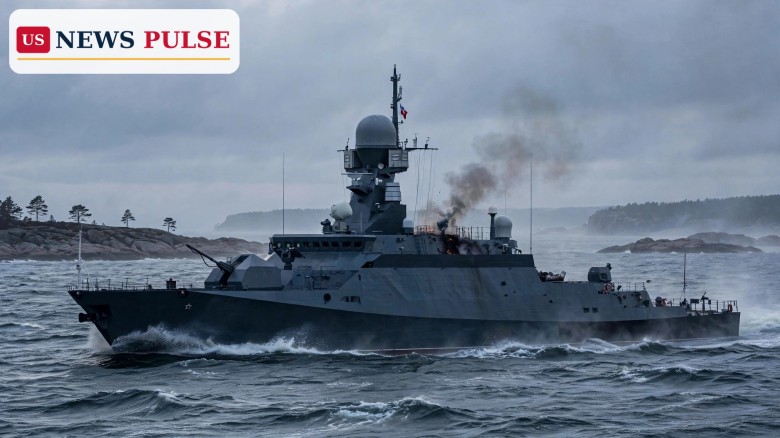
Ukraine's Security Service said its drones struck the Russian missile corvette Naro-Fominsk in the Gulf of Finland in the early hours of Wednesday, November 11, 2026, in what would be the first Ukrainian attack on a Russian warship at sea in the Baltic since the full-scale invasion began.
Finland's armed forces confirmed on Thursday that they had detected a strike on a Russian warship in the gulf, and Estonia's defence minister said an explosion had gone off aboard a Russian Baltic Fleet vessel at about 5:30 a.m. local time on Wednesday. The ship then headed toward St. Petersburg under its own power, and Moscow has not commented on the claim.
Key Points
- Ukraine's Security Service (SBU) said its drones struck the Russian missile corvette Naro-Fominsk in the Gulf of Finland early on Wednesday, November 11, 2026.
- Finland confirmed it detected a strike on a Russian warship near Gogland Island, about 40 km off its coast, where sensors recorded flashes and smoke.
- Estonian Defence Minister Martin Herem said an explosion occurred aboard a Russian Baltic Fleet vessel at about 5:30 a.m., and the ship sailed on toward St. Petersburg.
- The Naro-Fominsk is a Buyan-M-class corvette, commissioned in December 2023, with an eight-cell launcher for Kalibr and Oniks cruise missiles.
- Damage and casualties are unknown, Moscow has not commented, and neither NATO state has independently verified the claim.
What Happened
The SBU said the strike was part of a wider drone operation against the Ust-Luga oil export port on Russia's Baltic coast, one of the country's main outlets for crude and refined products.
Finland's armed forces said on Thursday that their sensors had picked up the attack. A senior Finnish official told the broadcaster Yle that the strike took place near Gogland Island, roughly 40 kilometres off the Finnish coast, where sensors recorded flashes and smoke over the water.
Estonia's defence minister, Martin Herem, told the broadcaster ERR that an explosion occurred aboard a Russian Baltic Fleet vessel at about 5:30 a.m. local time, and the ship then continued toward St. Petersburg under its own power. Ukraine's general staff said five oil storage tanks were damaged at Ust-Luga, and Russian regional authorities said three workers were injured.
Background
The Naro-Fominsk is one of Russia's newest small warships. A Buyan-M-class corvette, it was launched in December 2022 and commissioned in December 2023. Despite its modest size, it carries an eight-cell launcher able to fire Kalibr land-attack cruise missiles and Oniks anti-ship missiles, weapons Russia has used extensively against Ukraine.
The Buyan-M class was built for shallow coastal waters: launching long-range missiles from behind Russia's air defences, then returning to guarded ports such as Ust-Luga and Baltiysk. Until now, Ukraine had not been able to reach these ships at sea in the Baltic.
Ukrainian naval drones have sunk or badly damaged a string of Russian warships in the Black Sea, including the flagship Moskva in 2022. The same overnight operation also sent Ukrainian drones across NATO airspace in Lithuania, Latvia and Estonia, triggering air alerts and scrambling NATO jets.
Naro-Fominsk Strike: A First for the Baltic Sea
If confirmed, the strike would mark a new phase in a war that has spread far beyond the front lines in eastern Ukraine. Ukraine has shown it can hit Russian warships at sea; doing so in the Baltic, in waters watched by Finland, Estonia and NATO, extends its drone campaign by hundreds of kilometres.
The Gulf of Finland is a narrow, crowded stretch of water, bordered by Finland to the north, Estonia to the south and Russia to the east. Gogland Island, where Finnish sensors placed the strike, sits about 40 kilometres off the Finnish coast, midway between Helsinki and St. Petersburg.
That the ship sailed on under its own power suggests limited damage, but even a limited hit carries a message: a corvette built to launch cruise missiles at Ukraine from the Baltic is no longer safe there. The same night, five oil tanks were hit at Ust-Luga.
Reactions
Kyiv has presented the operation as a success, with the SBU claiming the strike and the general staff reporting damage at Ust-Luga. Ukraine has not released imagery of the corvette, and no independent footage of the ship has emerged.
Helsinki and Tallinn have been careful. Finland confirmed only what its sensors recorded, a strike on a Russian warship in the gulf, and has not endorsed Ukraine's account of which ship was hit or how badly it was damaged. Estonia's account matches the timeline, but Tallinn has not verified the claim in full.
Moscow has said nothing. The Russian Defence Ministry has not commented on the corvette, the port or the drones that crossed NATO airspace. Russia routinely says nothing about successful Ukrainian strikes.
Why It Matters
First, it extends Ukraine's naval drone war into a new sea. The Black Sea campaign forced Russia's fleet to retreat from Sevastopol; a Baltic campaign, even a small one, would force Moscow to defend a second coastline and a second fleet.
Second, it puts NATO's newest members at the centre of the war's geography. Finland joined the alliance in 2023 and Estonia has been a member since 2004. Finnish sensors detected the attack, and the drones crossed the airspace of three allies that night.
Third, it strikes at the economics of the war. Ust-Luga is a major oil export terminal, and the Baltic Fleet's corvettes exist in part to protect it. Hitting both in one night signals sustained pressure on the revenue and warships that sustain Russia's campaign.
What Happens Next
The first question is verification. Satellite imagery and shipping trackers may soon show whether the Naro-Fominsk is at sea, in port at Baltiysk or Kronstadt, or under repair. Visible damage in port would strengthen Ukraine's claim; a ship sailing normally would weaken it.
The second question is Russia's response. Moscow may move its missile ships closer to St. Petersburg, increase air defences around Ust-Luga, or retaliate against Ukrainian ports and energy infrastructure, as it has after previous long-range strikes.
Frequently Asked Questions
What is the Naro-Fominsk?
A Buyan-M-class missile corvette of Russia's Baltic Fleet, launched in December 2022 and commissioned in December 2023, with an eight-cell Kalibr and Oniks launcher.
When did the strike happen?
Ukraine says its drones hit the ship early on Wednesday, November 11, 2026; Estonia put an explosion aboard a Russian vessel at about 5:30 a.m. that day.
Where did the strike take place?
In the Gulf of Finland, near Gogland Island, about 40 kilometres off the Finnish coast, according to a Finnish official.
How badly was the ship damaged?
That is not known. The ship reportedly headed toward St. Petersburg under its own power, suggesting it was not disabled, and Moscow has not commented.
Why is this strike significant?
It would be the first Ukrainian attack on a Russian warship in the Baltic since the invasion began, extending the drone campaign to a second sea ringed by NATO members.
Related coverage: our report on how NATO jets were scrambled as drones crossed Lithuania and Latvia, our report on the St Petersburg car bombing that killed a Russian air defence colonel.
© 2026 US News Pulse. All rights reserved.
 Print
 Save