
Trump Approval Rating Sinks to Record Low 32% in Economist/YouGov Poll
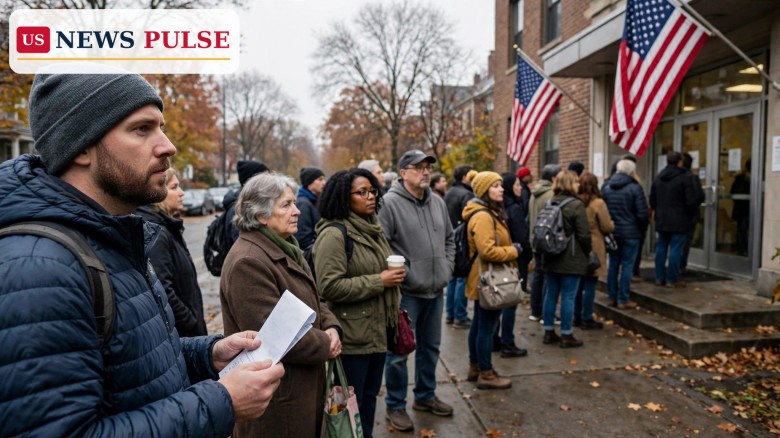
President Donald Trump's approval rating has fallen to 32 percent in the latest Economist/YouGov poll, a new low for his second term and the weakest reading in the survey since he returned to the White House. The poll, released on Thursday, November 12, 2026, put Trump's approval down four points in a single week, dropping below the previous second-term low of 33 percent recorded in August.
Key Points
- Trump's approval rating fell to 32% in the Economist/YouGov poll released on November 12, 2026, a new low for his second term.
- The figure is down four percentage points from the previous week and below the 33% low recorded in August.
- Majorities disapproved of Trump's handling of foreign policy, the economy, crime, taxes and government spending.
- A majority said Trump is using the presidency for personal gain, and 50% said they support Congress blocking his White House ballroom.
- Two-thirds of respondents, 66%, said the country is on the wrong track, and 55% said the economy is getting worse.
What Happened
The Economist/YouGov poll, conducted from November 9 to 11 among 1,685 United States citizens, found that only 32% approve of the job Trump is doing as president, a four-point fall from the previous week and the first time the survey has put his approval below the 33% mark recorded in August.
The dissatisfaction runs beyond the headline number. Majorities disapproved of Trump's handling of every area tested: foreign policy, the economy, crime, taxes and government spending. The poll also asked about his motives and his White House ballroom project. A majority said Trump is using the presidency for personal gain, and exactly half, 50%, said they support Congress blocking the ballroom.
Background and Context
The Economist/YouGov survey is a weekly tracker that has followed Trump's standing since he returned to the White House. Its previous low came in August, when approval touched 33%. Thursday's release breaks through that floor, making 32% the weakest reading of the second term in this series so far.
The timing matters. The poll was conducted entirely after the November 3 midterm elections, in which Republicans suffered losses, and it is the first Economist/YouGov reading taken since then. Voters were surveyed between November 9 and 11, a full week after the elections. Other national surveys tell a similar story at a higher level: a Reuters/Ipsos poll conducted just after the midterms also put Trump's approval at 32%, although that is a different survey with its own sample and methods.
Trump Approval Rating: How the 32% Figure Compares
The polling averages compiled as of November 12 show Trump higher than the Economist/YouGov figure, but still deep underwater. The RealClearPolitics average put him at 38.7% approval against 59.1% disapproval, the New York Times average at 36% against 61%, and Nate Silver's Silver Bulletin average at 37.6% against 59.4%. The gap between the Economist/YouGov number and the averages is a reminder that no single poll is the whole picture: different pollsters survey different samples and weight their results differently, so readings vary from week to week.
What the surveys agree on is the direction: more Americans disapprove of Trump's performance than approve of it, by a wide margin, in every major measure published this week. The Economist/YouGov reading is the lowest, sitting about five to seven points below the averages. Falling below the August low within three months, and by four points in a single week, suggests the decline is not a one-week blip but part of a continuing slide the midterms did nothing to arrest.
Reactions and Quotes
There was no single dramatic response to the poll, because the poll itself is the response: a direct measure of what the public thinks. Half of the country wants Congress to stop the White House ballroom project, and a majority believes the president is using his office for personal gain. Those are judgements about character and conduct, not just policy, and they point to a trust problem as much as a popularity problem.
The economic findings carry the same weight. When 55% say the economy is getting worse and 42% expect prices to rise over the next 12 months, against only 15% who expect them to fall, the public is describing its own daily experience. The recession question split the country almost evenly: 37% said the United States is currently in a recession, 31% said it is not and 32% were unsure.
Why It Matters
The new low matters because of what surrounds it. A president at 32% in a weekly tracker, with two-thirds of the country saying it is on the wrong track, is governing against the grain of public opinion. The wrong-track figure, 66%, is itself a blunt summary of the national mood, and it sits alongside majority disapproval on foreign policy, the economy, crime, taxes and spending. That combination leaves the White House little room to argue the problem is confined to one unpopular policy.
It matters for the economy in particular: 55% said it is getting worse, and more than twice as many people expect prices to rise as expect them to fall. For a president who made the cost of living a central campaign promise, those numbers are a direct challenge. It also matters for the weeks ahead: the ballroom finding hands Trump's critics in Congress a ready-made argument, and a president in the low thirties has less leverage with his own party as lawmakers weigh the next spending decisions.
What Happens Next
The next test comes quickly. The Economist/YouGov tracker is weekly, so the next reading will show whether 32% is a floor the president can build back from or the start of a further slide. Other national polls in the coming days will help settle whether this survey is an outlier or the leading edge of a broader move. For now the record stands: 32% approval, a four-point weekly fall, and a new second-term low, with the country, by two to one, saying it is on the wrong track.
Frequently Asked Questions
What is Trump's approval rating in the latest Economist/YouGov poll?
32%, according to the poll released on Thursday, November 12, 2026, a new low for his second term.
How far has Trump's approval fallen?
It is down four percentage points from the previous week and below the previous second-term low of 33% recorded in August.
What did the poll find about the economy?
55% said the economy is getting worse, 42% expect prices to rise over the next 12 months against 15% who expect them to fall, and 37% said the United States is in a recession.
How does the poll compare with other national surveys?
As of November 12, Trump stood at 38.7% in the RealClearPolitics average, 36% in the New York Times average and 37.6% in Nate Silver's Silver Bulletin average, all with disapproval near 60%.
Who was polled, and when?
The Economist/YouGov poll was conducted from November 9 to 11, 2026, among 1,685 United States citizens, with a margin of error of 3 percentage points.
Read more on Trump's polling: Trump approval rating holds at 32% in first post-midterm Reuters/Ipsos poll and Trump approval underwater in 39 states after midterms, Civiqs tracker shows.
© 2026 US News Pulse. All rights reserved.
 Print
 Save