
Helicopter Crash Near Lone Wolf, Oklahoma Leaves One Pinned in Wreckage
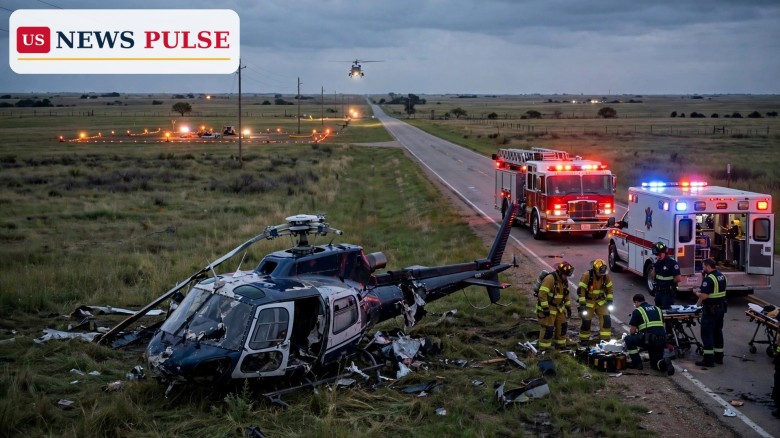
A helicopter went down near Lone Wolf in Kiowa County, Oklahoma, on Friday, November 13, 2026, leaving one person pinned in the wreckage and three people reportedly on board. Emergency crews reached the scene near the intersection of N 2080 Road and E County Road 1390 and set up a landing zone after requesting helicopter air support,.
Authorities have not yet said how badly anyone was hurt, what kind of aircraft was involved, or what caused the helicopter to go down.
Key Points
- A helicopter crashed near Lone Wolf in Kiowa County, Oklahoma, on Friday, November 13, 2026.
- Three people were reportedly on board the aircraft when it went down.
- One person was left pinned in the wreckage, according to preliminary reports.
- The crash happened near the intersection of N 2080 Road and E County Road 1390.
- Emergency crews set up a landing zone and requested helicopter air support.
- Authorities have not yet released the identities of those aboard, the aircraft type, or the cause of the crash.
What Happened in the Oklahoma Helicopter Crash
The helicopter came down near Lone Wolf, a small town in southwestern Oklahoma, on Friday. Preliminary information said three people were aboard when the aircraft went down near the crossing of N 2080 Road and E County Road 1390, outside the town. One person was left pinned in the wreckage, and emergency response units were sent to the location.
Crews arriving at the scene found the wreckage and began working to manage the situation. They set up a landing zone and requested helicopter air support, the step taken when an injured person may need to be flown to a hospital.
So far, authorities have not released details about the extent of the injuries or the condition of the other people who were reportedly on board. The circumstances leading to the crash also remain unclear, and further information about the aircraft, the identities of those aboard and the cause of the incident is still awaited.
Background: Lone Wolf and Kiowa County
Lone Wolf is a small farming community in Kiowa County in southwestern Oklahoma, set in open prairie country. The county seat is Hobart, and the area is the kind of wide, flat landscape where a crash site can sit a long way from the nearest hospital. That geography shapes everything about an emergency response here: the first help often comes from local volunteer firefighters and sheriff's deputies, and getting a seriously injured person to a trauma centre can mean a long drive or a flight.
The crash site, near N 2080 Road and E County Road 1390, is typical of the area, a crossing of two county roads in open country rather than a built-up street.
How Emergency Crews Respond to a Rural Helicopter Crash
When a helicopter goes down in a rural area, the response follows a familiar pattern. The first call goes to the county dispatcher, who sends the nearest fire and medical crews and alerts the sheriff's office. Firefighters secure the scene, deal with any fuel or fire risk, and begin the work of freeing anyone trapped in the wreckage. Paramedics assess the injured, and if someone is seriously hurt, a medical helicopter is called to carry them to a hospital.
Freeing a person pinned in wreckage is slow, careful work. Crews must cut and lift twisted metal without moving the injured person in ways that could worsen spinal or internal injuries. The landing zone is a key part of that work: an air ambulance needs a clear, flat area, free of power lines, fences and loose debris, and ground crews mark it out and keep it clear while the helicopter comes in.
What Officials Have Said So Far
So far, officials have said very little in public. No agency has yet released the names of the people aboard, the type of helicopter, or any account of what went wrong, and no statement has been issued about the condition of the three people reported to be on board, beyond the preliminary report that one was pinned in the wreckage.
Why It Matters
A crash like this matters first and most to the three people aboard and their families, who are waiting for news that has not yet come. Beyond that, it matters because it tests the emergency system that rural Oklahoma depends on: volunteer firefighters, deputies, paramedics and air ambulance crews covering large distances with limited resources.
It also matters because helicopter crashes, even when they involve only a few people, raise questions that only an investigation can answer: whether the aircraft had a mechanical problem, whether weather played a part, and whether anything about the flight itself went wrong. Those answers will not come today. They come from wreckage, maintenance records, flight data and witness accounts, gathered over weeks and months, not from the first reports out of a field in Kiowa County.
What Happens Next
The next steps are already set in motion. The Federal Aviation Administration and the National Transportation Safety Board, the agency that leads investigations into civil aviation accidents in the United States, will be notified, and investigators will travel to the scene to document the wreckage, interview witnesses and gather records. The NTSB typically issues a preliminary report within a few weeks, while a full investigation, with a probable cause, can take a year or more.
In the shorter term, the focus will be on the people. Hospitals will treat the injured, authorities will notify families, and officials will release the names of those aboard once next of kin have been informed. The sheriff's office is expected to confirm the aircraft type and the number of people aboard, and to say whether anyone was killed or seriously injured, as soon as those facts are verified.
Frequently Asked Questions
Where did the helicopter crash happen?
The crash happened near Lone Wolf in Kiowa County, Oklahoma, near the intersection of N 2080 Road and E County Road 1390, on Friday, November 13, 2026.
How many people were on board?
Preliminary reports say three people were aboard the helicopter. One person was left pinned in the wreckage.
Has anyone died in the crash?
No deaths have been confirmed. Authorities have not yet released details about the extent of the injuries or the condition of the people on board.
What caused the helicopter to crash?
The cause is not yet known. The circumstances leading to the crash remain unclear, and the aircraft type has not been released. Investigators will examine the wreckage to determine what happened.
Who investigates a helicopter crash like this?
The National Transportation Safety Board leads investigations into civil aviation accidents in the United States, with support from the Federal Aviation Administration. A preliminary report is usually issued within a few weeks, and a full report can take a year or more.
Related coverage: investigators detailed the final water drop in the Yosemite helicopter crash that killed two pilots, and a Wisconsin pilot was killed in an L-39 jet crash in Kentucky after a refuelling stop.
© 2026 US News Pulse. All rights reserved.
 Print
 Save