
HHS Commits $4.9 Million to Ibogaine PTSD Treatment Research for Veterans
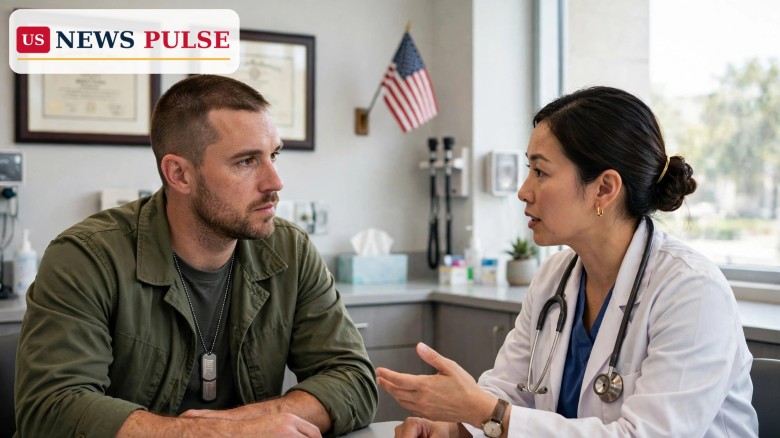
The federal government is putting millions of dollars behind one of the most controversial ideas in veteran mental health care: ibogaine, a powerful psychedelic compound, as a possible treatment for post-traumatic stress disorder (PTSD). The Department of Health and Human Services (HHS) announced on Thursday, November 12, 2026, that it will invest up to $4.9 million over five years to develop ibogaine as a PTSD treatment for veterans.
Secretary Robert F. Kennedy Jr. announced it with Department of Veterans Affairs (VA) leaders the day after Veterans Day. Separately, the National Institute of Mental Health (NIMH) opened a $20 million funding opportunity for a research network studying rapid-acting psychiatric drugs.
Key Points
- HHS will invest up to $4.9 million over five years through ARPA-H to advance ibogaine as a potential PTSD treatment.
- The money funds groundwork only — IND applications, clinical-grade ibogaine and domestic manufacturing — not patient treatment or trials.
- The Mark Cuban Cost Plus Drug Company will build a US-made, single-molecule ibogaine hydrochloride product, while Beond Inc. supplies clinical safety, dosing and efficacy data.
- NIMH opened a $20 million funding opportunity for a network studying rapid-acting drugs such as ketamine and psilocybin. Recipients will be named in summer 2027.
- Ibogaine is not FDA-approved and carries potentially life-threatening cardiac risks.
What Happened
HHS announced the investment on Thursday, November 12, 2026, in Washington, through ARPA-H, the federal agency for high-risk, high-reward health research. Additional awards are expected, including work on ibogaine for substance use disorders.
Two teams were selected. The first, led by the Mark Cuban Cost Plus Drug Company, will build the foundation for a domestically manufactured, single-molecule ibogaine hydrochloride product. The second, Beond Inc., will deliver clinical data on ibogaine's safety, dosing, efficacy and durability. Both teams will open-source their findings.
The awards are deliberately narrow. They support IND applications — the filings a developer must make before the FDA allows human trials — plus securing clinical-grade ibogaine and developing domestic manufacturing. The money does not fund patient treatment or human-subject research, and it does not authorise clinical trials.
Background/Context
Ibogaine is a psychoactive compound from the root bark of the iboga plant, native to West Africa, where it has long been used in traditional ceremonies. In the United States it is a Schedule I controlled substance with no accepted medical use, and it has never been approved by the FDA.
Interest has grown largely because of veterans. Some former service members who did not improve with standard PTSD treatments have travelled to clinics in countries such as Mexico, where ibogaine is legal, and reported dramatic improvements. Those accounts have fuelled a campaign for serious scientific study in the United States.
The funding follows President Donald Trump's April 2026 executive order on psychedelic research, and builds on an HHS–VA partnership. It came the day after Veterans Day: the House recently passed a veterans benefits bill restoring full pay for combat-injured retirees, and the defence secretary awarded a medal to the Tomb Guard at Arlington.
PTSD remains one of the most stubborn problems in veteran health care, bringing flashbacks and severe anxiety, and raising the risk of depression, substance use and suicide. Existing treatments help many patients but leave a large share still struggling, so researchers are looking for faster-acting alternatives. Ketamine already acts far more quickly than conventional antidepressants, and ibogaine could join it if trials prove it safe and effective.
Ibogaine PTSD Research: What the $4.9 Million Will Fund
The $4.9 million pays for the work that must happen before any patient can legally receive ibogaine in an American trial: preparing IND applications with the chemistry, manufacturing and safety data the FDA requires; securing clinical-grade ibogaine; and developing US manufacturing processes.
Affordability is part of the plan: if the medicine earns FDA approval, the goal is to price it at the cost of production plus a fair margin. ARPA-H is pursuing multiple IND applications across more than one indication, and future awards will evaluate ibogaine for substance use disorders, including opioid use disorder. Funding depends on meeting aggressive research milestones.
Reactions/Quotes
Kennedy framed it as a debt owed to veterans: "Veterans kept their promise to this country. We must keep ours," he said. "Veterans have told us ibogaine changed their lives. Their experiences demand serious scientific investigation. We will pursue the evidence, confront the risks and put affordability at the center of this work."
He added: "We owe veterans more than promises. We owe them rigorous science, honest answers and a path to affordable care if the evidence supports it."
VA Secretary Doug Collins said: "Veterans deserve effective treatments and clear answers about the benefits and risks of those treatments. We look forward to working with HHS to explore the possibilities of ibogaine and prepare our clinicians to deliver new treatments if they earn FDA approval." Dr Al Bugazia, the ARPA-H official leading the effort, said: "Reports of successful ibogaine treatments are too promising to ignore."
Why It Matters
First, it moves ibogaine from the margins of American medicine into a federally funded research programme — a landmark shift for veterans who have lobbied for years to have the drug studied properly.
Second, the programme's design — open-source data, affordable domestic manufacturing, and a commitment to publish findings whatever they show — answers the two criticisms that have dogged psychedelic research: cherry-picked results, and treatments priced beyond reach. Third, the risks are real. Ibogaine can cause potentially life-threatening heart rhythm problems, and HHS said future studies must include screening, cardiac monitoring and independent safety oversight. Nothing in Thursday's announcement makes ibogaine available, legal or safe to use.
What Happens Next
The teams will now begin the groundwork — IND applications, clinical-grade ibogaine and domestic manufacturing. Only after the FDA accepts an IND application could a clinical trial begin; none has been authorised yet. ARPA-H is expected to announce more awards for substance use disorders, while NIMH network recipients will not be named until summer 2027. Veterans should not expect access to ibogaine treatment. Anyone in crisis can call or text 988 and press 1 to reach the Veterans Crisis Line.
Frequently Asked Questions
What is ibogaine?
Ibogaine is a psychoactive compound from the root bark of the iboga plant, native to West Africa. It has drawn interest as a possible fast-acting PTSD treatment, but it is not FDA-approved.
Is ibogaine legal in the United States?
No. Ibogaine is a Schedule I controlled substance under federal law, and this announcement does not change its legal status. It can only be studied under strict federal research rules.
Will veterans be able to get ibogaine treatment now?
No. The $4.9 million funds research groundwork only — regulatory filings, clinical-grade supply and domestic manufacturing. It does not pay for patient treatment.
What is the $20 million NIMH funding for?
The National Institute of Mental Health opened a $20 million funding opportunity for a research network studying rapid-acting psychotropic drugs, including ketamine, esketamine and psilocybin. Recipients will be announced in summer 2027.
Is ibogaine safe?
Ibogaine carries serious risks, including potentially life-threatening heart rhythm problems. Future studies must include screening, cardiac monitoring and independent safety oversight. Its safety and effectiveness have not been established.
© 2026 US News Pulse. All rights reserved.
 Print
 Save