
Permanent US Military Base in Poland Backed by Pentagon - US News Pulse
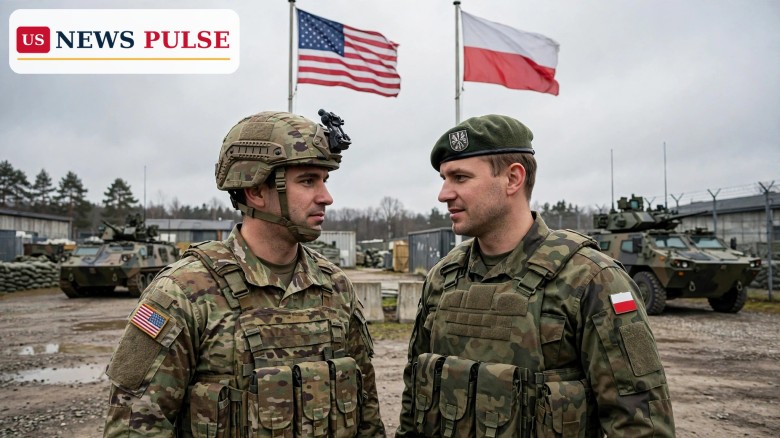
The Pentagon has given the green light for a permanent US military base in Poland, Warsaw said this week, in a step that would make America's rotational deployment on NATO's eastern flank permanent. Polish Deputy Prime Minister and Defence Minister Wladyslaw Kosiniak-Kamysz said the backing came after talks at the Pentagon on Tuesday, November 10, 2026, with US Secretary of War Pete Hegseth, and that the final decision now rests with President Donald Trump.
The decision is expected in early December, as the Pentagon nears the end of a review of about 80,000 US troops stationed across Europe. Poland has offered to pay the construction costs of the new base, estimated at 15 to 17 billion zloty, about $3.8 billion to $4.4 billion, for a site housing about 5,000 permanently stationed American troops, plus families and support staff.
Key Points
- Polish Defence Minister Wladyslaw Kosiniak-Kamysz said after Pentagon talks on November 10, 2026, with US Secretary of War Pete Hegseth, that the Pentagon has backed a permanent US military base in Poland.
- The final decision rests with President Donald Trump and is expected in early December, as the Pentagon completes its review of about 80,000 US troops in Europe.
- Poland has offered to pay construction costs estimated at 15 to 17 billion zloty ($3.8 billion to $4.4 billion) for a base housing about 5,000 permanent US troops, with families and support staff bringing the total to as many as 25,000 people.
- Four cities west of the Vistula River are candidates: Bydgoszcz, Poznan, Szczecin and Wroclaw.
- About 10,000 US troops are currently in Poland, mostly on rotational deployments; Warsaw wants a combined presence of about 10,000 rotational and 5,000 permanent troops.
What Happened
Kosiniak-Kamysz travelled to Washington for talks with Hegseth on Tuesday, November 10, 2026, as the Pentagon weighs the future of the American military footprint in Europe. After the meeting, he said the Pentagon had backed the permanent-base plan, quoting Hegseth as saying "everything is going in a good direction".
The proposal is for a purpose-built garrison west of the Vistula, in one of four candidate cities: Bydgoszcz, Poznan, Szczecin or Wroclaw. Poland would fund the construction, a bill Warsaw puts at 15 to 17 billion zloty. The base would host about 5,000 American troops on permanent assignment, and with families and support staff the community could reach up to 25,000 people.
That would be a major change. About 10,000 US troops are stationed in Poland today, but most rotate in and out on temporary deployments. Warsaw wants to keep that rotational force and add 5,000 permanent troops, giving the alliance a fixed American anchor on its eastern flank.
Permanent US Military Base in Poland: What Warsaw Is Proposing
Poland has pushed for a permanent American garrison for years, arguing that a fixed base deters Russia far more effectively than troops on short tours. In September, Polish President Karol Nawrocki said the complex would be called "Fort Trump" if the plan is finalised, a name meant as a tribute to the president who would approve it.
The timing matters because the Pentagon is reviewing the deployment of about 80,000 US troops across Europe, a process that will shape where American forces sit for years. A decision on the Polish base is expected in early December, once that review is complete, and only President Trump can give final approval.
Warsaw's offer to pay for construction is central to the pitch. By covering the estimated $3.8 billion to $4.4 billion cost itself, Poland is telling Washington that a permanent base would not add to the American defence bill. The four candidate cities are all west of the Vistula, in western and northern Poland, where land, transport links and existing military infrastructure make a large garrison easier to build.
Reactions and Quotes
Kosiniak-Kamysz presented the Pentagon meeting as a breakthrough, saying Hegseth had told him that "everything is going in a good direction". The Polish government has cast the base as the natural next step for an alliance that it says has already made Poland a model partner of the United States.
The Pentagon itself has been more cautious in public. Its own readout of the November 10 meeting did not mention the base at all, instead emphasising defence-industrial cooperation, and the Pentagon did not immediately comment on Warsaw's account. That gap between the Polish announcement and the American readout leaves the final decision, and its timing, with the White House.
Why It Matters
A permanent base in Poland would be the most significant change to the American military map in Europe in years. Warsaw has pressed its case in Washington for months, and Trump recently backed Poland's bid for a seat at the G20 table. Rotational troops can be withdrawn at short notice; a purpose-built garrison with families, schools and support facilities is far harder to reverse, and it tells Moscow that the United States intends to stay on NATO's eastern flank.
It also matters for Poland's own security and economy. A community of up to 25,000 Americans would transform the host city, bringing jobs, housing demand and investment, while the base would put American combat power near the Suwalki Gap, the narrow corridor between Poland and Lithuania that planners see as NATO's most exposed ground. For a country bordering Ukraine, Belarus and Russia's Kaliningrad region, that presence is the point.
What Happens Next
All eyes are now on the White House. The Pentagon's review of US troops in Europe is expected to conclude in the coming weeks, with the decision on the Polish base expected in early December. Until Trump signs off, Warsaw's announcement remains a Pentagon green light, not a final commitment.
The country is also still reeling from the Krakow shooting that killed nine people. If the president approves it, the next steps would be choosing a city, agreeing on the design and timetable, and starting construction on a project that would take years to complete. Poland has made its case by offering to pay for the building. The question now is whether the White House agrees that a permanent American base in Poland is worth building.
Frequently Asked Questions
Has the Pentagon approved a permanent US base in Poland?
Poland says the Pentagon gave the green light after November 10, 2026 talks between Defence Minister Wladyslaw Kosiniak-Kamysz and US Secretary of War Pete Hegseth. President Donald Trump decides, likely in early December.
How many US troops would be based there?
About 5,000 troops would be permanently stationed there, with families and support staff bringing the total to as many as 25,000. About 10,000 US troops are already in Poland, mostly on rotational deployments.
Where would the base be built?
Bydgoszcz, Poznan, Szczecin and Wroclaw, all west of the Vistula River, are under consideration. No site has been chosen yet.
How much would it cost, and who pays?
Poland has offered to pay, with construction estimated at 15 to 17 billion zloty, about $3.8 billion to $4.4 billion.
Would it really be called Fort Trump?
Polish President Karol Nawrocki said in September it would be called "Fort Trump" if the plan is finalised. That name has not been formally agreed.
© 2026 US News Pulse. All rights reserved.
 Print
 Save