
New York Highway Funds Restored as Court Blocks Trump's $73.5 Million Cut
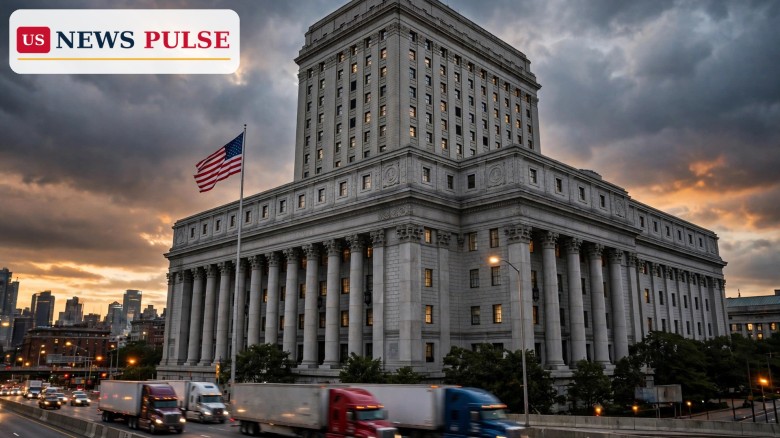
A federal appeals court ruled on Friday that the Trump administration broke the law when it withheld $73.5 million in highway funds from New York, handing the state a major victory in its fight over commercial driver licences issued to foreign drivers. The US Court of Appeals for the Second Circuit said the Transportation Department's April decision to freeze the money "runs afoul of fair notice principles" and was arbitrary and capricious, rejecting the administration's claim that New York had violated federal rules.
The ruling restores the $73,502,543 and undercuts the threat to withhold a further $147 million a year on the same grounds — the latest court defeat for the administration's use of federal funding as leverage against states that resist its policies.
Key Points
- The Second Circuit ruled on Friday, November 13, 2026, that the Trump administration overstepped by withholding $73.5 million in highway funds from New York.
- The money was frozen in April after a federal audit found New York had issued commercial driver licences to foreign drivers in ways the administration said broke federal rules.
- The court said the decision "runs afoul of fair notice principles, departs from the regulatory text, and underestimates the complexity of its supposedly 'common sense' requirement".
- The judges found the rules in force at the time contained no requirement that a licence's expiry match the driver's lawful-presence documents.
- The administration had also threatened to withhold a further $147 million a year; spokespeople for Secretary Sean Duffy and Governor Kathy Hochul did not immediately comment.
What Happened
The case, State of New York v. U.S. Department of Transportation, No. 26-1097, was decided by a three-judge Second Circuit panel. Judge Alison J. Nathan wrote the opinion, joined by Judge Sarah A. L. Merriam, with Judge Matthew A. Schwartz concurring separately.
The dispute began in April, when the Transportation Department withheld the money after a Federal Motor Carrier Safety Administration audit found New York had routinely issued such licences in violation of federal rules. Of 200 sampled records, 107 failed federal requirements, including 101 licences valid beyond the expiry of the drivers' lawful-presence documents.
New York sued, arguing the withholding was unlawful and that revoking the licences "would disrupt key industries that rely on commercial drivers and could lead to bus driver shortages affecting schools and families". The court agreed, holding the decision was arbitrary and capricious.
Background and Context
Federal highway funding is one of the largest streams of money Washington sends to the states, paying for road maintenance and construction. In freezing New York's $73.5 million in April, the administration used that funding to force the state to change how it issues commercial driver licences to foreign drivers.
The administration said New York was routinely handing out licences to people who should not have received them and should revoke them or lose the money.
New York's answer was that the rules in force when the licences were issued contained no requirement that a licence expire when a driver's lawful-presence documents expired — the state could not fairly be punished for breaking a rule that did not exist.
New York Highway Funds: What the Court Decided
The Second Circuit sided with New York. The judges held that the Transportation Department's decision "runs afoul of fair notice principles, departs from the regulatory text, and underestimates the complexity of its supposedly 'common sense' requirement" — in plain terms, the administration could not punish a state for breaking a rule it had never clearly set out.
The opinion focused on the regulations as they stood when the licences were issued: they contained no expiration-matching requirement — nothing saying a commercial licence had to expire with the holder's lawful-presence documents. Treating that absence as a violation was arbitrary and capricious.
Under federal administrative law, agencies must give fair notice of what the rules require and explain decisions in line with the regulations they cite. The Second Circuit found the department failed on both counts — enough to strike down the withholding.
Reactions and Quotes
The court's words were unusually blunt: the decision "runs afoul of fair notice principles, departs from the regulatory text, and underestimates the complexity of its supposedly 'common sense' requirement" — a direct rejection of the administration's claim that its reading of the rules was obvious.
New York framed the stakes in practical terms: revoking the licences, it warned, "would disrupt key industries that rely on commercial drivers and could lead to bus driver shortages affecting schools and families".
Neither side rushed to claim victory. Spokespeople for Secretary Sean Duffy and Governor Kathy Hochul did not immediately comment, leaving the administration's next move unclear. The courts have repeatedly checked the administration's immigration policies this term, with the Supreme Court now set to decide the fate of the asylum ban at the southern border.
Why It Matters
For New York, the ruling restores $73.5 million and removes the threatened loss of a further $147 million a year — money that pays for highways and roads across the state, where the freeze had put projects and planning in doubt since April.
More broadly, the administration has repeatedly used withheld federal money to push states to fall in line on immigration enforcement. A ruling that such a withholding was arbitrary and capricious sets a limit on that tactic: agencies cannot invent a rule after the fact and then punish a state for not following it.
It also matters for trucking and transport, and for the schools and families New York warned about: commercial drivers move goods, carry passengers and staff school buses, and mass revocations would have taken drivers off the road when the industry already struggles to hire.
What Happens Next
The administration has not said whether it will ask the full Second Circuit to rehear the case or appeal to the Supreme Court. Either route would take months, and the money stays restored in the meantime unless a higher court says otherwise.
Watch, too, for whether the Transportation Department tries a different route. The court struck down this withholding because the rules in force contained no expiration-matching requirement — but the administration could try to write one into the regulations, setting up a fresh fight with New York and other states. Appeals courts have moved fast and unpredictably on administration policies this month, with the Ninth Circuit reversing its own election order within hours.
Frequently Asked Questions
What did the court decide?
The Second Circuit ruled the administration overstepped by withholding $73.5 million in highway funds from New York, calling the decision arbitrary and capricious.
How much money was at stake?
The administration withheld $73,502,543 in April and threatened a further $147 million a year on the same grounds.
Why did the administration withhold the funds?
After a federal audit found New York had routinely issued commercial driver licences to foreign drivers in ways the administration said broke the rules.
What did the audit find?
Of 200 sampled records, 107 failed federal requirements, including 101 licences valid beyond the drivers' lawful-presence documents.
What happens next?
The money is restored unless a higher court intervenes. The administration has not said whether it will seek a rehearing or appeal.
© 2026 US News Pulse. All rights reserved.
 Print
 Save