
US Fighter Jet Shot Down in Iran as One Crew Member Rescued, Search Continues
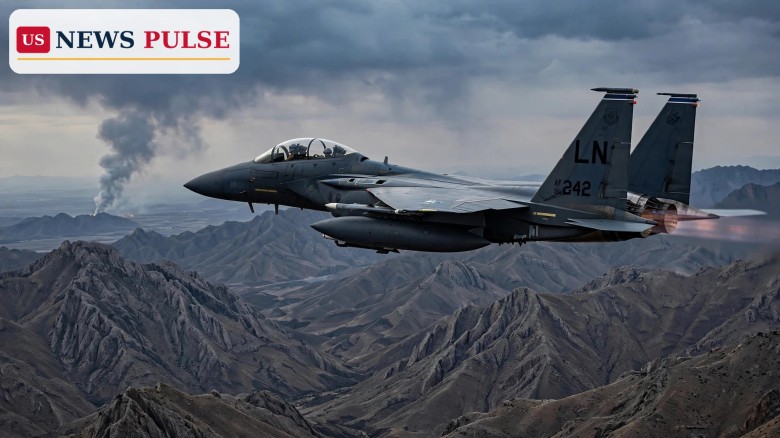
A US fighter jet shot down in Iran on Friday — a United States Air Force F-15E Strike Eagle — was the first piloted American warplane lost inside Iranian territory since the war between the United States and Iran began in February. One of the two crew members was rescued on Friday, while a military search-and-rescue operation continued for the second aviator, according to American and Israeli officials.
The loss marks a sharp escalation in a conflict now in its ninth month. Until Friday, Iran's claims of shooting down American aircraft had involved only uncrewed drones. The downing of a two-seat strike fighter — and the fate of its second crew member — now sits at the centre of the war.
Key Points
- A US Air Force F-15E Strike Eagle was shot down over Kohgiluyeh and Boyer-Ahmad province, a mountainous region in southwestern Iran, on Friday, November 13, 2026.
- One of the two crew members was rescued on Friday; a search-and-rescue operation was still under way for the second.
- It is the first time the United States has lost a piloted aircraft in Iranian territory since the US-Iran war began on February 28, 2026.
- The Pentagon confirmed it received notification an aircraft had been shot down. President Donald Trump was briefed, and House Speaker Mike Johnson was notified.
- Iranian state media showed debris said to be from the jet and urged residents to hand over any "enemy pilot" to police, promising a reward.
What Happened
The F-15E went down in Kohgiluyeh and Boyer-Ahmad province, a rugged, mountainous part of southwestern Iran. Iranian state media said the jet had been brought down by Iranian air defences. A channel affiliated with state television showed metal debris in the back of a pickup truck and urged residents to hand over any "enemy pilot" to police, promising a reward.
One of the two crew members was rescued on Friday, a US official and an Israeli official said anonymously. The second remained missing as a US search-and-rescue operation continued. Israel was helping with intelligence, but not with rescue efforts on the ground.
A Pentagon email obtained by The Associated Press confirmed the US military had received notification of "an aircraft being shot down" in the Middle East, with no further details. The White House said President Donald Trump had been briefed, and House Speaker Mike Johnson was notified.
Worthy News reported that a second American aircraft, an A-10 attack plane taking part in the rescue mission, was also hit and that its pilot ejected over the Gulf and was rescued. That report has not been independently confirmed.
Background: A War in Its Ninth Month
The war between the United States and Iran began on February 28, 2026, and is now in its ninth month. More than 1,900 people have been killed in Iran since the fighting started, according to a tally by The Associated Press. On the same day, Iran fired on targets across the region, setting Kuwait's Mina al-Ahmadi oil refinery on fire and damaging a desalination plant.
Iran has repeatedly claimed to have shot down American aircraft during the war, but those claims have involved drones — including MQ-1 and MQ-9 uncrewed aircraft over the Strait of Hormuz and Qeshm Island — and the United States has not confirmed most of them. Friday was the first time Iran went on television urging the public to look for a suspected downed pilot.
The shootdown came at a moment of deep uncertainty over diplomacy. Vice President JD Vance said earlier in November that Washington had made progress in talks with Iran, but President Trump said days later that the United States does not need a deal and pulled Vance off the Iran file.
US Fighter Jet Shot Down in Iran: What the Rescue Effort Involves
Recovering a downed aircrew inside hostile territory is one of the most dangerous missions in modern warfare. Search-and-rescue teams must reach the crash site quickly, before the crew can be captured, while operating under the threat of the same air defences that brought the jet down. The mountainous terrain of Kohgiluyeh and Boyer-Ahmad province makes the search harder still.
The rescue of one crew member on Friday suggests American forces reached at least part of the crew fast. The fate of the second aviator is now the urgent question. If captured, the crew member would become a prisoner of war and a powerful bargaining chip for Tehran.
Reactions and Statements
The Pentagon has confirmed only that it received notification an aircraft was shot down, releasing no details about the mission or the weapon that brought it down. The White House said the president had been briefed, and the Defense Department notified the House speaker.
Israeli officials, speaking anonymously, confirmed that one crew member had been rescued and said Israel was assisting with intelligence. Iran's state media treated the shootdown as a victory, broadcasting images of debris and calling on the public to help find the pilot. Neither side has released the names of the crew members.
Why It Matters
The loss of a piloted fighter jet changes the character of the war. Drones can be replaced; aircrews cannot, and a captured American pilot would give Iran leverage it has not held at any point in the conflict. It would also raise the pressure on Washington to respond, at a moment when the Trump administration is publicly split over whether to pursue a deal or keep fighting.
The incident also tests Iran's air defences, a central target of American strikes since February, including attacks on missile sites on Qeshm Island. That an Iranian system could still bring down a modern strike fighter after months of war suggests the air campaign has not eliminated the threat to American aircraft.
What Happens Next
The immediate focus is the search for the second crew member. The Pentagon is expected to release more details once the rescue operation ends. Any confirmation that the second crew member has been captured would be likely to draw a swift response from Washington.
Longer term, the shootdown could harden both sides. For Tehran, it is proof its defences can still bite. For Washington, it is a reminder that the war's costs grow with every month it continues.
Frequently Asked Questions
What type of aircraft was shot down?
An F-15E Strike Eagle, a two-seat fighter-bomber flown by a pilot and a weapons systems officer.
Where did the jet go down?
In Kohgiluyeh and Boyer-Ahmad province, a mountainous region in southwestern Iran.
Was anyone rescued?
Yes — one crew member was rescued on Friday; the search for the second continues.
Has the US lost a piloted aircraft in Iran before in this war?
No — the first since the war began on February 28, 2026. Earlier Iranian claims involved uncrewed drones.
What happened to the second aircraft reported hit?
Worthy News reported an A-10 in the rescue mission was hit and its pilot ejected over the Gulf and was rescued. That report is unconfirmed.
Read more: Qeshm Island strikes | Vance on Iran talks | Bahrain radar claim
© 2026 US News Pulse. All rights reserved.
 Print
 Save