
Justice Alito Warns Congress Could Defund Supreme Court, 'Turn Off Lights'
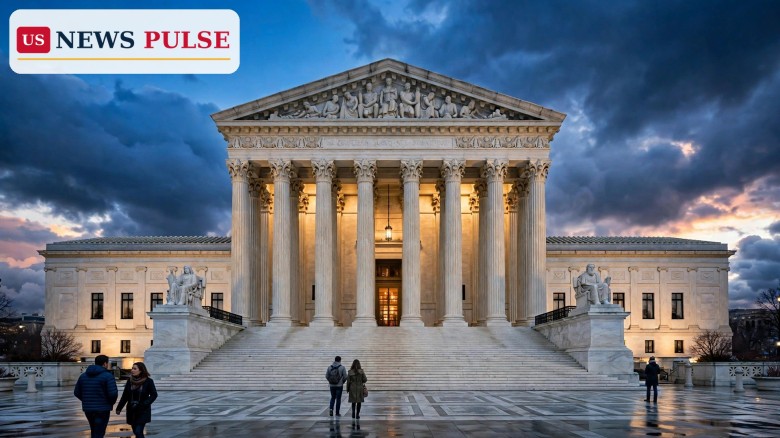
Justice Samuel Alito warned on Thursday that Congress could bring the United States Supreme Court to a standstill by cutting off its funding, telling a Washington audience that lawmakers could "turn off the lights" at the nation's highest court. The warning came at the Federalist Society's annual Antonin Scalia Memorial Dinner on November 12, 2026.
Alito, 76, spoke before more than 1,000 conservative lawyers in an interview with Mollie Hemingway, editor-in-chief of The Federalist. The Alito defund Supreme Court warning came a week after Democrats won both chambers of Congress, although he did not mention the election, named no lawmaker, and no defunding bill has been announced.
Key Points
- Alito warned Congress could "turn off the lights" at the Supreme Court by defunding it, at the Federalist Society dinner on November 12, 2026.
- He called the judiciary the weakest branch and "vulnerable" to Congress and the executive.
- Alito rejected retirement speculation, saying he still believes he can contribute on the court, where he has served since 2006.
- Article III protects justices' salaries from cuts, but not the court's operating budget, staff or building costs.
- The warning follows a 2023 Democratic proposal to withhold $10 million in court funding over ethics rules.
What Happened
Alito delivered his warning in Washington on Thursday, November 12, 2026, in an onstage conversation with Mollie Hemingway. He said Congress could halt the court's work entirely by cutting its money.
"Congress can turn off the lights at the Supreme Court and stop everything from happening if they want to defund their activities. And there are many, many, many other things that they can do, or at least try to do," Alito said.
He described the judiciary as "vulnerable" to pressure from Congress and the executive. "So, it is important to preserve the independence of the judiciary. If that is eliminated, then the Constitution as adopted in 1789 will no longer be the same," he said.
Background and Context
Alito has served on the Supreme Court since 2006, after being nominated by President George W. Bush. He is a leading voice of its conservative majority. His remarks were not tied to any pending case, but they landed in a charged moment: Democrats won both chambers of Congress on November 3, 2026, and will take control in January 2027.
The funding question is not new. In 2023, Democratic senators proposed withholding $10 million in Supreme Court funding until the justices adopted stricter ethics rules, after reports about undisclosed gifts and travel. The proposal did not become law. Over the summer, Justices Elena Kagan and Amy Coney Barrett made a rare joint visit to Capitol Hill to seek more judiciary funding.
The Constitution draws a sharp line: Article III bars Congress from reducing the salary of a sitting justice, but that guarantee covers only the justices' own pay, not the court's operating budget, staff, security or building costs, which depend on annual appropriations.
Alito's Supreme Court Defunding Warning
The heart of Alito's message was institutional: the court, for all its authority, depends on the other branches to function. Unlike the president, it commands no army. Unlike Congress, it controls no purse. Its power rests on the political branches funding it and respecting its rulings.
That dependence is why the funding lever matters. A Congress determined to punish the court would not need to touch a justice's salary. It could cut the money that pays law clerks, security officers and building maintenance, leaving the nine justices in place but stripping away the institution around them.
The venue sharpened the message. The Federalist Society dinner, named for the late Justice Antonin Scalia, is a leading gathering in conservative legal circles. Alito did not accuse any individual or party, and he did not say Democrats plan to defund the court. But his warning came eight days after an election that handed Congress to the party that has most openly debated using the court's budget as leverage.
Reactions and Quotes
Alito's central warning was blunt. "Congress can turn off the lights at the Supreme Court and stop everything from happening if they want to defund their activities," he said, adding that there are "many, many, many other things that they can do, or at least try to do."
On the stakes, he was equally direct: "So, it is important to preserve the independence of the judiciary. If that is eliminated, then the Constitution as adopted in 1789 will no longer be the same."
Alito also addressed the retirement speculation that has followed him and Justice Clarence Thomas. He said he still believes he can contribute, and sources close to both justices told CNN earlier this month that neither is expected to retire because of the election results. Democratic congressional leaders did not immediately respond publicly to the remarks.
Why It Matters
The Supreme Court decides the cases that settle the country's most contested questions, from elections and immigration to presidential power. Its ability to do that work depends on resources Congress controls, and Alito's warning is a reminder that the court's independence is maintained by norms as much as by constitutional text.
That matters more now because the political landscape has shifted. Democrats will control both chambers from January, while President Donald Trump remains in the White House. The court's rulings on tariffs, birthright citizenship and mail-in voting have already drawn criticism from the president, so the warning reads as a signal to both sides.
The court's legitimacy is also under strain. Approval has fallen, ethics controversies have dogged several justices, and confirmations have become partisan battlegrounds. Alito's argument is that whatever the disagreements over the court's decisions, the institution itself must be protected from political punishment through the budget.
What Happens Next
No defunding bill has been announced, and no lawmaker has proposed cutting the court's budget. The next concrete test will come when the new Congress takes up the judiciary's funding in the appropriations process next year. Attention will also turn to whether Democratic leaders respond. For now, the court's term continues, with Alito on the bench.
Related coverage: Alito and Thomas won't retire, sources say; Schumer vows Democrats will block a 'right-winger' on Supreme Court; Justice Department steps up Dobbs leak probe.
Frequently Asked Questions
What did Justice Alito warn about?
Alito warned that Congress could "turn off the lights" at the Supreme Court by cutting its funding, stopping the court's work entirely.
Where and when did he make the remarks?
He spoke on Thursday, November 12, 2026, at the Federalist Society's Scalia Memorial Dinner in Washington, in an interview with Mollie Hemingway.
Can Congress actually defund the Supreme Court?
Congress controls the court's operating budget, so it could cut funding for staff, security and building costs. But Article III bars Congress from reducing a sitting justice's salary.
Is there a bill to defund the court?
No. Alito named no lawmaker or proposal, and no defunding bill has been announced. A 2023 proposal to withhold $10 million over ethics rules did not become law.
Is Justice Alito retiring?
Alito said he still believes he can contribute, and sources close to him and Justice Clarence Thomas say neither is expected to retire. Alito has served since 2006.
© 2026 US News Pulse. All rights reserved.
 Print
 Save