
Mike Pence Leaves Door Open to 2028 White House Run After GOP Midterm Rout
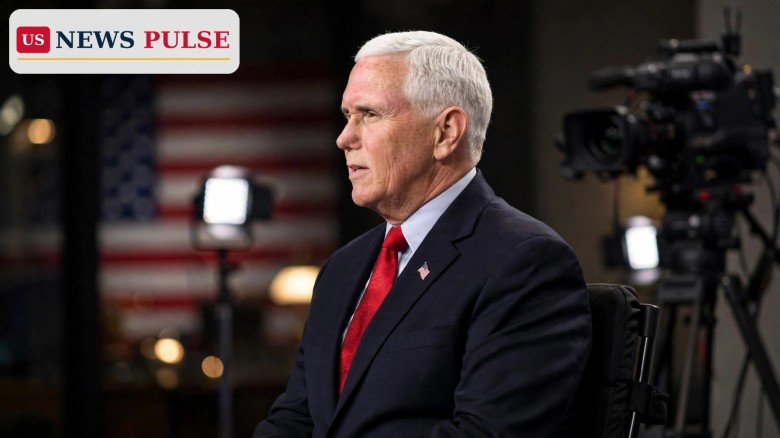
Former Vice President Mike Pence declined to rule out another run for president in 2028, telling Fox News Digital that "a lot of people" around the country have asked him to run and that he has been "very humbled" by the outreach. The remarks, published Thursday, November 12, 2026, are his first extended comments since Republicans lost control of both chambers of Congress.
Key Points
- Mike Pence declined to rule out a 2028 presidential run in a Fox News Digital video interview published Thursday, November 12, 2026, saying "a lot of people" have asked him to run.
- He gave no timeline — a shift from September 2026, when he told the Economic Club of Washington, D.C. that he had "no plans" to seek the White House or any other elected office in 2028.
- Pence warned Republicans must return to traditional conservative principles — strong defence, limited government, fiscal responsibility and the right to life — or risk losing again regardless of the nominee.
- He declined to say whether he would back Vice President JD Vance or Secretary of State Marco Rubio if he does not run himself.
- Pence sought the 2024 Republican nomination against Donald Trump but suspended his campaign in October 2023 before any primary contests.
What Happened
Pence left the door open to 2028 in a video interview with Fox News Digital, his first extended comment since the November 3 midterms swept Democrats into control of the House and the Senate. Asked directly whether he would run again, the former vice president did not say yes — and, notably, did not say no. He said people across the country have urged him to consider another campaign and that he has been "very humbled" by the encouragement, but he offered no timeline.
Background: A Vice President Who Broke With Trump
Pence served as vice president under Donald Trump from 2017 to 2021, and their relationship fractured after he refused to block certification of the 2020 election results on January 6, 2021. He ran for the 2024 Republican nomination as a traditional conservative alternative to Trump, but the campaign never gained traction. He suspended it in October 2023, before a single primary vote was cast, and Trump went on to win the nomination and the presidency.
Since leaving office, Pence has kept a lower profile than most former vice presidents, building a policy organisation and speaking to conservative audiences. That is what made his September remarks so definitive: speaking to the Economic Club of Washington, D.C., he said he had "no plans" to seek the White House or any other elected office in 2028. Two months later, he is no longer closing the door.
Mike Pence 2028: What the Hint Really Means
The change of tone matters because of the timing. The Republican field for 2028 is already taking shape, even though the midterms are barely a week old. Vice President JD Vance is courting disaffected Trump voters for a "new right" alliance ahead of 2028, and Secretary of State Marco Rubio is widely seen as the other leading contender. Pence's refusal to endorse either man — and his refusal to rule himself out — puts him in the conversation as a third option, rooted in the pre-Trump conservative movement.
His message also draws a clear line inside the party. By naming a strong defence, limited government, fiscal responsibility and the right to life as the principles the GOP must return to, Pence argues the midterm defeat was a failure of identity, not just messaging. The subtext: the party drifted from its foundations under Trump and paid for it at the ballot box. That puts him at odds with the populist wing that still dominates the Republican base.
Reactions and Quotes
Pence's own words were measured, as they usually are. He said "a lot of people" around the country have asked him to run and that he has been "very humbled" by the encouragement. He gave no timeline and no indication of how seriously he is weighing a bid.
His warning was blunter: Republicans must return to traditional conservative principles or risk losing again regardless of the nominee. He declined to say whether he would support Vance or Rubio if he does not run himself, a silence that keeps both men guessing and his own options open.
Why It Matters
The 2028 Republican primary is still more than a year from its first votes, but the field is forming now. Vance and Rubio are the presumed frontrunners. Pence offers something neither can: a candidacy defined by distance from Trump, aimed at voters who backed the old Republican Party and have not found a home in the new one. Whether that constituency can win a primary is an open question — his 2024 campaign suggests it is small — but after a midterm rout, the party may be more willing to listen.
The stakes go beyond one man's ambitions. Democrats won control of the House in the 2026 midterms, ending the Republican majority, and also took the Senate, leaving the GOP to reckon with a defeat that cost it both chambers. The argument Pence is making — that the party lost because it abandoned its principles — is now the central debate inside the Republican Party, and the 2028 primary will settle it. His hint ensures he will be part of that fight, as a candidate or as a voice the candidates must answer.
What Happens Next
Pence gave no timeline, so the next signal will be what he does rather than what he says. Watch for a political action committee, a book tour, or a schedule of early-state visits to Iowa and New Hampshire. If none appear, the interview will be remembered as a warning, not a launch.
The leadership question is also live on the other side of the aisle, where Senator Chris Van Hollen announced on November 12 that he will challenge Chuck Schumer for Senate majority leader. For Pence, the decision is his alone — and he has just made clear that he has not made it yet.
Frequently Asked Questions
Is Mike Pence running for president in 2028?
Not yet. In a Fox News Digital interview published November 12, 2026, Pence declined to rule out a run, saying "a lot of people" have asked him to run, but he gave no timeline for a decision.
What did Pence say in September 2026 about 2028?
He told the Economic Club of Washington, D.C. that he had "no plans" to seek the White House or any other elected office in 2028 — a position his November remarks walk back.
What warning did Pence give Republicans?
He said the party must return to traditional conservative principles — a strong defence, limited government, fiscal responsibility and the right to life — or risk losing again regardless of the nominee.
Would Pence back JD Vance or Marco Rubio?
He declined to say whether he would back either man if he does not run himself.
Did Pence run for president before?
Yes. He sought the 2024 Republican nomination against Donald Trump but suspended his campaign in October 2023 before any primary contests were held.
© 2026 US News Pulse. All rights reserved.
 Print
 Save