
Trump Orders DOJ to Investigate Epstein Ties to Clinton, Summers and Hoffman
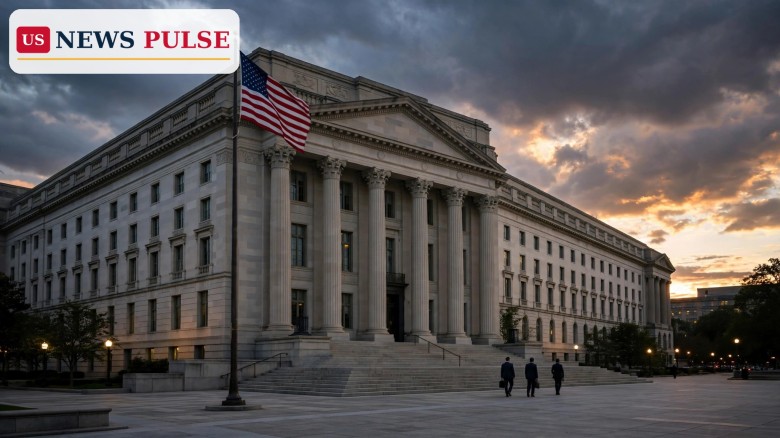
President Donald Trump on Friday ordered the Justice Department to investigate Jeffrey Epstein's ties to former President Bill Clinton, former Treasury Secretary Larry Summers, LinkedIn co-founder Reid Hoffman and JPMorgan Chase, a dramatic escalation in the fight over the late financier's files. Attorney General Pam Bondi moved within hours, assigning Jay Clayton, the US attorney for the Southern District of New York, to lead the inquiry. The order came two days after House Democrats released thousands of Epstein emails, including one in which Epstein wrote that Trump "knew about the girls."
Key Points
- Trump said Friday, November 13, 2026, on Truth Social he will ask Attorney General Pam Bondi, the Justice Department and the FBI to investigate Epstein's "involvement and relationship" with Clinton, Summers, Hoffman, JPMorgan Chase "and many other people and institutions."
- Bondi assigned Jay Clayton, US attorney for the Southern District of New York, to lead it within hours.
- The move came two days after House Oversight released thousands of Epstein emails, including one saying Trump "knew about the girls".
- JPMorgan said it ended its relationship with Epstein years before his 2019 arrest and did not help him commit crimes. The bank paid $290 million in 2023 to settle a survivors' class action.
- No credible evidence has publicly tied Clinton, Summers or Hoffman to Epstein's crimes, and all three deny wrongdoing. A 218-signature petition forces a House vote on releasing all DOJ and FBI Epstein files, which Trump opposes.
What Happened
Trump announced the directive in a Truth Social post on Friday accusing Democrats of reviving attention to his own past ties with Epstein, saying they are "using the Epstein Hoax, involving Democrats, not Republicans, to try and deflect from their disastrous SHUTDOWN." His order: "I will be asking A.G. Pam Bondi, and the Department of Justice, together with our great patriots at the FBI, to investigate Jeffrey Epstein's involvement and relationship with Bill Clinton, Larry Summers, Reid Hoffman, J.P. Morgan, Chase, and many other people and institutions." He also called Republicans backing the files release "soft and foolish," writing: "This is another Russia, Russia, Russia Scam, with all arrows pointing to the Democrats." Within hours Bondi assigned Clayton to lead the inquiry. The Justice Department did not immediately comment.
Background and Context
Epstein, the financier arrested in July 2019 on federal sex-trafficking charges who died in a Manhattan jail a month later, left a vast paper trail of emails, flight logs and financial records. Demands for the full release of the Justice Department's files have grown since Trump returned to office. This week the House Oversight Committee released thousands of Epstein documents and emails, including the message in which Epstein wrote that Trump "knew about the girls." Trump denies wrongdoing. Read our report on the Epstein emails saying Trump knew about the girls. At the same time, a discharge petition reached its decisive 218th signature, forcing a House vote on releasing all DOJ and FBI Epstein files. Trump failed earlier in the week to get Republicans to block it, even holding a Situation Room meeting with one signer. Speaker Mike Johnson says he will schedule the vote next week. Read our report on Massie forcing a second Epstein files vote as the petition hit 218 signatures.
Trump Epstein Investigation: What Bondi and Clayton Will Examine
What exactly Bondi and Clayton will examine is unclear. Trump's post names four targets — Clinton, Summers, Hoffman and JPMorgan Chase — and gestures at "many other people and institutions" without saying who they are or what conduct is suspected. No charges have been announced, no subpoenas reported, and the Justice Department has said nothing about the scope or whether it is a formal criminal investigation or a preliminary review. Clayton is a logical choice: his office covers Manhattan, where Epstein was arrested and jailed, and handled the Epstein and Maxwell prosecutions. The bank is the one target with a documented trail: in 2023 JPMorgan paid $290 million to settle a survivors' class action and $75 million to settle with the US Virgin Islands, admitting no wrongdoing in either case. Spokeswoman Patricia Wexler said the bank "ended our relationship with him years before his arrest": "The government had damning information about his crimes and failed to share it with us or other banks." For Clinton, Summers and Hoffman the record is thinner: all three acknowledge knowing Epstein, and all deny involvement in his crimes.
Reactions and Quotes
JPMorgan moved quickly to distance itself, stressing it cut Epstein off years before his arrest and did nothing criminal; its position is that the two settlements already punished the relationship. Democrats, who won Congress in the November 3 midterms and take over in January, call the move a diversion from the files themselves and from the discharge petition forcing a House vote next week — a reading the timing supports, coming two days after the email release and the day the petition hit 218. Republicans are split: the rank-and-file signers, led by Representative Thomas Massie, keep pushing for full release despite Trump's attacks. Legal experts will watch whether the inquiry produces anything or quietly fades once the files vote passes.
Why It Matters
This tests the line between the presidency and federal law enforcement. Presidents traditionally keep their distance from individual Justice Department investigations, because directing prosecutors at named people looks like using the state against political opponents. Trump has now crossed that line in public, naming his targets and his prosecutor in the same breath. It also matters because of the files themselves: if released, they could damage powerful people in both parties, and an investigation into Clinton, Summers, Hoffman and JPMorgan gives Trump a counter-narrative — that the scandal is about Democrats, not him.
What Happens Next
The House vote on releasing the Epstein files comes next week, with significant Republican support expected; if it passes, the Justice Department must release its files. Then comes Clayton's inquiry: it is not yet known whether he will open a formal criminal investigation, issue subpoenas or simply review existing records, and Bondi has given no timeline. The longer arc runs to January, when Democrats take Congress and start their own investigations into the administration, including the Epstein files.
Frequently Asked Questions
What did Trump order the Justice Department to investigate? On Friday, November 13, 2026, Trump said he would ask Attorney General Pam Bondi, the Justice Department and the FBI to investigate Epstein's "involvement and relationship" with Clinton, Summers, Hoffman and JPMorgan Chase.
Who is leading the investigation? Bondi assigned Jay Clayton, US attorney for the Southern District of New York, within hours of Trump's post.
Has anyone named been accused of a crime? No. No charges have been announced, and no credible evidence has publicly tied them to Epstein's crimes. All three deny wrongdoing.
What did JPMorgan pay over its Epstein ties? $290 million in 2023 to settle a survivors' class action, and $75 million to settle with the US Virgin Islands. It admitted no wrongdoing.
What happens next with the Epstein files? A 218-signature petition forces a House vote on releasing all DOJ and FBI Epstein files; Speaker Mike Johnson says he will schedule it next week.
© 2026 US News Pulse. All rights reserved.
 Print
 Save