
Zelenskyy Says US Floated Ukraine NATO Membership for Donbas Withdrawal
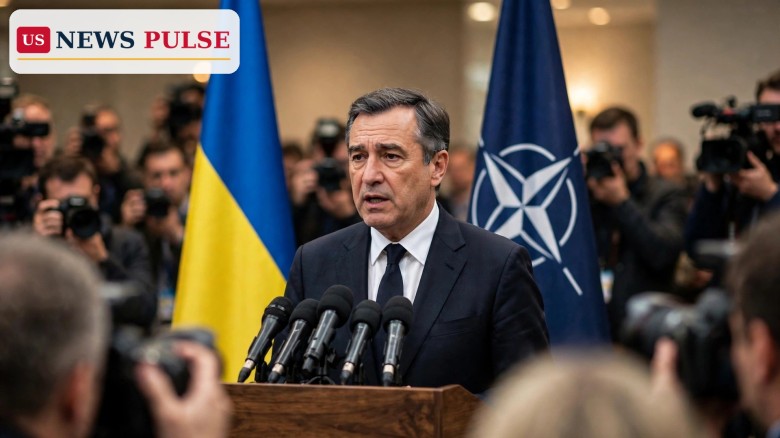
Ukrainian President Volodymyr Zelenskyy said on Friday, November 13, 2026, that American negotiators raised a striking new idea at the peace talks in Abu Dhabi: Ukraine could join NATO if it withdrew its forces from the Donbas. It was the first time the trade had ever been raised, he said, putting NATO membership back at the centre of the push to end the war.
Zelenskyy revealed the exchange in remarks to reporters released by his office on Saturday, November 14. He said the question came directly from the US side during the talks held in Abu Dhabi on November 10 and 11: "What if Ukraine joins NATO? Would Ukraine withdraw from Donbas?" He added: "This was the first time this had been raised. That is why I believe NATO is back on the agenda."
Key Points
- Zelenskyy said US negotiators in Abu Dhabi floated Ukraine joining NATO in exchange for withdrawing from Donbas — a first.
- Kyiv will not retreat from its territory or recognise occupied land as Russian, but would put a deal to a referendum with a full security package.
- He rejected enshrining neutrality in the constitution: "If Putin expects Ukraine's neutrality to be enshrined, that's not going to happen."
- He called a new US-floated European security framework "dangerous", warning Moscow could use it to weaken NATO.
- No US response has been reported, and NATO membership needs the unanimous consent of all 32 allies.
What Happened
The revelation came days after the first trilateral peace talks in nine months, held in Abu Dhabi on November 10 and 11. The United States was represented by special envoy Steve Witkoff and Jared Kushner, in the first face-to-face meeting of the Ukrainian and Russian delegations since February. The talks ended without a ceasefire, but with an agreement in principle on a large-scale prisoner exchange.
According to Zelenskyy, it was during those sessions that the American side raised the NATO-for-Donbas question. He did not say which US official put it forward, or whether it was formal or a trial idea. What he made clear is that it had never been raised before, and that its appearance now changes the shape of the negotiation.
Zelenskyy also set out the conditions under which he would even consider putting such a question to the Ukrainian people. If Ukraine received a comprehensive security package — NATO and EU guarantees, a strong, well-funded army with no size limits, and rebuilding funds — he would put it to a referendum. But the specifics do not yet exist and would need US and NATO confirmation first.
Background and Context
The Donbas has been at the heart of the war since Russia launched its full-scale invasion in February 2022, and the fighting there goes back to the separatist conflict that began in 2014. Russia now holds roughly a fifth of Ukraine's territory, including most of Donetsk and Luhansk, the two regions that make up the Donbas. Moscow demands Ukraine surrender the remaining parts of Donetsk it still holds, which Kyiv has consistently rejected.
Before the Abu Dhabi talks, a senior US official said both sides were privately showing flexibility on a possible exchange of territory, even as their public positions stayed unchanged. Security guarantees were expected to dominate, including a possible NATO-style Article 5 commitment. Ukraine joining NATO itself, however, had been treated as off the table for years — too provocative for Moscow, and too divisive among allies while the war raged.
Ukraine NATO Membership for Donbas Withdrawal: What the Trade Would Mean
For Ukraine, the appeal of the trade is clear. Membership of NATO would bring the alliance's collective defence guarantee, the strongest security commitment in the world. Any future Russian attack would be treated as an attack on all 32 allies. For a country fighting nearly five years for its independence, that guarantee is worth more than any paper promise.
For Russia, the calculation runs the other way. Giving up its demand to keep Ukraine out of NATO in exchange for the rest of the Donbas would be a major concession, and there is no sign Moscow is willing to make it. The Kremlin has insisted throughout that its territorial demands are not negotiable. There is also a practical problem: NATO membership requires the unanimous consent of all 32 allies, and several have been reluctant to admit a country at war.
Reactions and Quotes
Zelenskyy's own words carried the weight of the announcement. "This was the first time this had been raised," he said. "That is why I believe NATO is back on the agenda." On neutrality, he was blunt: "If Putin expects Ukraine's neutrality to be enshrined, that's not going to happen." Neutrality would require changing a constitution that commits Ukraine to seeking NATO membership.
He also warned about a separate American idea: a new European security framework. Zelenskyy called it "dangerous", saying Moscow could use it to weaken NATO and reshape Europe's borders, including by seeking the withdrawal of US troops. There has been no public response from the US government to Zelenskyy's account, and no comment yet from NATO headquarters.
Why It Matters
This is the first time in the war that NATO membership has been openly linked to a territorial settlement. For years, the alliance question and the territory question were treated as separate problems. Bringing them together opens a possible path to a deal neither side has had — but also new risks. If the trade becomes the centrepiece, every other issue — ceasefires, prisoner exchanges — will be measured against it.
What Happens Next
The immediate question is whether Washington confirms that the idea was raised, and whether Moscow responds. The next round of talks has not yet been scheduled, though envoy Jared Kushner said after Abu Dhabi that the talks would expand to include European nations, and that work was under way on the largest prisoner exchange of the war. For the full story, read our report on the first trilateral talks in nine months and our coverage of the territorial flexibility shown before the talks.
For now, Zelenskyy has put the idea into the open; it cannot be taken back. Whether it becomes the basis of a peace deal or fades as a trial balloon will depend on what Washington, Moscow and the NATO allies say next — and on whether Ukrainians, if ever asked, would trade the Donbas for the alliance's protection.
Frequently Asked Questions
What did Zelenskyy say the US floated at the Abu Dhabi talks? US negotiators asked: "What if Ukraine joins NATO? Would Ukraine withdraw from Donbas?" He said it was the first time the idea had been raised.
Would Zelenskyy accept the trade? He would put it to a referendum with a comprehensive security package — NATO and EU guarantees, a strong army with no size limits and rebuilding funds — but no specifics exist yet.
Will Ukraine accept neutrality? No. Zelenskyy said enshrining neutrality would require changing the constitution and "that's not going to happen."
Does NATO membership need all allies to agree? Yes. Joining NATO requires the unanimous consent of all 32 member countries.
Has the US government responded? No US government response to Zelenskyy's account has been reported.
© 2026 US News Pulse. All rights reserved.
 Print
 Save