
Three Oil Tankers Hit Mines and Catch Fire in Strait of Hormuz, Iran Says
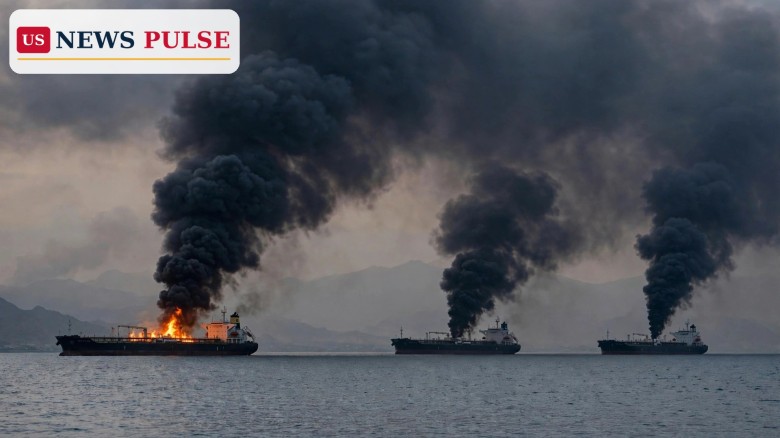
Three oil tankers hit mines and caught fire in the Strait of Hormuz on Saturday, Iran said, in the latest strike on shipping in the world's most important oil waterway as the US-Iran war grinds through its ninth month. Iran's Revolutionary Guards said two of the tankers, one a supertanker, exploded and burst into flames after striking a naval mine on an unauthorised route through the south of the strait, while Iran's conventional navy reported a third tanker catching fire after hitting a mine east of the strait. US Central Command dismissed Tehran's account as false, and no independent confirmation has emerged.
Key Points
- Iran says three oil tankers struck naval mines and caught fire in the Strait of Hormuz on Saturday, November 14, 2026, including one supertanker.
- The Revolutionary Guards said the two tankers had switched off their radar and positioning systems and were secretly using an unauthorised route in the south of the strait.
- Iran's conventional navy said a third tanker, sailing a prohibited zone east of the strait with its tracking systems off, caught fire and was forced to stop.
- No vessel names, origins, flags, cargoes or casualty figures were given, and there is no independent confirmation of any of the three incidents.
- US Central Command called the claims "false" and "another example of their lies and efforts to intimidate"; Al Jazeera counted five tankers hit around Hormuz in 24 hours.
What Happened
Iran's Revolutionary Guards navy said in a statement carried by Iranian state television early on Saturday that two oil tankers had struck a naval mine in the south of the Strait of Hormuz. The vessels had switched off their radar and positioning systems and were secretly trying to transit an unauthorised route when they "exploded and caught fire after striking a naval mine", the statement said.
A separate statement from Iran's conventional navy described a third incident further east: a tanker in a prohibited zone east of the strait, also with its tracking systems switched off, caught fire after striking a mine and was forced to stop. The reports came a day after an LNG tanker was reported to have hit a mine and exploded in the strait on Friday, covered in our report on the LNG tanker that hit a mine and exploded in the Strait of Hormuz.
Background and Context
The Strait of Hormuz is a narrow channel, about 33 kilometres wide at its narrowest, between Iran and Oman. It is the only sea passage from the Persian Gulf to the open ocean, and before the war roughly a fifth of the world's seaborne oil passed through it, along with a large share of liquefied natural gas.
The US-Iran war began on February 28, 2026, and is now in its ninth month. Tanker incidents have recurred throughout: three oil tankers were reported hit in late October, two more in early November, and four on Thursday, November 12, covered in our report on four tankers hit by explosions in the Strait of Hormuz. Washington says its forces have cleared the strait's main lanes: CENTCOM chief Admiral Brad Cooper said on October 30 that US forces had "successfully cleared the strait's internationally recognised primary transit routes of Iranian sea mines".
Oil Tankers Hit Mines: A Strait Running on a Fraction of Its Traffic
Whatever the truth of Saturday's reports, the shipping numbers tell their own story. Traffic through the Strait of Hormuz is down about 70 percent from pre-war levels, according to Al Jazeera, falling from 130 to 140 passages a day to around 36. Most commercial traffic now avoids the waterway, and the vessels that still transit accept the risk for a premium.
Every tanker that stays away is a cargo of oil or gas that must find another route, another supplier or another price, and the strait's traffic has become one of the most closely watched indicators of the war. Iran's account also carries a message: by stressing that the vessels had switched off their tracking and sailed unauthorised routes, Tehran presents the fires as the consequence of defying its warnings, not attacks on lawful shipping.
Reactions and Quotes
US Central Command moved quickly to reject Tehran's version of events, dismissing the mine claims as "false" and "another example of their lies and efforts to intimidate". The US military maintains that it has cleared the main routes through the waterway of mines, and that Iran's repeated mine reports are a campaign to frighten shipping away from a strait it does not control.
The denial fits a pattern that has held throughout the war. Iranian state media announces tanker incidents citing the Revolutionary Guards; Washington disputes them; and the shipping industry, unable to verify either version, treats the strait as dangerous regardless. For crews deciding whether to sail, the argument matters less than the fact that it keeps happening.
Why It Matters
The Strait of Hormuz is where the war meets the world economy. Oil prices, gas supplies and shipping insurance rates all move on what happens in this narrow stretch of water, and every reported mine strike, confirmed or not, adds a risk premium that consumers ultimately pay.
The incidents are also becoming a test of credibility. Iran says its mines are sinking ships; the United States says the mines are a fiction and the routes are clear. One side is wrong, and the gap between the two accounts shows how little independent information is reaching the outside world. Until a burning tanker is independently identified and verified, the public record will consist of rival statements.
What Happens Next
The immediate question is whether independent evidence of Saturday's fires emerges: satellite imagery, a distress call, a vessel identified by insurers or tracking firms, or confirmation from a Gulf state. Previous incidents have sometimes been corroborated days later, and sometimes never at all.
The wider question is whether the mine campaign, real or claimed, pushes the war towards a new phase. Vice President JD Vance said on Monday that Washington has made progress in talks with Iran and set no deadline for a deal, as covered in our report on Vance saying US-Iran talks are making progress with no deadline for a deal. But every tanker fire makes a settlement harder to sell at home, and every denial hardens the mistrust.
Frequently Asked Questions
How many tankers were reported hit in the Strait of Hormuz on Saturday? Iran said three oil tankers struck mines and caught fire, including one supertanker.
Have the incidents been independently confirmed? No. No vessel names, flags, cargoes or casualty figures were given, and US Central Command dismissed the claims as false.
How many tankers have been reported hit around Hormuz in the past day? Al Jazeera counted five in about 24 hours, including Friday's LNG tanker incident and Saturday's three oil tankers.
How much has shipping through the strait fallen? Traffic is down about 70 percent from pre-war levels, from 130 to 140 passages a day to around 36, according to Al Jazeera.
What does the United States say about mines in the strait? The US military says it has cleared the main routes of mines; Central Command called the claims false.
© 2026 US News Pulse. All rights reserved.
 Print
 Save