
Ecuadorian Fishermen Sue Trump Administration After Surviving US Drone Strike
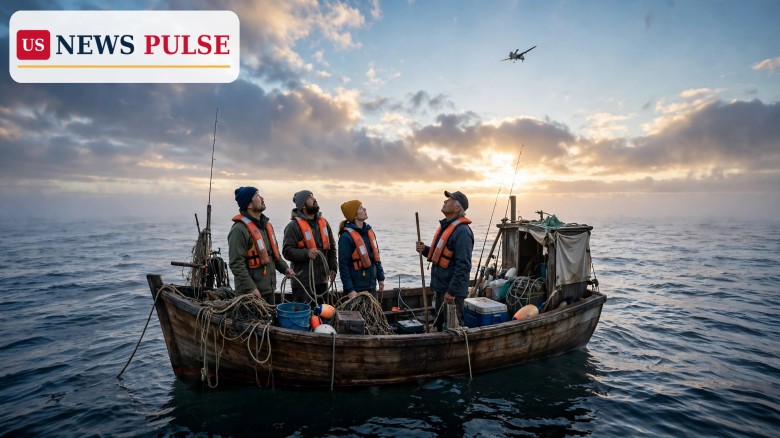
Sixteen Ecuadorian fishermen who survived a US drone strike on their fishing boat plan to sue the Trump administration, alleging they were kidnapped and tortured after the attack that destroyed their vessel in the Pacific Ocean. The Ecuadorian fishermen sue Trump administration case, first reported by The Guardian on Saturday, November 14, 2026, will be filed in a federal court in Pennsylvania on Monday, November 16, in a case that could test the legality of the administration's boat-strike campaign.
Key Points
- Sixteen Ecuadorian fishermen will file a lawsuit on Monday, November 16, 2026, in the US District Court for the Western District of Pennsylvania.
- The crew of the La Negra Francisca Duarte II say two armed US drones destroyed their boat on March 17, 2026, about 385 nautical miles from Manta.
- Two crew members were set on fire and burned on their legs, arms and back, the filing says.
- The men say they never trafficked drugs and that Ecuadorian authorities had inspected the boat before the attack and found no drugs or cartel links.
- They seek unspecified damages for the strike and their alleged kidnapping and torture, after US personnel took them into custody and jailed them for weeks in El Salvador.
What Happened
The crew of the La Negra Francisca Duarte II were returning from a two-week fishing trip on March 17, 2026, when two armed US drones destroyed their boat about 385 nautical miles from Manta. The strike set two of the fishermen on fire, leaving them with burns on their legs, arms and back, according to the filing reviewed by The Guardian.
After the attack, the surviving crew rowed lifeboats toward a nearby ship, where uniformed US personnel took them into custody. The men say their wrists were bound and they were hooded, then jailed for weeks in El Salvador. Ecuadorian authorities had inspected the boat shortly before the attack and found no drugs and no cartel links, the filing says.
The lawsuit will be lodged in the US District Court for the Western District of Pennsylvania on Monday, November 16. The men seek unspecified damages for the strike and their alleged kidnapping and torture. Their lawyer is Pittsburgh attorney Dan Kovalik, who said none of the men has been able to return to work since losing the vessel, worth roughly 400,000 dollars according to Captain Hernan Flores, who is still paying off the loan.
Background and Context
The strike was part of Operation Southern Spear, the Trump administration's boat-strike campaign, which began in November 2025. The campaign targets vessels the administration says are carrying drugs toward the United States, and it has become one of the most controversial parts of its approach to drug trafficking and Latin America.
The Washington Office on Latin America says the campaign has killed at least 238 to 250 people. The strikes, carried out in the Caribbean and the Pacific, have drawn criticism from lawmakers, human rights groups and governments in the region, who question the legal basis for killing people at sea without trial.
The administration has defended the campaign as a necessary response to drug cartels, arguing the boats are legitimate military targets. Critics say the strikes amount to extrajudicial killings and point to cases in which survivors and families say the victims were fishermen, not traffickers. Read our report on the Pentagon defending its Caribbean boat strikes against suspected drug traffickers. It joins similar litigation, including a case brought by the families of two Trinidadian fishermen killed in a US strike. But the plaintiffs here survived, and their testimony would give a court a first-hand account of what happens to the crews of boats hit by the strikes.
Ecuadorian Fishermen Sue Trump Administration Over Drone Strike
The legal claim is straightforward. The sixteen men say they were ordinary fishermen on a lawful voyage, inspected and cleared by their own country's authorities, when American drones destroyed their boat. They say the attack was unlawful, and that being bound, hooded and jailed for weeks in a foreign country amounted to kidnapping and torture.
The Pentagon declined to comment on the pending litigation. In June, the Pentagon and the US Coast Guard denied participating in operations involving Ecuadorian fishing vessels, a denial that sits uneasily alongside the filing's detailed account, which names the date, the distance from Manta and the weapon used.
Whether the court reaches the merits is far from certain. The administration is likely to argue the strikes are military actions beyond the reach of a civil lawsuit. The fishermen's lawyers will argue the men were civilians, no drugs were found, and their detention had no legal basis. Read our report on a former Mexican prosecutor who fled to the United States under American protection.
Reactions and Quotes
Their lawyer, Dan Kovalik, has said none of the men has been able to return to work since losing the vessel. Captain Hernan Flores, still paying off the loan on the 400,000-dollar boat, is among those who lost their only source of income.
The Pentagon has declined to comment on the pending litigation. Human rights advocates have long warned the boat-strike campaign risks killing innocent people, and the Ecuadorian case is likely to be cited as evidence that the risk is real. Supporters say the strikes target cartels that flood the United States with drugs.
Why It Matters
The lawsuit puts a human face on a campaign mostly debated in abstract terms. The administration talks about drug boats and cartel networks. The sixteen fishermen talk about a two-week fishing trip, a boat inspected and cleared by their own government, and a strike that left two of them burned and all of them jailed in a foreign country.
It also tests the legal limits of the campaign. If a federal court hears the case, it could force the government to explain how it chooses targets, what evidence it relies on, and what happens to survivors. If it declines, the fishermen would have no forum in which to challenge what happened.
What Happens Next
The lawsuit is due to be filed on Monday, November 16, 2026, in the US District Court for the Western District of Pennsylvania. The administration is expected to seek dismissal, arguing the strikes are military actions courts cannot review.
The case will proceed alongside other litigation over the campaign, including the case brought by the families of the two Trinidadian fishermen.
Frequently Asked Questions
Who are the sixteen Ecuadorian fishermen? They are the crew of the fishing boat La Negra Francisca Duarte II, who say two armed US drones destroyed their vessel on March 17, 2026, about 385 nautical miles from Manta, Ecuador.
What are they alleging? They say they never trafficked drugs, that Ecuadorian authorities inspected their boat and found no drugs, and that after the strike they were bound, hooded and jailed for weeks in El Salvador, which they describe as kidnapping and torture.
When will the lawsuit be filed? On Monday, November 16, 2026, in the US District Court for the Western District of Pennsylvania.
Has the Pentagon responded? It declined to comment on the pending litigation. In June, the Pentagon and the US Coast Guard denied participating in operations involving Ecuadorian fishing vessels.
© 2026 US News Pulse. All rights reserved.
 Print
 Save