
Trump Scales Back Europe Troop Cut to 5,000 as Allies Raise Defence Spending
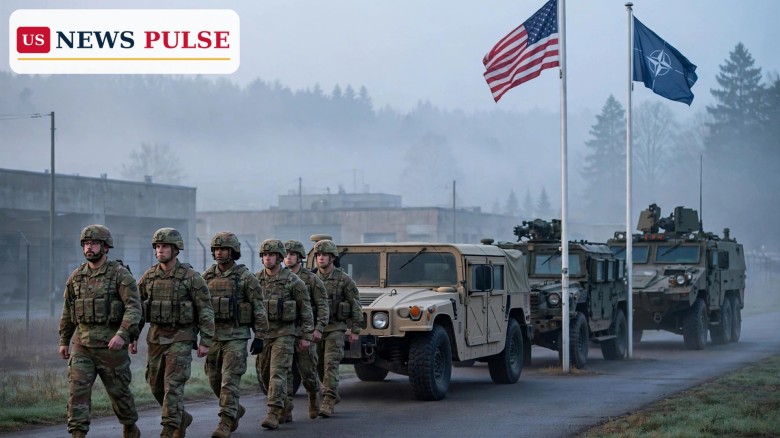
The Trump administration is sharply scaling back its planned reduction of the American military presence in Europe, Bloomberg reported on Friday, with officials now leaning toward withdrawing about 5,000 troops rather than the up to 25,000 under discussion — a shift that will reassure allies who feared a far deeper pullback.
About 80,000 United States service members are stationed in Europe, so the revised plan would remove only a small fraction of the force. The change reflects higher European defence spending, the value of European bases for American strikes in the Middle East, and the continuing war in Ukraine, where the American presence remains central to deterring Russia.
Key Points
- Bloomberg reported on Friday, November 14, 2026, that the administration now favours cutting about 5,000 US troops from the roughly 80,000 stationed across Europe.
- Earlier discussions had contemplated withdrawing up to 25,000 troops, a prospect that alarmed European allies.
- The rethink reflects higher European defence spending, the US-Israel campaign against Iran, and the value of European bases and airspace for American strikes in the Middle East.
- Germany, which hosts the largest American contingent in Europe, is expected to absorb the biggest share of the reduction.
- The American presence on NATO's eastern flank is expected to grow instead, with countries bordering Russia ready to help pay hosting costs.
What Happened
Bloomberg reported the revision on Friday, citing people familiar with internal deliberations that have not been made public. The administration is leaning toward a cut of about 5,000 personnel, a figure still subject to change because President Donald Trump will make the final decision. Under Secretary of Defense for Policy Elbridge Colby is due to prepare a report for Pentagon chief Pete Hegseth, who will present final proposals to the president on December 1, 2026.
The change in scale is striking. A cut of 25,000 would have removed nearly a third of the American force in Europe, the deepest reduction since the Cold War, and it rattled allied capitals. A cut of 5,000 amounts to roughly six per cent of the force — a trim rather than a retreat, leaving the backbone of the American presence intact.
The Pentagon has been reviewing the American force posture in Europe, weighing where troops are needed most and where allies can take on more of the burden. That review has unfolded as European defence budgets rise sharply and American operations in the Middle East depend on bases and airspace in Europe. Both factors point the same way: keep the bulk of the force where it is.
Background and Context
The United States has kept large forces in Europe since the Second World War, with troops across Germany, Italy, Britain, Spain, Belgium and Poland, plus headquarters, air bases, hospitals and logistics hubs supporting American operations far beyond the continent. Germany hosts the biggest contingent, and bases such as Ramstein and Grafenwoehr are central to American military power in Europe, Africa and the Middle East.
President Trump has long argued that European allies should spend more on their own defence, and his administration has pressed NATO members to raise military budgets. That pressure has worked: European defence spending has risen sharply. The higher spending is now cited as a reason a large withdrawal is no longer needed, while the war in Ukraine has made NATO's eastern flank its most sensitive frontier.
Europe Troop Cut: A Smaller Reduction With a Sharper Eastern Focus
The emerging plan is not simply a smaller cut; it is a reshaping of where American troops sit. The largest reduction may fall on Germany, while an increased presence is expected along NATO's eastern flank, where states bordering Russia are prepared to help fund hosting costs. The shift moves American power closer to the threat it is meant to deter.
Poland illustrates the direction of travel. The Pentagon has already backed a permanent United States military base in Poland, with Warsaw offering to pay construction costs of 15 to 17 billion zloty, about 3.8 to 4.4 billion dollars, for a base housing about 5,000 permanently stationed troops. Russia, meanwhile, has revived its demand that NATO pull back to its 1997 borders, a condition the alliance has rejected outright. Read more about the Pentagon-backed permanent base in Poland and Russia's demand for a NATO pullback to 1997 borders.
Reactions and Quotes
The clearest public signal has come from the United States Representative to NATO, Matt Whitaker, who played down expectations of a large drawdown. "We have a lot of assets here that are right where we want them. I don't expect anything big," Whitaker said — a remark that now looks like a preview of the revised plan.
European allies had reacted with alarm when the figure of up to 25,000 was first discussed, warning it would undermine deterrence. The smaller number is likely to be welcomed, even though the final decision still rests with President Trump and the details — including which units move and when — have not been settled.
Why It Matters
The size of the American force in Europe is one of the most consequential decisions in Western security policy. United States troops are the backbone of NATO deterrence: their presence signals to Moscow that an attack on an ally would mean war with America. A cut of 25,000 would have been read in Moscow as a weakening of that commitment; a cut of 5,000 is unlikely to be read that way.
The decision also matters for the war in Ukraine and the diplomacy around it. Washington has floated far-reaching ideas in the talks, including questions about Ukrainian NATO membership, and the credibility of American security guarantees is central to any settlement. Read more about the United States floating NATO membership for Ukraine in exchange for a Donbas withdrawal.
What Happens Next
The next milestone is December 1, 2026, when Hegseth is to present final proposals to President Trump. Colby's report will shape those proposals, and the president will then decide the final size and shape of the reduction. Until then, the figure of about 5,000 remains a leaning, not a decision, and it could still change.
Attention will then turn to the details: which units leave, which bases shrink, and how quickly the changes take effect — and whether the promised build-up on the eastern flank materialises.
Frequently Asked Questions
How many US troops are being cut from Europe?
About 5,000, according to Bloomberg — down from earlier discussions of withdrawing up to 25,000.
How many US troops are stationed in Europe?
About 80,000 service members, so a cut of 5,000 would amount to roughly six per cent of the force.
Which country will see the biggest reduction?
Germany, which hosts the largest American contingent in Europe, is expected to absorb the biggest share.
Will the US presence on NATO's eastern flank grow?
Yes. An increased presence is expected there, with states bordering Russia prepared to help fund hosting costs.
When will the final decision be made?
Pentagon chief Pete Hegseth presents final proposals to President Donald Trump on December 1, 2026.
© 2026 US News Pulse. All rights reserved.
 Print
 Save