
New Orleans Tanker Collision: NTSB Recovers Data Recorder as Port Sues
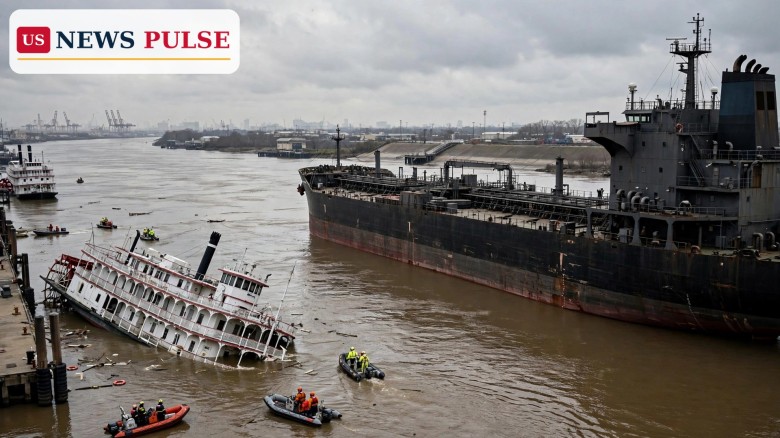
NEW ORLEANS — Federal investigators have recovered the voyage data recorder from the tanker that slammed into a docked paddle-wheeler on the Mississippi River in New Orleans, the National Transportation Safety Board said on Saturday, as the port moved to seize the ship over more than $1 million in damage. The recorder — the maritime equivalent of an aeroplane's black box — logs speed, direction and course, plus audio from the bridge, evidence investigators hope will explain why the 520-foot vessel appeared to lose steering before the New Orleans tanker collision on Friday.
The American Heritage, an American Cruise Lines paddle-wheeler carrying 191 people, was left listing and partly submerged in about 25 feet of water. No one was killed, but 32 people were taken to hospital and nine were still being treated. A 16-member NTSB team is now in New Orleans, while the US Coast Guard runs its own investigation.
Key Points
- The NTSB recovered the voyage data recorder from the tanker Atlantic Asphalt on Saturday, November 14, 2026.
- The recorder logs speed, direction, course and bridge audio, and should show whether the ship lost steering.
- The Port of New Orleans sued on Friday to seize the tanker, saying it caused more than $1 million in damage to its terminal; a judge issued a warrant giving federal officials control of the ship for now.
- No one was killed; about 100 people were pulled from the water and 32 were taken to hospital.
- A preliminary NTSB report is expected within about 30 days; the final report will take 18 to 24 months.
What Happened
The collision happened at about 12:30 p.m. on Friday, November 13, when the Atlantic Asphalt struck the American Heritage, docked at its terminal on the Mississippi River. The tanker appeared to lose steering as it approached, according to early reports, though the exact cause is still unknown. Passengers fled as the riverboat took on water, and first responders pulled about 100 people from the river.
Thirty-two people were taken to local hospitals on Friday, and nine remained hospitalised on Saturday afternoon, Mayor Helena Moreno said. Moreno said it might take weeks to remove the riverboat from the site. The NTSB team reached New Orleans late after being delayed by Friday's nationwide flight ground stop.
Background: A Busy River and a Foreign-Flagged Tanker
The Mississippi at New Orleans is among the busiest commercial waterways in the United States, carrying ocean-going ships, barges and river cruisers past the city's terminals daily. The American Heritage is a paddle-wheeler operated by American Cruise Lines. The Atlantic Asphalt is a 520-foot tanker owned by Nave Shipping SA, registered in Monrovia, Liberia, and managed by Thome Ship Management of Singapore — a reminder that the ships moving through American ports are often owned and crewed far from the waters they sail.
The NTSB leads the federal probe, as it does for major transport accidents. The agency recently recovered a cockpit voice recorder after the fatal Learjet crash in Greenacres, Florida, and will follow a similar pattern here: secure the recorder, interview the crew, examine the machinery and reconstruct the minutes before impact. The US Coast Guard is also investigating. Read our earlier report: New Orleans Riverboat Collision: Tanker Capsizes Docked Ship, 32 Hurt.
New Orleans Tanker Collision: What the Data Recorder Could Reveal
The voyage data recorder is the single most important piece of evidence recovered so far. Like an aeroplane's flight data recorder, it captures the ship's speed, direction and course before the collision, together with bridge audio. If the Atlantic Asphalt did lose steering, the recorder should show when control was lost, what the crew did in response, and whether any warning signs appeared first.
NTSB member John DeLeeuw said on Saturday that the agency has 16 investigators on site and is scheduling interviews with those involved. He also asked anyone with video of the collision to submit it to the NTSB. DeLeeuw said a preliminary report is expected within about 30 days, with the final report taking 18 to 24 months.
Reactions and Quotes
Mayor Helena Moreno said on Saturday that no one was killed, that first responders pulled about 100 people from the water, and that nine of the 32 taken to hospital remained there that afternoon. She warned removing the sunken American Heritage might take weeks.
DeLeeuw said the NTSB's 16 investigators were on site and scheduling interviews, and urged anyone with video to send it to the board. The Port of New Orleans sued on Friday to seize the tanker, saying it caused more than $1 million in damage to its terminal. A judge issued a warrant giving federal officials control of the ship for now.
Why It Matters
The collision matters for more than the two ships involved. A loaded tanker losing steering on the Mississippi at New Orleans could have caused far worse: the river carries heavy commercial traffic past densely built riverfronts, and a vessel out of control puts every nearby ship, terminal and passenger at risk. That nobody was killed, despite 191 people aboard and about 100 ending up in the water, owes as much to luck as to the rescue response.
The investigation will also test how the United States handles an accident involving a foreign-flagged, foreign-managed ship in American waters. The legal questions — who pays for the terminal damage, who is liable for the injuries, and what safety failures caused the loss of steering — will play out across maritime law, the port's seizure action and the NTSB's findings.
What Happens Next
The NTSB team will spend about a week in New Orleans, interviewing both crews and port staff and analysing the recorder. Its preliminary report, expected within about 30 days, should confirm whether steering failed. The full investigation, including any safety recommendations, will take 18 to 24 months.
In the meantime, the Atlantic Asphalt remains under federal control under the judge's warrant, and the port's lawsuit will move through the courts. The American Heritage will stay partly submerged while salvage crews plan its removal.
Frequently Asked Questions
What is a voyage data recorder? A ship's equivalent of an aeroplane's black box, recording speed, direction, course and bridge audio.
Was anyone killed in the New Orleans riverboat collision? No. Thirty-two people were taken to hospital, nine still being treated on Saturday; about 100 were pulled from the water.
Who owns the tanker Atlantic Asphalt? The 520-foot tanker is owned by Nave Shipping SA, registered in Monrovia, Liberia, and managed by Thome Ship Management of Singapore.
Why is the Port of New Orleans suing to seize the ship? It says the tanker caused more than $1 million in damage to its terminal; a judge issued a warrant giving federal officials control for now.
When will the NTSB say what caused the crash? A preliminary report is expected within about 30 days; the final report will take 18 to 24 months.
Related coverage: the NTSB's recent recorder recovery in Florida — NTSB Recovers Cockpit Voice Recorder From Fatal Greenacres Learjet Crash — and the cause of Friday's nationwide flight disruption, which delayed the NTSB team — Duffy Blames L3Harris Contractor Work and Faulty Router for FAA Ground Stop.
© 2026 US News Pulse. All rights reserved.
 Print
 Save