
Iran Claims Six Drones Hit US Radar Base in Bahrain as Saudi Arabia Downs Houthi Missiles
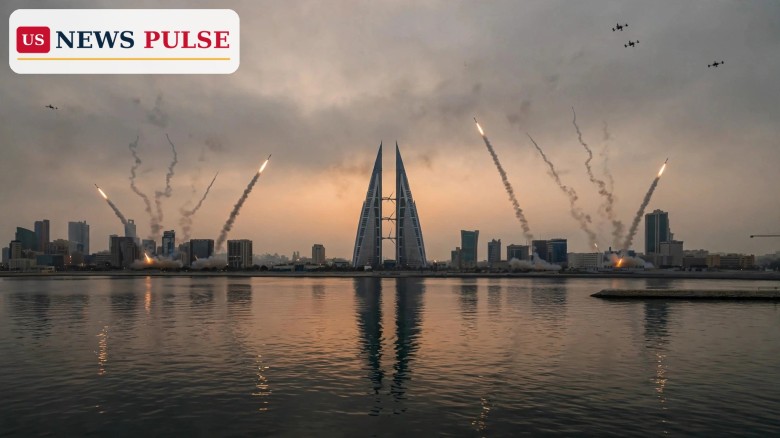
Iran's Revolutionary Guards said on Sunday morning that six of its drones struck a United States air-defence radar installation at Bahrain's Al-Rifaa helicopter base, calling the attack the "second phase of a decisive and crushing response" to American aggression, as explosions were reported across Bahrain and Saudi Arabia said it had shot down Houthi missiles aimed at Riyadh.
Bahrain's military said its air defences intercepted and destroyed several Iranian aerial attacks, and the Interior Ministry twice urged residents to seek shelter. Washington has not confirmed the claims, and no damage or casualties have been reported.
Key Points
- Iran's Revolutionary Guards (IRGC) said six drones hit a US air-defence radar at the Al-Rifaa helicopter base in Bahrain on Sunday, November 15, 2026, calling it the "second phase" of its retaliation against the United States.
- Bahrain's Defence Force said its air defences "confronted, intercepted and destroyed a number of Iranian aerial attacks" before they could achieve their objectives.
- Saudi Arabia's air defences intercepted two ballistic missiles launched toward Riyadh by Yemen's Houthi rebels, plus three drones in the Eastern Province, the Saudi Press Agency reported.
- Washington has not confirmed the claims, and no independent confirmation exists that Al-Rifaa was hit.
- The IRGC Navy separately claimed two oil tankers exploded after striking naval mines south of the Strait of Hormuz, a claim that is unverified and gives no vessel identities.
What Happened
The IRGC said its Aerospace Force launched six drones at the US air-defence radar at the Riffa, or Al-Rifaa, helicopter base. The Guards said the drones achieved a "precise and successful impact" that "was heard in various parts of Bahrain," and warned that every act of aggression would draw a "tough" and "calculated" response.
Explosions were reported across Bahrain on Sunday morning, and the Iran-aligned Sabereen News channel attributed them to an Iranian drone attack on US targets.
Bahrain's Defence Force accused Iran of a "systematic hostile approach" through attacks targeting the kingdom. "With strong determination and high combat readiness, the air defence systems of the Bahrain Defence Force confronted, intercepted and destroyed a number of Iranian aerial attacks today ... before they could achieve their objectives," the statement, carried by the state-run Bahrain News Agency, said.
The Interior Ministry twice urged citizens and residents to remain calm and proceed to the nearest safe location. The alerts were Bahrain's first nationwide warnings since September, and the ministry lifted the alert less than an hour later, saying the danger had passed.
Background: A Week of Claims and Interceptions Around Bahrain
Sunday's exchange is the latest round in a fast-moving sequence around Bahrain, which hosts the headquarters of the US Navy's Fifth Fleet.
On Friday, November 13, US Central Command said American forces intercepted two Iranian one-way attack drones heading for Bahrain. CENTCOM also rejected an earlier IRGC claim that it had destroyed an American early-warning radar in Bahrain. That claim followed Iran's statement a day earlier that it had struck a US radar in Bahrain in retaliation for an "enemy" strike on a telecom tower in the southern Iranian port city of Sirik late on Thursday, November 12.
President Donald Trump said the same day he would renew strikes "without hesitation" if Tehran threatened US allies or American vessels. The war, now in its ninth month, began with US and Israeli strikes on Iran on February 28, 2026. Bahrain had already sounded warning sirens and ordered residents to shelter earlier on Sunday, the seventh such alert in under 48 hours, according to Roya News.
Iran Drones Bahrain: What the Al-Rifaa Claim Means for the Gulf
The Al-Rifaa claim matters because it is specific in a way Iran's earlier claims were not. The IRGC named a target, a weapon count and a location, and framed the strike as a deliberate second phase rather than a one-off reprisal.
At the same time, the claim remains unverified. Washington has not confirmed the latest attacks, and neither US nor Bahraini authorities have said the Al-Rifaa installation was hit. That gap between claim and confirmation has become a pattern: on Friday, CENTCOM publicly disputed the IRGC's claim of destroying an early-warning radar.
For Bahrain, the stakes are direct. The kingdom is small, densely populated and home to the Fifth Fleet, making it both a strategic asset for Washington and a target for Tehran.
Saudi Arabia Intercepts Houthi Missiles Aimed at Riyadh
Saudi Arabia's air defences intercepted and destroyed two ballistic missiles launched toward Riyadh by Yemen's Iran-backed Houthi rebels, Saudi officials said on Sunday. Three drones were also intercepted in the kingdom's Eastern Province, the Saudi Press Agency reported. No damage or casualties were reported.
Reactions and Quotes
The IRGC's statement set the tone for Tehran's account, describing the drone attack as the "second phase of a decisive and crushing response" to US aggression.
Bahrain's military said its air defences had destroyed the incoming attacks "before they could achieve their objectives."
President Donald Trump signalled that the United States might hold off on further attacks if it faced no new provocations from Tehran or the Houthis in Yemen, while saying the US would nevertheless maintain its naval blockade.
Why It Matters
Bahrain matters to the United States because it hosts the Fifth Fleet, the naval command for American operations across the Gulf and the Red Sea. A confirmed strike there would be the first successful Iranian attack on an American military facility in a Gulf state in more than two months.
The Strait of Hormuz, which the IRGC again claimed was closed, is a vital shipping chokepoint. The IRGC Navy's separate claim that two oil tankers exploded after striking naval mines south of the strait is unverified and gives no vessel identities. It should not be confused with the separate incident on Saturday, November 14, in which three oil tankers hit mines and caught fire in the Strait of Hormuz. Gulf Arab states on Friday demanded Iran pay compensation for thousands of attacks since February.
What Happens Next
The immediate question is whether the United States confirms or disputes the IRGC's claim. CENTCOM answered Friday's radar claim swiftly and publicly; a similar statement would settle whether the six drones reached their target.
Oil markets will be watching on Monday. Talks between Washington and Tehran continue through Qatari mediators, but strikes keep overtaking the negotiations.
Frequently Asked Questions
Did Iranian drones hit a US base in Bahrain?
Iran's Revolutionary Guards said six drones hit a US air-defence radar at Al-Rifaa, but Washington has not confirmed the claim and there is no independent confirmation the installation was hit.
What is the Al-Rifaa base?
Al-Rifaa, also spelled Riffa, is a helicopter base in Bahrain that hosts a US air-defence radar installation.
What happened in Saudi Arabia on Sunday?
Saudi air defences intercepted two ballistic missiles launched toward Riyadh by Yemen's Houthi rebels, plus three drones in the Eastern Province, according to the Saudi Press Agency.
Was anyone hurt in Bahrain?
No damage or casualties have been reported. Bahrain's Interior Ministry twice told residents to seek shelter, then lifted the alert.
Is the Strait of Hormuz closed?
Iran's Revolutionary Guards said so, but the claim is unconfirmed. Shipping has continued despite repeated Iranian claims and mine incidents.
© 2026 US News Pulse. All rights reserved.
 Print
 Save