
Guatemala Declares 30-Day State of Emergency After Lawmaker and Three Police Killed
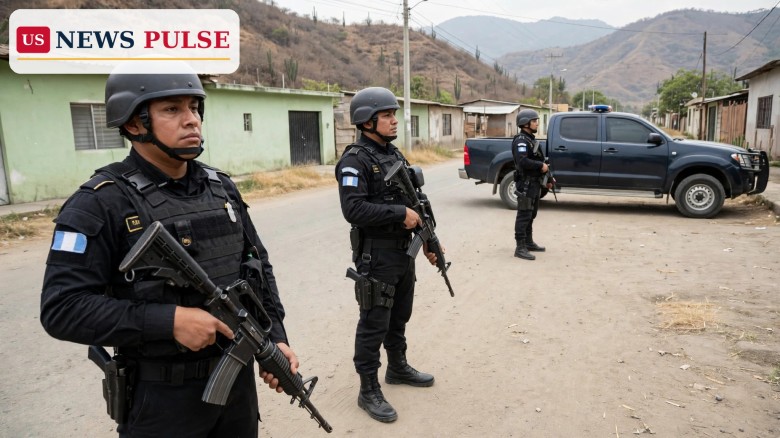
Guatemala has declared a 30-day state of emergency in two eastern departments after a wave of armed attacks that killed a lawmaker and three police officers, the government announced on Saturday, November 14, 2026. The Guatemala state of emergency gives security forces sweeping powers in Zacapa and Izabal, including the right to ban gatherings, disperse groups by force, make arrests and enter homes without a warrant.
The decree took effect immediately, covering two neighbouring departments whose combined territory is roughly the size of Qatar. It follows a series of armed attacks in Zacapa, above all the shooting of lawmaker Julio Cesar Portillo Paz in Rio Hondo on November 6. He later died of his injuries, and three police officers were also killed in the attack, President Bernardo Arevalo announced.
Key Points
- Guatemala decreed a state of emergency on Saturday, November 14, 2026, in the eastern departments of Zacapa and Izabal, effective immediately for 30 days.
- The decree bans gatherings and gives security forces powers to disperse groups by force, make arrests and enter homes without a warrant.
- It follows armed attacks in Zacapa, including the shooting of lawmaker Julio Cesar Portillo Paz in Rio Hondo on November 6, 2026.
- Portillo Paz later died of his injuries, and three police officers were also killed, President Bernardo Arevalo announced.
- Authorities have not identified who was responsible, amid heightened concern over organised crime influence in the region.
What Happened
The government announced the decree on Saturday, November 14, 2026, after days of rising violence in Zacapa, a department in eastern Guatemala long known as a corridor for drug trafficking and organised crime. It covers Zacapa and its neighbour Izabal, on the Caribbean coast, and suspends some constitutional guarantees for 30 days while security forces move to restore order.
Under the decree, public gatherings are banned, and police and soldiers may break up groups by force. They may also detain suspects and enter private homes without a court warrant, powers normally restricted under Guatemala's constitution.
The immediate trigger was the attack in Rio Hondo on November 6. Gunmen opened fire, leaving Portillo Paz gravely wounded. He was rushed to hospital, where he later died, and three police officers were killed in the same attack, according to President Arevalo.
Background and Context
Zacapa sits on one of Guatemala's most important drug trafficking routes. The department lies between the Caribbean coast and the capital, Guatemala City, and its highways carry traffic, legal and illegal, between Honduras, El Salvador and Mexico.
Izabal, the second department covered by the decree, borders the Caribbean Sea and Honduras. The two departments together cover an area roughly the size of Qatar, a vast stretch for security forces to patrol.
President Bernardo Arevalo, who took office in January 2024 promising to fight corruption and organised crime, has faced a difficult security picture. His government has accused criminal networks of trying to destabilise his administration. The emergency decree is one of the strongest measures available to a Guatemalan president, and its use signals that the government believes ordinary policing is not enough in the east.
Guatemala State of Emergency: What the Decree Allows
The decree's most important provision is the suspension of the right to free assembly. Gatherings are banned outright in Zacapa and Izabal for the duration of the emergency, and security forces may disperse any group by force. That is a broad power in a region where markets, churches and community meetings are a normal part of daily life.
Police and soldiers may also arrest people without the usual legal formalities and enter homes without a warrant.
Reactions and Quotes
President Arevalo announced the deaths of Portillo Paz and the three officers after the Rio Hondo attack, and his government moved within days to impose the emergency decree. The speed of the response suggests the administration sees the attacks as a direct challenge to its authority in the east, and as a threat that requires a visible show of force.
Authorities have not identified who was responsible for the attacks. No group has claimed responsibility, and the government has not named any suspects.
Why It Matters
The killing of a sitting lawmaker is a rare and serious event in any country, and in Guatemala it carries a particular weight. Portillo Paz was an elected representative, and his death, together with the killing of three police officers, shows that armed groups in the east are willing to attack the state itself. A government that cannot protect its own lawmakers and police officers faces a crisis of authority.
The emergency also matters for the United States. Guatemala is a key partner in Washington's efforts to control drug trafficking and migration through Central America, and violence in the east can push more people to leave. Read our report on the Mexican prosecutor who fled to the US after secretly helping the CIA fight cartels.
For President Arevalo, the decree is a test. He came to power promising to clean up Guatemala's institutions and to take on the criminal networks that have infiltrated them.
What Happens Next
The immediate question is what the security forces do with their new powers. In the coming days, residents of Zacapa and Izabal can expect a heavier presence of police and soldiers, checkpoints on major roads, and searches in areas where armed groups are believed to operate.
Congress is expected to take up the decree, as required by law. The 30-day clock is also important: if the violence continues, the government may seek to extend the emergency, and if calm returns, the decree will lapse. Investigators will also be under pressure to identify who carried out the attacks. Read our report on President Donald Trump threatening to double tariffs on Mexico over migrant caravans.
Frequently Asked Questions
What is the state of emergency in Guatemala? It is a 30-day decree, announced on Saturday, November 14, 2026, covering the eastern departments of Zacapa and Izabal. It bans gatherings and gives security forces powers to disperse groups by force, make arrests and enter homes without a warrant.
Who was killed in the attacks? Lawmaker Julio Cesar Portillo Paz was shot in Rio Hondo, Zacapa, on November 6, 2026, and later died of his injuries. Three police officers were also killed in the attack, President Bernardo Arevalo announced.
Who is responsible for the attacks? Authorities have not identified who was responsible. No group has claimed responsibility, and the attacks came amid heightened concern over organised crime influence in the region.
How long will the emergency last? The decree is effective for 30 days from November 14, 2026. Congress must approve it, and the government could seek an extension if the violence continues.
Where are Zacapa and Izabal? They are neighbouring departments in eastern Guatemala, on the Caribbean side of the country. Together they cover an area roughly the size of Qatar.
© 2026 US News Pulse. All rights reserved.
 Print
 Save