
Macron Warns Cutting Ukraine Aid Would Force 'Unjust Peace' and Another War
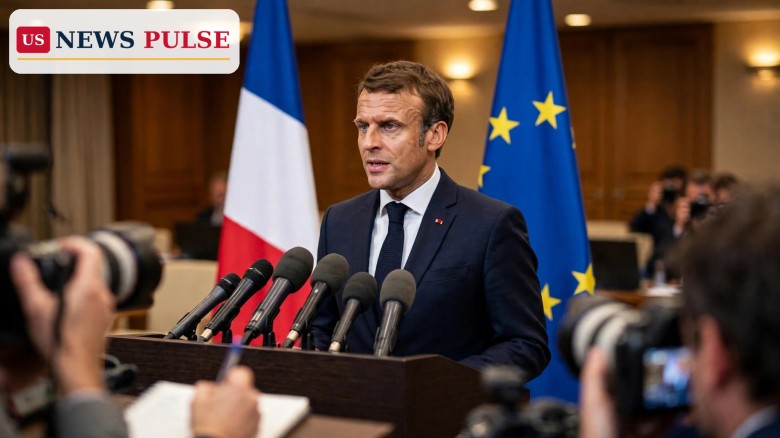
French President Emmanuel Macron has warned that limiting aid to Ukraine would force Kyiv into an "unjust peace" — and that such a peace would be a "recipe for another war". In a lengthy post on X on Saturday, 14 November 2026, Macron said France would keep backing Ukraine while pressing for a fair and lasting peace.
Key Points
- Macron wrote on Saturday, 14 November 2026, that those who want to ration aid to Ukraine "wish underneath it all to force an unjust peace on it" — calling that "the spirit of defeat" and "a recipe for another war".
- He warned that rationing aid would leave Ukraine permanently defenceless and leave Europe vulnerable too, and said that "cannot be France's position".
- The warning is widely read as a rebuke to the United States, whose administration is mediating the talks and has floated Ukraine giving up the Donbas for NATO membership or NATO-like guarantees.
- Ukrainian President Volodymyr Zelenskyy disclosed the US suggestion in comments released the same day, Saturday, 14 November.
- The remarks follow the latest US-brokered Russia-Ukraine talks in Abu Dhabi on 10–11 November, which ended without a breakthrough, and the European Political Community meeting in Dublin on 12–13 November.
What Happened
Macron took to X on Saturday with a long and unusually blunt message about the direction of the Ukraine peace effort. He argued that cutting back support for Kyiv is not a shortcut to peace but a path to a settlement imposed on Ukraine — and that such a settlement would not hold. "Those who want to ration aid to Ukraine wish underneath it all to force an unjust peace on it," he wrote. "That is the spirit of defeat. That is a recipe for another war. That cannot be France's position."
The timing was pointed: the warning came the same day Zelenskyy revealed Washington had suggested Ukraine give up the Donbas for NATO membership or NATO-style guarantees, and days after the latest US-brokered talks in Abu Dhabi, on 10–11 November, ended without a breakthrough.
Background and Context
The United States has taken the lead in mediating between Russia and Ukraine, with envoys Steve Witkoff and Jared Kushner shuttling between the parties. Their Abu Dhabi round on 10–11 November ended without an agreement, and the hardest questions — territory, security guarantees and the future of the Donbas — remain open.
Europe, meanwhile, has been fighting for a seat at the table. At the European Political Community meeting in Dublin on 12–13 November, European countries chose five nations — France, Germany, Italy, the United Kingdom and Poland — to send representatives to the peace talks. Macron told leaders in Dublin that Europe must take full part in reaching a fair and lasting peace, and he warned there that without Europeans there is no support for Ukraine.
That effort bore fruit on Friday, 13 November, when European Council President Antonio Costa announced that Europe will be represented at the talks by the EU institutions plus the five-nation E5 team. But what terms Europe will accept — and whether Washington might press Kyiv to trade land for security — is still unsettled. Macron's post is the clearest statement yet of where France draws the line.
Macron Ukraine Aid Warning: 'A Recipe for Another War'
The heart of Macron's warning is a simple argument: a peace imposed on a defenceless Ukraine is not a peace at all. If aid is rationed, he argued, Kyiv would be left permanently unable to defend itself — and Europe, sitting next door to a re-armed and emboldened Russia, would be left exposed as well. A settlement reached under those conditions, in his view, would only set up the next war.
That framing puts France at odds with the American mediation. Zelenskyy disclosed on Saturday that the United States had floated Ukraine withdrawing from the Donbas in exchange for NATO membership or NATO-like guarantees — a trade handing Moscow land it has failed to take by force, for a security promise Kyiv has questioned before.
Macron's post does not name the Donbas proposal directly. But warning against rationing aid and an "unjust peace" on the same day Zelenskyy disclosed it, he made his position plain: France will not back a deal that trades Ukrainian land for a promise.
Reactions and Quotes
Macron's own words carried the message, and they were deliberately stark. "Those who want to ration aid to Ukraine wish underneath it all to force an unjust peace on it," he wrote. "That is the spirit of defeat. That is a recipe for another war. That cannot be France's position."
Zelenskyy's disclosure of the US suggestion added weight to the warning. The Ukrainian president said Washington had raised the idea of Ukraine giving up the Donbas for NATO membership or NATO-like security guarantees — a proposal that, if accepted, would redraw the map of eastern Ukraine by negotiation rather than by battle.
Why It Matters
Macron's warning draws a public line inside the Western alliance at the most delicate moment of the peace effort. The United States is mediating, Europe has just won a seat at the talks, and the terms of any deal — above all, territory and security guarantees — are now being discussed in earnest. Saying openly that rationing aid means an unjust peace pressures Washington not to trade Ukrainian land for a quick agreement.
It also matters for Kyiv: its bargaining power rests on continued Western support, and if that support looks conditional or shrinking, Moscow has less reason to compromise. Keeping aid flowing is what makes a fair negotiation possible at all.
What Happens Next
The next round of talks will test whether Macron's line holds. Europe now has its five-nation team at the table; the question is whether it can turn that seat into real influence over the terms — above all on territory and the security guarantees Kyiv would receive for anything it gives up.
Washington has not publicly responded, and no date has been set for the next formal round. The mediators face a choice: keep pressing for a deal on the current terms, or accept that a lasting peace will need European backing — and Ukrainian consent — to survive.
Frequently Asked Questions
What did Macron say about Ukraine aid?
On Saturday, 14 November 2026, Macron wrote on X that those who want to ration aid to Ukraine wish to force an "unjust peace" on it, calling that "the spirit of defeat" and "a recipe for another war". He said France would keep backing Kyiv.
Why is Macron's warning aimed at the United States?
He did not name the US, but the warning came as the Trump administration mediates the talks and has floated Ukraine giving up the Donbas for NATO membership or NATO-like guarantees — a suggestion Zelenskyy disclosed the same day.
What happened at the Abu Dhabi talks?
The latest US-brokered Russia-Ukraine talks were held in Abu Dhabi on 10–11 November 2026 and ended without a breakthrough, leaving territory and security guarantees unresolved.
What does Macron want instead?
A fair and lasting peace, with France continuing to support Ukraine financially and militarily — not a settlement imposed on a defenceless Ukraine.
© 2026 US News Pulse. All rights reserved.
 Print
 Save