
Trump's RNC Chair Joe Gruters Faces Rebellion as Crosbie Challenges After Midterms
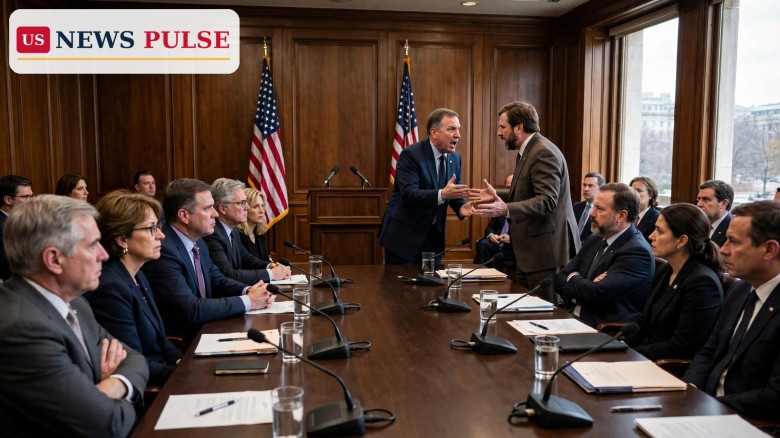
President Donald Trump's handpicked Republican National Committee chairman, Joe Gruters, faces a rebellion inside his own party after the Republicans' worst midterm performance in a generation, with a small but growing group of committee members rallying behind co-chair KC Crosbie of Kentucky. Crosbie launched her bid for the chair two days after the November 3 election, calling the midterms a serious setback and demanding an honest account of what went wrong. Trump has made clear he wants Gruters to stay, giving him his complete and total endorsement on Truth Social and calling him a MAGA warrior. The clash, first reported by the Associated Press on Sunday, November 15, 2026, is a rare public challenge to Trump's dominance of the party, and it will be settled at the RNC winter meeting in January in Arizona.
Key Points
- KC Crosbie, the RNC co-chair from Kentucky, launched a bid for the chair two days after the November 3 midterms, calling the result a serious setback and demanding an honest account of what went wrong.
- President Donald Trump has backed chairman Joe Gruters, giving him his complete and total endorsement on Truth Social and calling him a MAGA warrior.
- Dissident members are demanding a forensic audit of RNC spending, including hair and makeup services, a $22,500 hospitality spend at the Presidents Cup and a contract for Caroline Wiles.
- At a White House meeting on November 6, Trump threatened to punish the RNC if members crossed him, according to a senior White House official.
- RNC member Sue Cienki of Rhode Island predicted Crosbie would have at least 20 backers, the minimum needed for a nomination, ahead of the January leadership election in Arizona.
What Happened
The rebellion began almost as soon as the scale of the midterm defeat became clear. Republicans lost both chambers of Congress on November 3, and within two days Crosbie had announced her challenge. Her message was deliberately blunt: the party had suffered a serious setback, and its members deserved an honest account of the decisions, the spending and the strategy that produced it.
Trump moved quickly to close the contest down. On Truth Social he gave Gruters his complete and total endorsement, praised him as a MAGA warrior and signalled that loyalty to the chairman was loyalty to him. Then, at a White House meeting on November 6, he went further. According to a senior White House official, Trump threatened to punish the committee if its members crossed him, saying he would refuse to appear at fundraisers or allow his name and image to be used in party solicitations. For a committee that depends heavily on the president's drawing power to raise money, that was not a vague warning. It was a threat aimed at the RNC's finances, delivered in person, three days after the election.
Background and Context
The midterm result is the reason the tension has broken into the open. The party that expected to defend its majorities instead lost the House and the Senate, and the defeat has already produced recriminations in every direction. Some Republicans blame the president's agenda and his handling of the economy. Others blame the party's organisation, its fundraising and its ground operation. Crosbie's challenge sits in the second camp: it is an argument that the committee itself failed, that its leadership should be held to account, and that a new chair could rebuild it before the next presidential cycle. Related coverage: Trump Florida trip: first outing since midterm rout as he backs Gruters for RNC.
RNC Chair Joe Gruters and the Audit Demands
Gruters answered the critics in a letter to members on Thursday night, defending the spending item by item. He said the Presidents Cup hospitality space had brought in $2.5 million in renewed contributions, far more than the $22,500 it cost, and that the Wiles contract was a six-month engagement arranged by his predecessor, Michael Whatley, rather than by him. The letter was an attempt to take the audit argument off the table by showing that the most eye-catching items had a return, or a different author, than the critics suggested.
Reactions and Quotes
The clearest public sign of how far the rebellion has spread came from Sue Cienki of Rhode Island, an RNC member who predicted Crosbie would have at least 20 backers. Twenty is the minimum needed for a nomination, so the prediction matters: if Cienki is right, Crosbie will be on the ballot in January, and the vote will be a real contest rather than a formality. It does not mean she will win. It means the challenge cannot be dismissed as a handful of malcontents, and that Gruters will have to win the chairmanship rather than inherit it.
Why It Matters
The fight matters because it is the first open test of Trump's authority inside the party since the midterm defeat. Until now, his dominance of the Republican Party has been treated as a fact of life: he picks the chair, the chair serves, and the committee follows. A contested election for the chair, with a sitting co-chair running against the president's chosen man, breaks that pattern. Even if Gruters wins in January, the vote will show how many members were willing to defy the president in public, and that number will be read as a measure of his standing after the defeat. Related coverage: Jim Jordan beats Steve Scalise 106-73 to lead House Republicans in minority.
What Happens Next
The contest now moves to the RNC winter meeting in January in Arizona, where the 168 members will vote. Between now and then, both camps will be counting supporters, and the audit question will be fought over in private as much as in public. Crosbie needs to hold at least 20 backers to secure a nomination, and then to build beyond that number to have a chance of winning. Gruters needs to hold the members Trump delivered for him, and to show that his Thursday-night letter answered the spending questions well enough to stop the audit demand gathering force. If Trump campaigns openly for Gruters, the vote becomes a referendum on his leadership as much as on the chairman.
Frequently Asked Questions
Who is challenging Joe Gruters for RNC chair?
KC Crosbie of Kentucky, the RNC co-chair, launched her bid two days after the November 3 midterms, calling the result a serious setback and demanding an honest account of what went wrong.
What is Donald Trump's position?
Trump wants Gruters to stay. He gave him his complete and total endorsement on Truth Social, called him a MAGA warrior, and warned at a November 6 White House meeting that he would punish the RNC if members crossed him.
What spending are dissidents asking to be audited?
Hair and makeup services for Trump, Vice President JD Vance and former press secretary Karoline Leavitt, a $22,500 hospitality spend at the Presidents Cup, and a contract for Caroline Wiles, daughter of former chief of staff Susie Wiles.
How does Gruters defend the spending?
In a letter to members on Thursday night, he said the Presidents Cup space brought $2.5 million in renewed contributions and that the Wiles contract was a six-month engagement by his predecessor Michael Whatley.
© 2026 US News Pulse. All rights reserved.
 Print
 Save