
Iran Threatens Two US Navy Officers by Name as USS Spruance Returns Home - US News Pulse
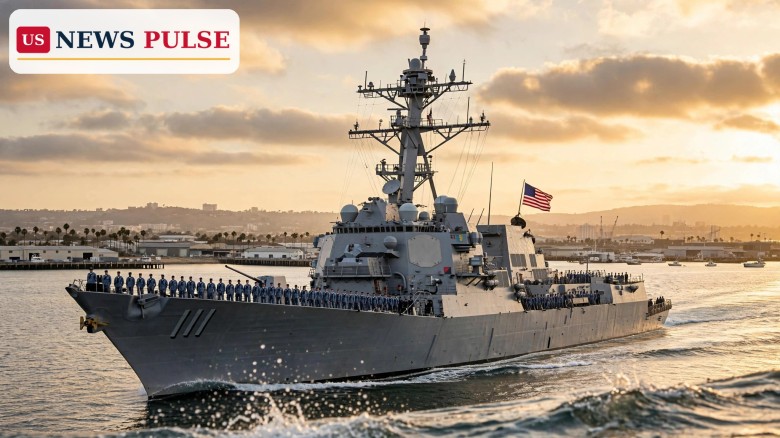
Iran has publicly threatened two United States Navy officers by name, posting “We will find you” alongside their photographs on the same day their warship sailed home from the longest destroyer deployment since the Second World War. The message, published on Friday, November 13, 2026, by Iran’s embassy in South Africa, identified the commanding officer and executive officer of the guided-missile destroyer USS Spruance.
Key Points
- Iran’s embassy in South Africa posted “We will find you” on X on November 13, with photographs of USS Spruance commanding officer Commander Leigh R. Tate and executive officer Lieutenant Commander Jeffrey E. York.
- The same embassy named the pair on March 28, accusing them of ordering Tomahawk strikes that killed 168 children at a school in Minab, Iran, and calling them “criminals.”
- The Spruance returned to Naval Base San Diego on November 13 after 357 days at sea — the longest US Navy destroyer deployment since World War II.
- The threat came a day after President Donald Trump warned Tehran against assassinating senior US officials: “They will not exist very long, any longer.”
- US intelligence warned on October 23 that Iranian efforts to target Americans abroad had substantially increased.
What Happened
The post appeared on the X account of Iran’s embassy in South Africa on Friday, November 13. It showed photographs of Commander Tate and Lieutenant Commander York, the two senior officers of the USS Spruance, above the words “We will find you.” No act was specified and no deadline given. The message was the threat itself: two named American officers, identified by face and rank, told publicly that Iran intends to find them.
It was not the first time the embassy had named them. On March 28, the same account accused the pair of ordering Tomahawk missile launches that killed 168 children at an elementary school in Minab. The timing was pointed: the Spruance pulled into Naval Base San Diego that same day, its crew returning to families they had not seen since the destroyer left port on November 21, 2025.
Background and Context
The United States and Iran have been at war since February 28, 2026. The Spruance sailed with the USS Abraham Lincoln Carrier Strike Group, took part in strikes on Iranian targets, and joined the American blockade of Iranian ports. Between February and August 2026, the destroyer launched dozens of Tomahawk cruise missiles at targets in Iran, and its crew destroyed 12 drones and four anti-ship cruise missiles.
The threat fits a wider pattern. On October 23, US intelligence warned that Iranian efforts to target Americans abroad had substantially increased. On November 10, the FBI added Shahram Poursafi, an operative of Iran’s Islamic Revolutionary Guard Corps, to its Most Wanted Terrorists list over an alleged plot to assassinate former American officials, including former national security adviser John Bolton.
Iranian-backed forces launched drone attacks on Bahrain on November 13 and again on November 15. The USS Theodore Roosevelt, a third American aircraft carrier, is arriving in the Middle East this week.
USS Spruance: A Record 357-Day Deployment
The USS Spruance is an Arleigh Burke-class guided-missile destroyer, and its deployment was historic. The ship left San Diego on November 21, 2025, and did not return until November 13, 2026 — 357 days later, the longest deployment by a US Navy destroyer since World War II.
In that time the Spruance travelled more than 88,000 nautical miles. Its crew launched dozens of Tomahawk missiles at Iranian targets, shot down 12 drones, and destroyed four anti-ship cruise missiles. The ship also took part in the blockade of Iranian ports, a central part of the American campaign to cut off Tehran’s oil revenue and war supplies.
Reactions and Quotes
President Donald Trump warned Tehran against targeting American officials the day before the embassy’s post. Speaking to radio host Hugh Hewitt on November 12, Trump said of any assassination attempt against senior US officials: “They will not exist very long, any longer.”
Behnam Ben Taleblu, a fellow at the Foundation for Defense of Democracies, told Fox News Digital that the embassy’s rhetoric should be taken seriously, given Iran’s history of plotting attacks on American officials.
Vice President JD Vance struck a different note, saying on November 2 that Washington has made “progress” in talks with Iran and that he and Trump “both feel pretty good about the prospects for potentially coming to a negotiated settlement.”
Why It Matters
Naming individual officers goes beyond the general threats that have become routine in this war. A government account posting the names and faces of two serving officers, and telling them “We will find you,” is a personal threat against people now back on American soil, living with their families in San Diego.
The threat also lands as the safety of American officials becomes a visible concern in Washington. A Treasury secretary living on a military base, a secretary of state and a defense secretary in protected housing, and a former national security adviser at the centre of an alleged assassination plot all point to a danger officials now treat as real and present.
What Happens Next
The immediate question is whether the United States responds publicly. The Navy has not announced new security measures for the Spruance’s crew, and the White House has not commented directly on the post. But Trump’s warning on November 12 suggests Washington has already put Tehran on notice.
Two events will shape the wider picture. The USS Theodore Roosevelt arrives in the Middle East this week, giving the United States three carrier strike groups in the region for the first time in the war.
Frequently Asked Questions
Who are the two officers Iran named?
Commander Leigh R. Tate, commanding officer of the USS Spruance, and Lieutenant Commander Jeffrey E. York, the ship’s executive officer. Iran’s embassy in South Africa posted their photographs on X on November 13, 2026, with the words “We will find you.”
Why did Iran single out these two officers?
The embassy first named them on March 28, accusing them of ordering Tomahawk strikes that killed 168 children at a school in Minab, Iran. The November post repeated the targeting without restating the accusation.
How long was the USS Spruance deployed?
357 days, from November 21, 2025, to November 13, 2026 — the longest deployment by a US Navy destroyer since World War II. The ship sailed more than 88,000 nautical miles and launched dozens of Tomahawk missiles at Iranian targets.
What did President Trump say about assassination threats?
In a November 12 interview with Hugh Hewitt, Trump warned Tehran against assassinating senior US officials, saying “They will not exist very long, any longer.” The warning came a day before the embassy’s post.
Is the United States still talking to Iran?
Yes. Vice President JD Vance said on November 2 that Washington has made “progress” in talks with Iran, and President Trump said a deal was “coming together very nicely.”
Read more: Mossad Warns CIA Iran Is Now Plotting to Kill Trump With Explosive Drones | US Intelligence: Iran Still Has Up to 2,500 Missiles Despite Trump Claims | Trump Iran Deal Reversal: President Says US Doesn’t Need a Deal, Pulls Vance
© 2026 US News Pulse. All rights reserved.
 Print
 Save