
Judge Orders Meta to Pay $25 Billion to New Mexico in Cambridge Analytica Case
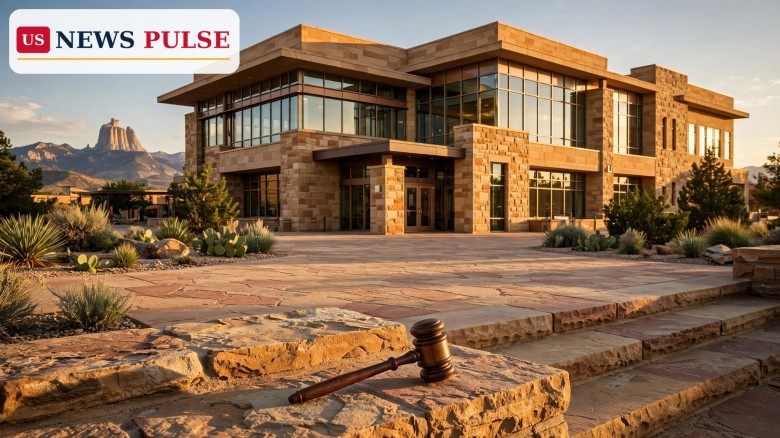
SANTA FE, New Mexico — A New Mexico judge has ordered Meta Platforms to pay $25 billion in civil penalties after a jury found the Facebook owner misled consumers about the privacy of their data, one of the largest penalties ever imposed on a US tech company. The Meta $25 billion judgment stems from the Cambridge Analytica scandal, in which the firm obtained the personal data of as many as 87 million Facebook users without their consent.
Key Points
- $25 billion penalty: First Judicial District Judge Francis J. Mathew ordered Meta to pay New Mexico $25 billion on Wednesday, October 21, 2026.
- 43.9 million violations: A 12-person Santa Fe jury found on September 25, 2026, after a 13-day trial, that 26 of 29 challenged Meta statements were misleading — 43,899,725 wilful violations of the state’s Unfair Practices Act.
- The math: At the Act’s $5,000 maximum per violation, the total reached $219,498,600,000. The judge called the maximum justified but cut it to $25 billion, with 15% annual interest until paid.
- New Mexico went it alone: The state opted out of the August multistate settlement worth up to $17.1 billion and sued alone; six other states settled for $459.2 million.
- Not final: Meta says it disagrees with the verdict and will appeal.
What Happened
Judge Mathew issued the order in Santa Fe more than three weeks after the jury’s verdict, in a case that began in 2021 when New Mexico’s attorney general sued Meta over claims that Cambridge Analytica, the British firm that worked on Donald Trump’s 2016 presidential campaign, harvested personal data from millions of Facebook users through a third-party app and used it for voter profiling.
Jurors found that Meta and its leadership made 26 misleading statements about data privacy, hate speech and platform safeguards, and that multiplying those statements by the audiences they reached produced 43,899,725 violations of New Mexico’s Unfair Practices Act. The Act allows penalties of up to $5,000 per wilful violation, putting Meta’s maximum exposure at nearly $219.5 billion. Judge Mathew ruled the maximum justified, citing “the extraordinary number of wilful violations found by the jury, the duration and repetition of the conduct” and “the involvement of senior Facebook leadership” — but he set the total at $25 billion.
Background: The Cambridge Analytica Scandal
New Mexico’s lawsuit, filed by then-Attorney General Hector Balderas and taken to trial by his successor, Attorney General Raúl Torrez, accused Meta of lying to New Mexico users about who had access to their data. The trial featured video deposition testimony from chief executive Mark Zuckerberg and former chief operating officer Sheryl Sandberg, and according to the judge’s order, Facebook — after vowing to tell users when apps misused their data — notified users of just two apps out of thousands. Meta has already paid heavily for the same scandal: a $5 billion penalty to the Federal Trade Commission in 2019 and $725 million to settle a consumer class action in 2022. New Mexico refused every off-ramp and went to trial alone, as it did earlier this year when it won another $942 million from Meta in two trials over the sexual exploitation of young people.
The Meta $25 Billion Penalty: How the Jury’s Math Worked
The size of the judgment comes from a feature of New Mexico’s Unfair Practices Act that few cases had ever tested at this scale: each misleading statement, multiplied by each person it reached, counts as a separate violation, and each violation can carry a penalty of up to $5,000. Twenty-six statements, reaching tens of millions of users, produced nearly 44 million violations — and at $5,000 each, the theoretical maximum approached $219.5 billion. Judge Mathew did not impose that maximum, but he reduced it to $25 billion, a number that still dwarfs every previous single-state penalty against a company. The judgment grows at 15% interest a year until paid, so each year of appeals adds about $3.75 billion.
Reactions: A Warning to Big Tech, and a Promise to Appeal
Attorney General Torrez called the penalty “one of the single largest, if not the largest, single-state verdict against a company in American history.” At a press conference in Albuquerque, he said: “It has been a long time coming holding Big Tech accountable. I think today’s judgment is a clear break with that past and a very clear warning to those in this space and beyond that we intend to protect our people and protect our consumers.” Judge Mathew was equally direct in his order, writing: “Facebook’s wrongdoing — over the course of years and systematically broadcast to the public — goes to the heart of Facebook’s core business practices.”
Meta says the fight is far from over. “This ruling, and the Attorney General’s approach to this enforcement, makes it all but impossible to do business in the state of New Mexico,” the company’s chief legal officer, C.J. Mahoney, said in a statement. Mahoney said Meta is confident it will prevail on appeal, and in court filings the company argued that it does not sell user data and that New Mexico never proved any consumer was actually misled.
Why It Matters
Wednesday’s order hands every state attorney general in the country a template: take a decades-old consumer protection law, apply its per-violation penalty to statements a platform broadcasts to millions of people, and the math does the rest. If the $25 billion survives appeal, it would show that a single state, acting alone, can impose a penalty on a global tech company that rivals anything Washington has managed — and encourage other states to bring their own cases. It also matters for Meta’s business: a $25 billion judgment, growing at 15% a year while appeals run, is a material liability even for a company worth nearly $2 trillion
What Happens Next
Meta will appeal, and the case is expected to spend years in New Mexico’s appellate courts, where the company will argue the penalty is disproportionate and the state never proved consumers were misled. Until those appeals are resolved, the $25 billion is a judgment on paper, not money in the state’s accounts, and the 15% interest will keep adding to the total.
Frequently Asked Questions
How much was Meta ordered to pay New Mexico?
$25 billion in civil penalties, ordered by Judge Francis J. Mathew on October 21, 2026, with 15% annual interest until paid.
Why is the penalty so large?
A jury found 26 misleading statements produced 43,899,725 wilful violations. At up to $5,000 each, the maximum reached nearly $219.5 billion.
What is Cambridge Analytica?
A now-defunct British firm that worked on Donald Trump’s 2016 campaign and obtained data from as many as 87 million Facebook users without consent.
Is the $25 billion final?
No. Meta says it disagrees with the verdict and will appeal, so the amount could be reduced or overturned.
Where would the money go?
Under New Mexico’s constitution, Unfair Practices Act penalties are dedicated to school construction and other capital projects.
Related coverage: Italy fines Meta $887 million after Facebook accessed Android photo galleries; AI child sexual abuse material reports soar 8,400%, Childlight research finds; Bessent gives Nvidia 10 days to explain whether AI chips reached China.
© 2026 US News Pulse. All rights reserved.
 Print
 Save