
Pence Calls for Competitive 2028 GOP Primary and Rejects Vance as Frontrunner
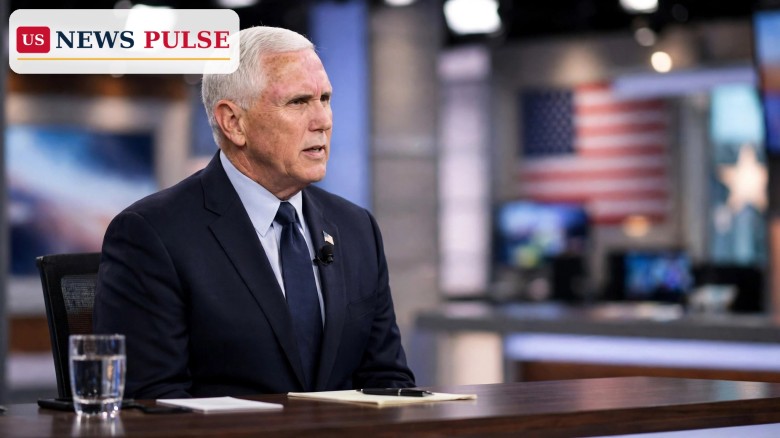
Former Vice President Mike Pence used a Sunday-morning television appearance to reopen the question of who leads the Republican Party next, calling for a competitive 2028 presidential primary and declining to anoint Vice President JD Vance as the party’s presumptive frontrunner. On NBC’s Meet the Press on November 15, Pence said he hoped for “a very vigorous debate going forward about the leadership of the party” and pointed to a “terrifically deep bench” of Republican talent. Axios reported the same day that Vance will not decide on a 2028 run until after the new year, and could wait until late spring.
Key Points
- On NBC’s Meet the Press on November 15, Pence called for a competitive Republican presidential primary in 2028 and declined to back Vice President JD Vance as presumptive frontrunner.
- Pence wants “a very vigorous debate going forward about the leadership of the party” and says the party has a “terrifically deep bench”.
- He rejected Vance’s claim that the Iran war alone explained the midterm losses: “He’s a good man but Vice President Vance is wrong”; the reasons were “much more complex”.
- Axios reported on November 15 that Vance will not decide on a 2028 run until after the new year and could wait until late spring.
- Pence again declined to rule out his own 2028 run, saying his focus is his Advancing American Freedom foundation.
What Happened
Pence’s appearance was his most direct challenge yet to the idea that the 2028 Republican nomination is Vance’s for the taking. Asked whether he would back the vice president as the party’s next standard-bearer, Pence did not endorse him, making the case instead for an open contest that would test the candidates and sharpen the party’s message after a midterm defeat that cost Republicans control of Congress.
He framed the argument around principles: the party must return to traditional conservative principles — a strong defence, limited government, fiscal responsibility and the right to life. Provisional Popular Vote Analytics tallies put Democrats on 56.1 percent of the nationwide vote to 42.4 percent for Republicans, a margin that turned a disappointing night into a rout.
Background and Context
The exchange is the latest chapter in a disagreement building since election night. Vance moved first to explain the defeat, blaming the Iran conflict, living costs, inflation and the administration’s approach to Israel. Pence answered days later on the same Sunday programme, arguing that the party lost because the Trump administration halted the Iran campaign after five weeks of gains, not because of the war itself.
Pence had already signalled his interest in the party’s future. In a Fox News Digital video interview published on November 12, he declined to rule out another run for president in 2028, saying “a lot of people” had asked him to run. That marked a shift from September 2026, when he told the Economic Club of Washington, D.C. that he had “no plans” to seek the White House in 2028. Vance, meanwhile, said at a CBS town hall in Michigan that there was “a chance” he would not run.
Mike Pence, JD Vance and the 2028 Republican Primary
Pence’s call matters because it challenges the assumption that has shaped Republican planning since the midterms: that Vance, as the sitting vice president, would inherit the party’s leadership. A former vice president publicly refusing to endorse the current vice president is a rare and deliberate signal, delivered on national television.
His argument rests on two ideas: competition makes the party stronger, forcing candidates to set out their positions and giving voters a genuine choice rather than a coronation; and the party needs to settle its identity before it picks a leader. With Vance not expected to decide until well into next year, other Republicans have a long window to organise and test the waters, and Pence’s refusal to rule out his own run keeps him in that conversation.
Reactions and Quotes
Pence’s own words carried the interview. On the primary, he said: “I would hope that we have a very vigorous debate going forward about the leadership of the party.” On the depth of the field, he added that the party has a “terrifically deep bench”. On Vance’s explanation for the midterm defeat, he was blunt: “He’s a good man but Vice President Vance is wrong”, and the reasons were “much more complex”.
Vance has not responded directly, but his own recent words frame the other side. The morning after the vote, he wrote on X: “The reason we lost is the war.” At the CBS town hall, he said there was “a chance” he would not seek the presidency in 2028 — and the Axios report that he may wait until late spring suggests a vice president in no hurry to claim a nomination others are already contesting.
Why It Matters
The 2028 Republican primary is now genuinely open. If Vance were the inevitable nominee, a former vice president would not be calling for a vigorous debate about the party’s leadership on national television. The refusal turns a policy disagreement about the Iran war into a leadership contest, and gives other ambitious Republicans permission to run.
The argument over why the party lost will also shape what it becomes: if Vance is right, the lesson is restraint abroad; if Pence is right, it is a return to traditional conservative principles and a harder line on foreign policy. For voters, the effect is a longer, more competitive contest rather than a swift consolidation behind one figure.
What Happens Next
The timetable runs through Vance: Axios says he will not decide until after the new year, and could wait until late spring. Pence says his focus remains his Advancing American Freedom foundation, but he has twice declined to rule out a run. Watch whether other senior Republicans echo his call as the new Congress convenes on January 3, 2027.
Frequently Asked Questions
What did Mike Pence say about the 2028 Republican primary? On NBC’s Meet the Press on November 15, Pence called for a competitive 2028 Republican presidential primary and declined to back Vice President JD Vance as presumptive frontrunner.
Is JD Vance running for president in 2028? He has not decided. Axios reported on November 15 that Vance will not decide until after the new year and could wait until late spring to announce. At a CBS town hall in Michigan, he said there was “a chance” he would not run.
Why did Pence say Republicans lost the midterms? Pence rejected Vance’s claim that the Iran war alone explained the defeat — “He’s a good man but Vice President Vance is wrong” — saying the reasons were “much more complex” and the party must return to traditional conservative principles.
Will Mike Pence run for president in 2028? He has declined to rule it out, in a Fox News Digital interview on November 12 and again on Meet the Press, while saying his focus is his Advancing American Freedom foundation.
Read more on US News Pulse: Mike Pence leaves the door open to a 2028 run; Pence blames Trump’s Iran halt for the midterm losses; and JD Vance blames the Iran war for the midterm wipeout.
© 2026 US News Pulse. All rights reserved.
 Print
 Save