
Trump's Nvidia Stake Grew to as Much as $62 Million, Washington Post Finds
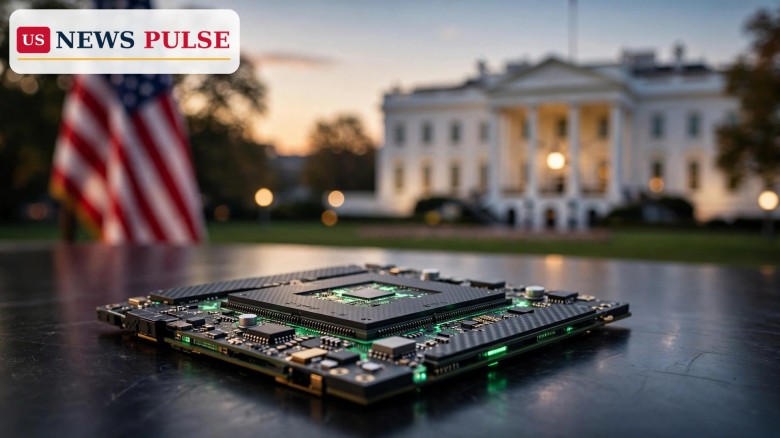
A Washington Post review of President Donald Trump's financial disclosures has found that Trump's Nvidia stake grew to as much as $62 million before the scandal broke around the chipmaker. The review, reported on Monday, November 16, 2026, suggests the president held between $13 million and $62 million in Nvidia stock as of the end of August 2026 — a dramatic rise from the modest holding he reported at the end of 2024.
Key Points
- A Washington Post review of President Donald Trump's financial disclosures found he held between $13 million and $62 million in Nvidia stock as of the end of August 2026.
- That is far above the $615,000 to $1.3 million in Nvidia shares he held at the end of 2024, and the real range was probably higher as the share price rose.
- The filings miss trades from the past two months because of reporting lags, and Trump's portfolio has logged tens of thousands of trades in his second term.
- The White House said in an unsigned statement that the president "does not pick or trade individual stocks" and that independent managers handle his portfolio.
- The disclosure comes as Nvidia faces scrutiny over Jensen Huang's resignation, a reported "national champion" plan, and earnings due on Tuesday, November 17.
What Happened
The Washington Post examined the president's financial disclosure filings and traced his reported trades in Nvidia this year, arriving at a range of $13 million to $62 million held as of the end of August 2026. Reuters reported the Post's findings on Monday, November 16, 2026, noting that it could not immediately verify the report. Officials report holdings in broad bands, not exact figures, so a large position can only be pinned down within a range.
What the numbers show clearly is scale. At the end of 2024, Trump held between $615,000 and $1.3 million in Nvidia shares. By the end of August 2026, the top of that range had risen roughly fiftyfold. The Post noted the actual range was probably higher still, because Nvidia's share price rose between the end of 2025 and the end of August.
Background: How the Holding Grew
Trump's trading activity in his second term has been unusually heavy. His portfolio has logged tens of thousands of stock trades, according to the Post's review, a pace that reflects active management across many companies rather than a buy-and-hold approach. Nvidia was only one name among them, but it became one of the largest.
The position grew through 2025 and into the summer of 2026, while the administration was shaping policy on advanced chips and exports to China. An earlier Reuters report, published on October 8, 2026, had covered only individual August trades, without putting a total on the holding. The Post's review is the first to estimate its full size. The Wall Street Journal also reported on Sunday that the administration plans to designate Nvidia and more than two dozen other AI companies as "national champions".
Trump's Nvidia Stake and the Huang Scandal
The disclosure comes amid heightened scrutiny of Nvidia after co-founder Jensen Huang resigned as chief executive last week. Huang stepped down amid the scandal over his relationship with Alice Huang, whom United States authorities suspect of intelligence ties to Beijing. The resignation has shaken the company and unsettled investors, while a public campaign urging Huang to return has gathered hundreds of thousands of signatures.
The holding reached its reported peak before the scandal broke, when Nvidia's leadership looked settled. What has happened to it since — whether it was trimmed in the sell-off or held through it — will not be visible in public filings for weeks. The White House and Nvidia did not immediately respond to Reuters. The White House did issue an unsigned statement, saying: "The President does not pick or trade individual stocks. Independent financial managers handle his portfolio."
Reactions and Quotes
So far the reaction has been defined less by what has been said than by what has not. The White House's unsigned statement is the only official comment, and it offers no detail about when the Nvidia shares were bought, how many remain, or whether the president knew the size of the position. Reuters reported that it could not immediately verify the Post's findings.
The silence leaves the central questions open. Ethics experts and lawmakers are likely to ask whether a president holding tens of millions of dollars in a company at the centre of national-security decisions about chips should face tighter rules, even when the trading is delegated. Investors will be watching Tuesday's earnings report closely to see whether the business has held up.
Why It Matters
The story matters first for the money. A holding that grew from about $1 million to as much as $62 million in under two years is one of the largest personal stakes a sitting president has held in a single company, and it sits in the middle of the industry the administration is trying to reshape.
It matters too for timing and trust. The position peaked before a scandal that has now consumed the company's leadership, and the public will not know for weeks whether it was sold, trimmed or held through the fallout. The administration's defence rests on delegation — independent managers, no presidential stock-picking — but the larger the holding and the more consequential the policy, the harder that defence is to sustain in public debate.
What Happens Next
Nvidia reports quarterly earnings on Tuesday, November 17, 2026, and the results will be read as a verdict on whether the company's business has survived its leadership crisis. Analysts will look for guidance on demand for AI chips, on the export-control dispute, and on the search for a permanent chief executive. In Washington, the filings lag by two months, so trades made since September will not appear until the next disclosures.
Frequently Asked Questions
How much Nvidia stock does President Trump own?
Between $13 million and $62 million as of the end of August 2026, according to a Washington Post review of his financial disclosures.
How much Nvidia stock did Trump hold at the end of 2024?
Between $615,000 and $1.3 million — dramatically less than the August 2026 figure.
Who manages President Trump's stock portfolio?
According to an unsigned White House statement, "The President does not pick or trade individual stocks. Independent financial managers handle his portfolio."
Why is Nvidia in the news right now?
Co-founder Jensen Huang resigned as chief executive last week amid a scandal over his relationship with Alice Huang, whom US authorities suspect of intelligence ties to Beijing.
Do the filings show Trump's current Nvidia holding?
No. The filings do not capture trades from the past two months because of reporting lags, so the current size of the holding is not publicly known.
Read more: Bessent gives Nvidia 10 days to explain whether AI chips reached China | Jensen Huang weighs Nvidia return as 157,000 back Bring Jensen Back campaign | Bessent publicly blames Lutnick for Megaspeed failure as WSJ reports job fight
© 2026 US News Pulse. All rights reserved.
 Print
 Save