
Aurora Hindu Temple Plot: India Demands Justice After Neo-Nazi Attack Foiled
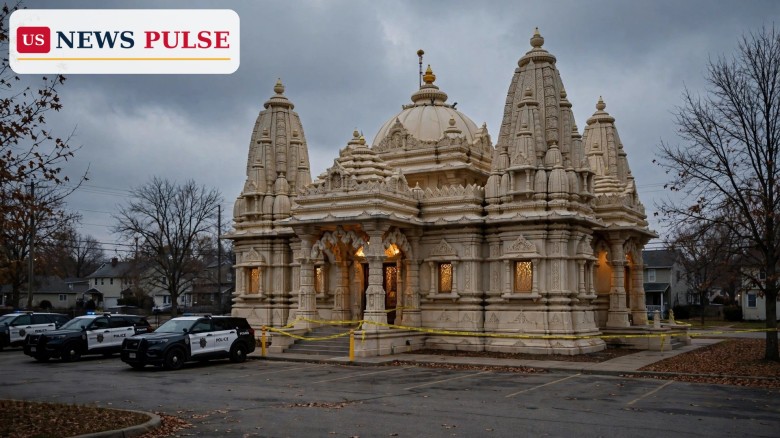
India has said it is “deeply concerned” after a neo-Nazi plot to carry out a mass shooting at a Hindu temple in Aurora, Illinois, was foiled while a US congressman was worshipping inside. The Aurora Hindu temple plot returned to the headlines on Monday, November 16, 2026, when India’s Ministry of External Affairs spoke publicly about the case for the first time, calling the reported anti-Hindu and racist nature of the plan “particularly disturbing.”
The suspect, Alexandros Paporakis, 19, of Palatine, Illinois, was arrested on Sunday, October 11, 2026, after a co-worker tipped off police. Prosecutors say he drove to the Sri Venkateswara Swami (Balaji) Temple in Aurora that day — the first day of Navaratri — intending to open fire on worshippers, but left without firing after his rifle jammed. No one was hurt.
Key Points
- India’s foreign ministry raised the alarm on November 16, calling the alleged plot “deeply concerning.”
- Alexandros Paporakis, 19, of Palatine, Illinois, was arrested on October 11 after a co-worker alerted police.
- Prosecutors say he drove to the Balaji Temple in Aurora on the first day of Navaratri intending a mass shooting, but left after his rifle jammed.
- Police recovered a rifle, loaded magazines, hundreds of rounds of ammunition, body armour and an eight-page manifesto.
- Representative Raja Krishnamoorthi was inside the temple with his family, and 105 lawmakers have urged the FBI to open a federal hate-crime investigation.
What Happened
Prosecutors say Paporakis arrived at the Sri Venkateswara Swami Temple — known locally as the Balaji Temple — on the morning of October 11, the opening day of Navaratri, when temples fill with families. Carrying a rifle, he intended to carry out a mass shooting inside, prosecutors say. Instead, the weapon jammed, and he drove away without firing.
He was arrested the same day after a co-worker reported concerns. He faces two felony charges — making a terrorist threat and unlawful possession of a weapon — after investigators found the rifle had a barrel shorter than 16 inches. A judge ordered him detained on October 14, 2026. Prosecutors told the court he had been planning an attack for two years and had focused on the Aurora temple for the last two months. Police also found an eight-page manifesto titled “Why I Fought: A.K.A.: (Aurora Shooter’s Manifesto).”
Background and Context
The Balaji Temple is a well-known place of worship for the Hindu community in the Chicago suburbs, and Navaratri draws large crowds of families to its prayer halls. The alleged attack was planned for the festival’s first day, when community members say the temple was full.
The case comes amid growing concern about attacks on houses of worship. In recent weeks, a far-right activist disrupted a Diwali festival in Seattle in front of performing children, and a Liberty University student was arrested with a loaded gun at a Washington synagogue. For India, the case carries particular weight: millions of people of Indian origin live in the United States, and New Delhi has repeatedly raised the safety of Indian nationals and Hindu places of worship with Washington.
The Aurora Hindu Temple Plot: What Investigators Say
Prosecutors say Paporakis described himself as a white supremacist and a neo-Nazi who expressed hatred toward Indians and other minorities. That self-description, together with the manifesto, is expected to be central to the prosecution’s case and to whether the attack should be treated as a hate crime under federal law.
The Justice Department’s Civil Rights Division has said it will review the incident, opening the door to federal charges if investigators conclude the temple was targeted because of the religion or national origin of its worshippers. One detail has drawn particular attention: Representative Raja Krishnamoorthi, a Democrat from Illinois, was inside the temple with his family when Paporakis drove by, and he has since led the push for federal involvement.
Reactions and Quotes
India’s foreign ministry spokesperson, Randhir Jaiswal, said New Delhi was “deeply concerned” by reports of the alleged plot and called its reported anti-Hindu and racist character “particularly disturbing.” He said India expects US authorities to “thoroughly investigate” the case, “bring those responsible to justice” and prevent such incidents.
On October 20, Krishnamoorthi led 105 members of Congress in writing to FBI Director Kash Patel urging a federal hate-crime investigation. The lawmakers argued the evidence — the manifesto, the suspect’s own statements, and the choice of a Hindu temple on a festival day — pointed to a crime motivated by religious and racial hatred.
Why It Matters
First, it was a mass shooting that came within a jammed rifle of happening, at a crowded house of worship on one of the holiest days of the year. The difference between a foiled plot and a massacre was, by the prosecution’s own account, a mechanical failure.
Second, the case tests how the United States treats alleged hate crimes against Hindus and Indian-Americans: advocates say attacks motivated by anti-Hindu bias are not always recognised as hate crimes, even when the evidence of motive appears strong. Third, the case now sits inside the US-India relationship, raising the diplomatic stakes of the prosecution and of any decision about federal charges.
What Happens Next
Paporakis remains detained as his state case moves forward; the two felony charges carry the prospect of a lengthy prison sentence if convicted. The bigger question is whether federal prosecutors will bring hate-crime charges of their own, a decision that will turn on the Justice Department’s review and the FBI’s assessment of the evidence. Krishnamoorthi and the other lawmakers are expected to keep pressing for a federal investigation, and India’s foreign ministry is likely to raise the case again with Washington.
Frequently Asked Questions
What happened at the Aurora Hindu temple?
Prosecutors say Alexandros Paporakis, 19, drove to the Balaji Temple in Aurora on October 11, 2026, the first day of Navaratri, intending a mass shooting. His rifle jammed and he left without firing. No one was hurt.
Who is Alexandros Paporakis?
Paporakis is a 19-year-old from Palatine, Illinois. Prosecutors say he described himself as a white supremacist and neo-Nazi, had planned an attack for two years, and had targeted the Aurora temple for two months.
Was anyone hurt in the incident?
No. No shots were fired. Police recovered a rifle, loaded magazines, hundreds of rounds of ammunition, body armour and an eight-page manifesto.
Why is India involved?
India’s foreign ministry said on November 16 that it is “deeply concerned” by the alleged plot and asked US authorities to investigate thoroughly and bring those responsible to justice.
What charges does Paporakis face?
He faces two felony charges: making a terrorist threat and unlawful possession of a weapon, because the rifle had a barrel shorter than 16 inches. A judge ordered him detained on October 14, and the Justice Department’s Civil Rights Division is reviewing the case.
Read more on hate-crime cases in the United States: a Somali-American Uber driver remains in a coma after an alleged hate-crime attack in Minnesota, and far-right activists stormed a Diwali festival in Seattle earlier this month.
© 2026 US News Pulse. All rights reserved.
 Print
 Save