
GlobalFoundries New York Chip Fab Breaks Ground on $10 Billion Malta Site
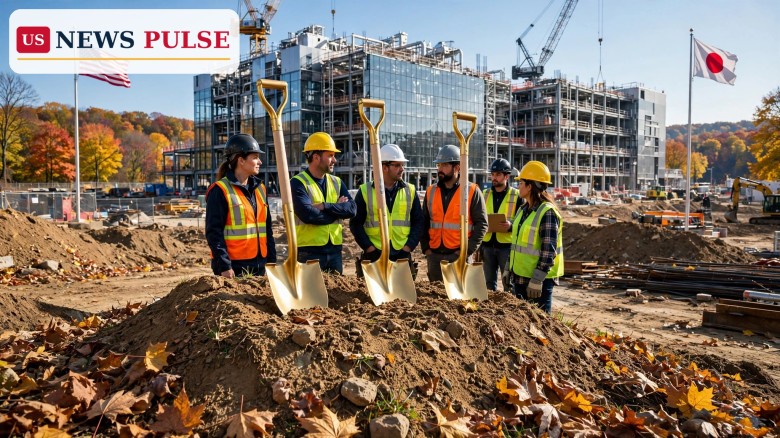
GlobalFoundries broke ground on Friday, November 13, 2026, on a new $10 billion semiconductor factory at its Malta, New York, campus, the first facility under a landmark United States-Japan initiative that will bring up to $21 billion of investment to American chip manufacturing. United States and Japanese officials, New York Governor Kathy Hochul, customers and community leaders joined the ceremony, which starts construction on a 300mm fab due online in 2029.
The GlobalFoundries New York chip fab will add about 900,000 300mm wafers of annual United States manufacturing capacity when fully operational, making chips for cars, industrial equipment and connected infrastructure. A second fab, backed by about $10 billion more, is planned. The two-fab initiative should create about 27,000 construction and ecosystem jobs and more than 1,000 high-skilled manufacturing jobs in New York's Capital Region.
Key Points
- GlobalFoundries broke ground on November 13, 2026, on a $10 billion fab at its Malta, New York, campus, the first under a landmark United States-Japan initiative.
- The initiative will bring up to $21 billion of investment, with Japan funding it and GlobalFoundries supplying the technology and expertise.
- The first 300mm fab is due online in 2029, adding about 900,000 wafers of annual United States capacity; a second fab would add about the same.
- New York State is backing the first fab with $570 million in incentives, and the project should create about 27,000 construction and ecosystem jobs plus more than 1,000 manufacturing jobs.
- The new capacity will make foundational semiconductors for automotive, industrial and connected infrastructure markets.
What Happened
GlobalFoundries, known as GF, joined United States and Japanese officials, state and local leaders, customers and employees at Malta on Friday to mark the start of construction and celebrate what the company called a first-of-its-kind investment in American semiconductor manufacturing.
GF announced on October 14, 2026, that it had been selected as technology provider and operator for two new fabs at Malta under the initiative, which provides up to $21 billion in funding. Japan will provide the investment, while GF will contribute its technologies, manufacturing expertise and proven operational capabilities. An initial investment of approximately $10 billion, supported by $570 million in incentives from New York State, is accelerating construction of the first fab, and a further $10 billion will support the second.
Background: Why Malta, and Why Now
GlobalFoundries has operated in Malta, a town in Saratoga County about 30 miles north of Albany, for more than a decade, and the site is already one of the most advanced semiconductor manufacturing campuses in the United States. The new fabs build on that base: a trained workforce, existing infrastructure and a supplier network far harder to build from scratch.
The project lands in a national push to bring chip production home. The CHIPS and Science Act, the 2022 law championed in the Senate by Democratic Leader Charles Schumer of New York, set aside tens of billions of dollars to rebuild domestic semiconductor manufacturing after pandemic-era shortages idled car plants and exposed how much of the world's chip supply depends on factories in Taiwan, South Korea and China. Japan's role is the deal's distinctive feature, pairing Japanese capital with American know-how in an alliance between two countries that see secure chip supplies as a matter of national security.
The GlobalFoundries New York Chip Fab in Numbers
The first fab carries an initial investment of approximately $10 billion, with New York State contributing $570 million in incentives. A second fab, backed by about $10 billion more, would take the total to about $21 billion.
The first fab is expected to add approximately 900,000 300mm wafers of annual United States manufacturing capacity when fully operational, and the second fab would add about the same. About 27,000 construction and ecosystem jobs will come during the build-out, and more than 1,000 high-skilled manufacturing jobs once the fabs are running. GF said it is working with schools, colleges and universities to build the next generation of semiconductor talent the region will need.
Reactions and Quotes
GF chief executive Tim Breen said the ceremony turned a partnership into reality. "Today, we're putting shovels in the ground and turning an ambitious partnership into reality," Breen said. "This first-of-its-kind initiative brings together the strengths of the United States, Japan and GF to expand trusted semiconductor manufacturing at a scale that matters."
Governor Kathy Hochul praised the investment in the workforce. "New York is building the future of American semiconductor manufacturing, and today's groundbreaking marks another major step forward for our state and the Capital Region," Hochul said.
Senator Schumer tied the project to the CHIPS and Science Act he fought to pass. "GlobalFoundries breaking ground on the first of up to two new cutting-edge chip fabs makes even clearer that Upstate New York is the chip hub of the country," Schumer said.
Why It Matters
Semiconductors are the foundation of the modern economy, and the United States still makes only a small share of the world's chips despite designing many of the most advanced ones. The shortages of 2021 showed how quickly a disruption overseas can shut down American factories, and adding nearly a million wafers a year of domestic capacity, then doubling it, directly reduces that vulnerability.
The project also matters for the Capital Region: more than 1,000 permanent, high-skilled manufacturing jobs, plus tens of thousands of construction and support roles, will reshape a local economy that has already become one of the country's chip hubs. And the United States-Japan structure shows how industrial policy is evolving, pairing Japanese capital with American manufacturing in allied supply chains that could be repeated elsewhere.
What Happens Next
Construction is now under way at Malta, with the first fab scheduled to come online in 2029. GF will work with state and local partners on workforce training, and the second fab will advance as the programme moves forward. The project will be watched as a test of the United States-Japan model: if the first fab is delivered on schedule, it will show allied investment can expand trusted chip capacity at the scale the economy needs.
Frequently Asked Questions
What is GlobalFoundries building in Malta, New York?
A new $10 billion 300mm semiconductor fab, the first of two planned under a landmark United States-Japan initiative worth up to $21 billion, due online in 2029.
How much capacity will the new fab add?
About 900,000 300mm wafers of annual United States manufacturing capacity when fully operational; a second fab would add roughly the same again.
How many jobs will the project create?
About 27,000 construction and ecosystem jobs and more than 1,000 high-skilled manufacturing jobs.
Who is paying for the new fabs?
Japan is providing the investment, while GlobalFoundries contributes its technology and expertise. New York State is supporting the first fab with $570 million in incentives.
What kinds of chips will the Malta fab make?
Foundational semiconductors for automotive, industrial and connected infrastructure markets: the workhorse chips in cars, factory equipment, power systems and connected devices.
Read more: Bessent Gives Nvidia 10 Days to Explain Whether AI Chips Reached China | Megaspeed Pledges Full Cooperation With US Probe | Nvidia Board Launches Probe of CEO Jensen Huang
© 2026 US News Pulse. All rights reserved.
 Print
 Save